If you’ve ever worked with sensitive electronics, static-sensitive components, or hazardous materials, you know how frustrating static discharge (ESD) can be. One wrong move, and you fry a $1000 chip, or worse, trigger a dangerous spark. That’s where conductive bags come in—they’re the workhorses of supply chains for tech, aerospace, and healthcare, shielding what can’t take a static hit. But let’s be real: stock bags rarely fit exactly what you need. I get it, because I’m the owner of a conductive bags supply company, and every day I get emails from people asking: “Can conductive bags actually be customized, or am I stuck ordering one-size-fits-all?” Conductive Bags
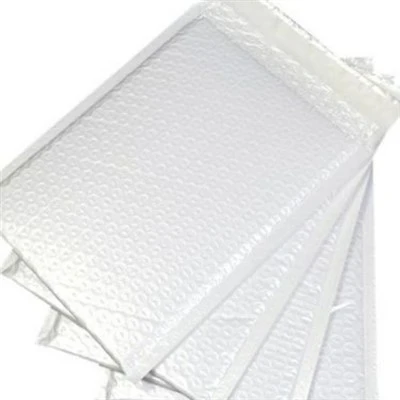
Short answer: Hell yes, they can be customized. But it’s not just throwing your logo on a bag—there’s a lot to get right if you want the custom bag to actually do its job, not just look like it. Let’s break this down like I would with a client who’s standing in my warehouse, holding a pile of circuit boards and a weird-sized medical sensor tray.
First, let’s start with the basics, so we’re all on the same page. Conductive bags aren’t just “thick plastic”—they’re made with materials that stop static cold. The standard stuff is usually a poly layer infused with carbon or metal particles, right? That makes it conductive, so any static charge on the bag’s surface drains away before it can jump to whatever’s inside. There’s also static-dissipative (ESD-safe) versions, which are a little less conductive but still way better than regular plastic, and anti-static bags, which just trap static and keep it from building up.
Now, customization isn’t one-size-fits-all, either. It depends on what you need the bag for, what you’re putting inside it, and how you’re shipping or storing it. Let’s run through the main customizations we do every week, because these are the ones people actually care about.
First, the big one: size. I can’t tell you how many times a client has shown up with a part that’s 12 inches long and 8 inches wide, and they’re like, “Your stock 10×12 inch bags are too small, and the next one up is a 15×18 that’s half a foot bigger than I need.” Stock bags are great for general use, but if you’re dealing with oddly shaped parts—think aerospace turbine sensors, medical implant trays, or custom router boards—you don’t want extra space. Extra space means your part can shift around during shipping, rub against the bag walls, and get static even if the bag itself is conductive. Custom size bags cut that extra space right out. We can make them any dimensions, down to a fraction of an inch, and if you have weird shapes? We can even do gusseted sides or bottoms so you can stand a tray upright, no sliding around. I had a medical device client last month who needed bags for a set of pacemaker test probes that were curved, not straight—we added a custom gusset that molded to the curve, so nothing moved during cross-country shipping. No extra charges, no headaches, just a bag that fits exactly what they needed.
Next, material and performance. Wait, so you can’t just slap a custom logo on a regular conductive bag, right? You need the material to match your part. Let’s say you’re storing lithium-ion battery packs—those are super sensitive, and they can even catch fire if they’re exposed to certain plastics. So we can customize the material to be flame-retardant, too, on top of conductive. Or if you’re working with food packaging that’s static-sensitive (yes, some medical food products and pharmaceutical components need ESD protection), we can make the material FDA-compliant, so there’s no risk of leaching. We can also adjust the conductivity level—some clients need super high conductivity for extremely static-prone parts, others just need basic ESD protection for regular circuit boards. Customizing the material isn’t just about performance, either: some industries need bags that are puncture-resistant, so if your parts have sharp edges (like metal stencils), the bag won’t tear and expose the part to static. We did a run of those last quarter for a semiconductor client—they were shipping lead frames with sharp, thin edges, and the standard bags were tearing way too often. We added a extra layer of high-density polyethylene to the material, same conductive core, just tougher. No more tears, no more ruined parts.
Then there’s closure types. This is another big one people don’t think about. Stock bags usually have a basic ziplock, but if you’re shipping parts across the world, a flimsy ziplock can pop open, or if you’re storing sensitive components for months, a ziplock can let in moisture (which kills conductivity over time). So custom closures? We’ve got options. For long-term storage, a heat-sealed closure—you can seal the bag shut completely, no gaps, no moisture getting in. For parts you need to open and close multiple times (like a lab that’s testing components every day), a resealable conductive adhesive strip, not a regular plastic ziplock. It sticks tight, doesn’t leave residue, and still keeps the static in check. We even do custom tamper-evident closures for aerospace clients—they need to know a bag hasn’t been opened in transit, so we add a thin strip that breaks if you try to open it without leaving a big, obvious mark. Last year, an aerospace client had a part go missing in shipping, and the tamper-evident strip let them prove it wasn’t their team that opened the bag. Saved them a ton of headache.
Oh, and custom printing! I know, this is the fun part for people—branding, or labeling for warehouse teams. You can print on conductive bags, too. It’s not like regular plastic bags where you can just print anything, though—you have to use special ink that’s compatible with conductive materials, so it doesn’t mess up the conductivity. We print everything from your company logo, to barcodes (super important for inventory tracking, especially for warehouses with thousands of parts), to warning labels like “ESD Sensitive – Do Not Open Without Grounding.” We can do single-color prints, full-color, even UV-resistant printing if the bags are going to be stored in a windowed cabinet or shipped in direct sunlight. A lot of our clients do full-color labels for their own inventory, so their team can grab the right bag fast, no reading tiny text. I had a startup client last month who made their bags look like their product, so when they shipped them to customers, the packaging looked professional, not just a plain conductive bag. Smart move, too—customers notice that.
Wait, but I need to be honest here—there are a few myths people believe about custom conductive bags, and I get why. A lot of people think custom = super expensive, or takes 6 weeks. Let’s set that straight. First, price: custom bags aren’t way more expensive than stock, not for small to medium runs. A lot of suppliers will nickel and dime you for every little custom tweak, but we don’t—we offer custom sizes, closures, printing, and material adjustments for the same base price as a stock bag, as long as your order is at least 500 units. If you only need 100, we can do that, too, it just adds a little premium because we have to set up the machine for a smaller run. As for lead times: if you need a rush order, we can have custom bags ready in 7-10 business days, not 6 weeks. Stock bags take 2 days, but custom isn’t that far behind, especially if you have a clear idea of what you need.
Another myth: custom bags are only for big companies. No way. We work with startups that are making their first batch of products, small electronics repair shops that need custom bags for their parts, even universities that are doing ESD testing for their engineering projects. Last semester, a college’s engineering lab needed 200 custom bags for their robotics parts, and we knocked that out in a week. They weren’t a big corp, just a small team working on a robot for a competition.
But here’s the thing: to get a custom bag that actually works, you can’t just send us a size and a logo. You need to tell us what’s inside the bag, how you’re using it, and what standards you need to meet. For example, if you’re in aerospace, you need the bag to meet MIL-STD-810 static standards, right? If you’re in medical, you need FDA compliance. If you don’t know the standards, that’s fine—we have a team that will walk you through it, ask questions like: Is your part going to be stored for 6 months, or 2 days? Does it have sharp edges? Will it ship cross-country, or just around the building? We’ve been doing this for 12 years, so we know the right questions to ask to make sure your custom bag doesn’t look cool, it actually protects your parts.
I’ll be honest, too—we’ve had clients come to us after trying a “custom” bag from another supplier, and it was garbage. They printed a logo, but the material was too thin, or the conductivity was off, and their parts got damaged. That’s why we test every custom run before it ships—we run static tests, check the material thickness, make sure the closures work. No cutting corners, because if your part gets ruined, that’s on us, and that’s not how we do business.
At the end of the day, conductive bags being customized is a game-changer for anyone working with static-sensitive stuff. You don’t have to settle for a bag that’s too big, the wrong material, or looks like a plain gray wrapper. You can get something that fits your exact needs, protects your parts, and even looks like your brand.

If you’re someone who’s tired of stock bags not working for you, or you’re starting a new project and need a custom solution, hit us up. We’ll ask you a few quick questions about your parts and needs, send you a free sample so you can test it yourself, and put together a quote that makes sense. No hidden fees, no jargon, just actual people who know what ESD protection is, not just salespeople reading from a script.
Bulk Bag References
- "ESD Protection Materials and Applications", Electrostatic Discharge Association (ESDA), 2022
- "Conductive Polymer Films for Packaging of Sensitive Electronics", Journal of Electronic Packaging, 2021
- "Custom ESD Packaging: Best Practices for Aerospace, Medical, and Electronics Industries", Packaging World, 2023
- "Flame-Retardant Conductive Bags: Performance Standards for Hazardous Material Storage", NFPA 70, 2022
Heze Jinniu Plastics Co., Ltd.
As one of the most professional conductive bags manufacturers in China, we have world-leading production equipment and strong manufacturing capabilities. Please rest assured to wholesale bulk high quality conductive bags for sale here from our factory.
Address: South section of Renmin Road, Heze City, Shandong Province
E-mail: lishaobin2379@163.com
WebSite: https://www.jnbulkbags.com/
