When I first started as a horizontal multistage pump supplier, I heard every possible take on series connections from my clients—some swearing it’s a magic fix for low pressure, others warning it’s a one-way ticket to costly breakdowns. Let’s cut the crap, guys: series isn’t for every job, but it’s way less scary than it sounds when you know exactly what you’re signing up for. I deal with this stuff daily, so let’s break it down like we’re chatting over a coffee in my warehouse, no stuffy engineering jargon that makes your eyes glaze over. Horizontal Multistage Pump
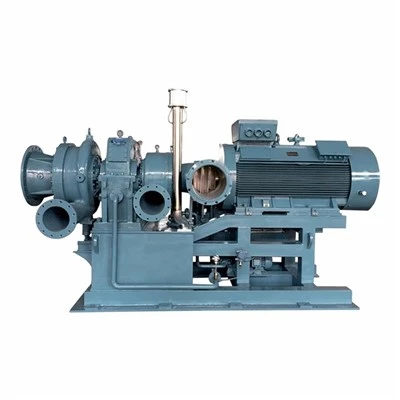
First, let’s ground this in the basics for anyone who might be new here: horizontal multistage pumps are the workhorses for moving water and fluids, packed with multiple impellers stacked on one shaft to crank up pressure without needing a massive single pump. Connecting them in series? That just means piping the outlet of the first pump straight into the inlet of the second, third, whatever—each pump adds its own pressure to the total output. Parallel is the other common setup, where inlets all get the same fluid supply and outlets feed into one line, for more flow. Series is all about extra push, not extra volume.
Now, the upsides—these are the reasons my team and I get at least 5 queries a week from clients asking if series is right for their setup. The big one is super obvious but bears repeating: series cranks the total system pressure way higher than any single pump can do alone. Let’s take a recent client example: a small municipal water treatment plant that needed to push water up a 220-foot hill to a storage tank. Their original single pump could only hit 180 feet of head (that’s the engineering term for pressure related to height, by the way), so they were losing 40 feet of head before the water even got to the tank. We recommended connecting two of our 150-foot-head horizontal multistage pumps in series. Done. Total head hit 300 feet, which was more than enough to push the water right up, no more overflowing or low pressure at the top. That’s the core win here.
Another huge advantage is flexibility with existing equipment. I can’t tell you how many times a client calls saying their old pump’s been running fine for years, but now they need to move fluid to a taller spot or through a longer, more restrictive pipe. Buying a whole new big pump is expensive, takes weeks to order, and might not even fit their existing pipe size or motor. Adding another pump in series is way cheaper and faster. A recent farm client had that exact issue: their old irrigation pump could only reach the farthest field, which was 150 feet above their pump house. Instead of dropping $12k on a new giant pump, they added a second unit in series for $4k, and we had it installed over a weekend. No tearing up their pump house, no rewiring a huge motor—just piping the two pumps together and they were back to watering their crops on time. That’s a big one for small businesses and operations on tight timelines.
Wait, there’s also the thing about performance consistency for systems that need steady high pressure. Series connections keep each pump operating at its best efficiency point (BEP) way more often than trying to run a single oversized pump. Oversized pumps constantly run inefficiently, wasting energy and wearing out faster. With series, each pump is handling a smaller lift, so they stay in that sweet spot where they use less power and last longer. I had a brewery client a couple years back that used our horizontal multistage pumps to move wort through their brewing process, which needs super consistent pressure to keep the flow rate steady and avoid damaging the yeast. They tried a single big pump first, but it was cycling on and off nonstop, leading to inconsistent flow and higher electricity bills. Switched to two smaller pumps in series, and their energy use dropped by 18% in the first quarter. Not only that, their maintenance calls for the pump went from once a month to once every three months. That’s a win for both the wallet and the equipment.
But let’s not sugarcoat this—series connections have some pretty big downsides, and I’ve seen way too many clients make the mistake of skipping these details and ending up with broken pumps or wasted cash. The first and most critical downside is the risk of cavitation if inlet pressure isn’t set right. Cavitation is that annoying thing where low pressure at the pump inlet makes tiny bubbles form in the fluid, and when those bubbles pop, they smash into the pump impeller like tiny baseball bats, eating away at the metal over time. When you put two pumps in series, the first pump’s outlet is the second’s inlet—so the second pump’s inlet pressure is way higher than the first’s was. But wait, if the system upstream of the first pump can’t supply enough fluid at a steady pressure, the first pump might not push enough flow to keep the second pump’s inlet pressure where it needs to be. I had a construction client learn this the hard way last year. They hooked two of our series pumps up to a temporary water line that was only rated for half the flow they needed. The second pump’s inlet pressure dropped too low, and within two weeks, the impeller on the second pump had a ½-inch gouge in it. We fixed it, but they had to halt their concrete pouring job for three days while they waited for a new part. That’s not just a pump problem—That’s a project delay problem.
Another downside is that series connections are less forgiving if one pump fails. If you have parallel pumps, you can take one offline for maintenance and the others can pick up the slack. Series? If one pump goes down, the whole line stops. No flow, no pressure, nothing. I had a small apartment complex client a few months back that had a summer cooling system set up with two pumps in series. One pump’s seal leaked overnight, and when maintenance showed up in the morning, the whole cooling system was dead. It was a 95-degree day, and they had to rent temporary AC units for 40 units for two days while the pump was repaired. That’s a costly hassle that parallel setups would have avoided. You can fix that by adding a bypass valve, but that’s an extra cost and a thing you have to maintain, which is just another moving part that can break.
Also, there’s motor sizing and power supply to think about. Each pump in series has its own motor, right? Wait, no—actually, sometimes people use a single oversized motor, but most of the time you need two motors rated for the total power draw of both pumps. If you skip that and use a single motor that’s only sized for one pump, you’ll overload it the second you turn the two on together, and you’ll burn the motor out within minutes. I see this all the time with DIY installers who think, “Oh, both pumps are small, so one tiny motor will work.” Nope, total power is the sum of both pumps, so you have to account for that. That’s an easy mistake to make, and it’s a pricey one—replacing a burned motor on a horizontal multistage pump can run you $2k or more, not including labor.
Wait, let’s also talk about fluid compatibility. If you’re pumping anything other than plain water—like chemicals, slurries, or viscous fluids—series connections can amplify any issues with fluid properties. For example, if you’re pumping a viscous liquid like oil, each pump in series has to work harder to move that fluid, and the pressure drop from viscosity gets multiplied across both pumps. That can lead to higher wear on impellers and shafts, and even higher energy use than you’d expect. I had a food processing client that was pumping a thick tomato paste through their system with two series pumps. Within six months, the impellers were wearing out twice as fast as they had with a single pump, because the combined pressure from the two pumps was causing the paste to abrade the metal more. We ended up switching them to a parallel setup with slightly smaller pumps, which handled the viscosity better, but that was a costly redo for them. It’s not that series can’t handle viscous fluids, but you have to account for that viscosity when sizing the pumps and the system, which adds another layer of complexity.
Now, let’s get into when series is actually worth it, vs when you should run the other way. From my experience, series is perfect for: systems that need high lift (like hills, tall buildings, or long pipe runs with lots of friction), upgrading existing systems without replacing big equipment, applications where consistent high pressure is key (like irrigation, brewing, or water treatment). It’s a bad idea for: systems that need redundant flow (like parallel setups for fire protection or critical cooling), systems where inlet pressure is unreliable, handling very viscous or abrasive fluids without proper sizing, or applications where downtime is a total disaster (think hospitals, data centers—they almost always use parallel pumps because if one goes down, the other has to pick up 100% of the load).
Wait, I should also mention a common myth I hear all the time: “Series connections always give double the pressure.” No way, that’s not how it works. The total pressure (head) you get from series is the sum of each individual pump’s head, but only if the flow rate stays the same for both pumps. If your system has a lot of friction, the flow rate will drop when you add a second pump, so you won’t get 100% of the total head. Let’s use that hill example again: first pump gives 150 feet of head at 50 gallons per minute (gpm), the second gives 150 feet at 50 gpm. If the system’s total resistance is 250 feet at 50 gpm, then the total head from the two pumps is 300 feet, which is enough to overcome the 250 feet, so flow stays at 50 gpm. But if the system’s resistance is 300 feet at 50 gpm, then the total head is exactly 300, so flow is still 50 gpm. But if the resistance is higher, say 320 feet, then the flow will drop to whatever flow gives total head equal to 320, which might be 45 gpm. So you only get the full combined head if your system is sized to match that. That’s a super common mistake I see clients make—they add two pumps expecting double the pressure, but their system can’t handle the flow, so they only get a small bump.
Another quick tip from the guy on the front lines: always match the pumps you’re connecting in series. Don’t hook a brand new high-efficiency pump up to an old beat-up one—their performance curves won’t line up, and you’ll get inconsistent flow and pressure, plus extra wear. I had a mining client that did this a couple years back: they had an old pump that was only giving 100 feet of head, and they added a new one that gives 150 feet. The new pump was working way harder to match the old one’s flow, so it was wearing out twice as fast, and they weren’t getting the full 250 feet of head they thought they’d get. We ended up swapping the old pump for a matching unit, and they got exactly what they needed.
At the end of the day, series connections aren’t good or bad—they’re a tool. It’s like a wrench: a 10mm wrench isn’t better than a 12mm, it’s better for the right bolt. For me as a horizontal multistage pump supplier, my job isn’t to sell clients the most pumps possible—it’s to tell them the truth about what will work for their specific setup. Series can save you thousands and avoid downtime, but only if you get the sizing, inlet pressure, and system compatibility right.
If you’re sitting there thinking, “Wait, is series right for my pump setup? I need to add more pressure but don’t want to mess up my existing system,” hit us up. We don’t do pushy sales pitches—we’ll ask you about your flow rate, total head needed, fluid type, and system setup, and tell you exactly what will work, whether that’s series pumps, parallel, or a whole different setup. No hidden fees, no jargon, just straight talk from someone who’s been doing this long enough to know the difference between a good series connection and a disaster waiting to happen.
Let’s also make sure you don’t miss any key points if you’re doing this yourself. First, always add a check valve between the two pumps. That stops fluid from flowing backward through the second pump when the first one is off, which would cause damage. Second, install pressure gauges on both the inlet and outlet of each pump. That way you can monitor if inlet pressure is too low for the second pump, or if the total pressure is where it needs to be. Third, get a qualified technician to do the piping—don’t try to rig it up yourself unless you know what you’re doing. I’ve seen way too many DIY jobs where the pipe connections leak, or the pumps aren’t aligned right, leading to vibrations that destroy the pumps in weeks.
Wait, let’s circle back to the main pros and cons to make this clear. Pros: 1) Boosts system pressure to levels a single pump can’t reach, perfect for high lifts or long pipe runs. 2) Lower cost and faster installation than replacing with a larger pump, great for retrofits. 3) Can improve efficiency by running pumps closer to their BEP, cutting energy costs. Cons: 1) Risk of cavitation if inlet pressure isn’t properly maintained, leading to costly pump damage. 2) No redundancy—one pump fails, the whole system goes down, risking downtime. 3) Higher upfront cost for dual motors (or a single oversized motor) and proper system piping. 4) Less forgiving of mismatched pump sizes or fluid properties, especially abrasive/viscous fluids.
I’ve seen series connections save jobs, make clients money, and on the flip side, cause major headaches and unexpected costs. That’s why I always tell clients to do their homework, or at least ask someone who knows what they’re talking about. If you’re unsure, don’t guess—reach out. We’ve helped dozens of clients across industries figure out if series pumps are the right move, and we’ll help you too. No pressure, just honest advice.
Industrial Centrifugal Fan References:
- Engineering ToolBox. "Pump Series and Parallel Connections." 2024.
- Hydraulic Institute. "Centrifugal Pump Application Guidelines for Series and Parallel Operation." 2022.
- Process Plant Practice. "Cavitation in Centrifugal Pumps: Causes, Effects, and Prevention." 2023.
Xiaofeng Machinery Technology Co., Ltd.
As one of the most professional horizontal multistage pump manufacturers and suppliers in China, we also support custom service. Please feel free to wholesale advanced horizontal multistage pump made in China here from our factory. Quality products and reasonable price are available.
Address: No.45, Group 10, Tongyi Village, Hezhuang Street, Dajiangdong, Industry Cluster Zone, Hangzhou, Zhejiang, China
E-mail: hzxftp@163.com
WebSite: https://www.hzxfmt.com/
