If you’ve spent any time around Japanese performance imports, you know the Toyota 1JZ is a legend. As someone who’s been supplying 1JZ parts for over a decade—building, sourcing, and tuning these engines for everything from street cruisers to track day cars—I’ve tuned more than my fair share of them. The 1JZ is special because it’s not just about power; it’s about balance. Too many new tuners jump straight for big turbo upgrades without nailing the basics first, and that’s how you end up with an engine that blows up before it hits 100,000 miles. Today, I’m breaking down how I tune a 1JZ, step by step, with lessons learned from thousands of builds. Toyota 1JZ
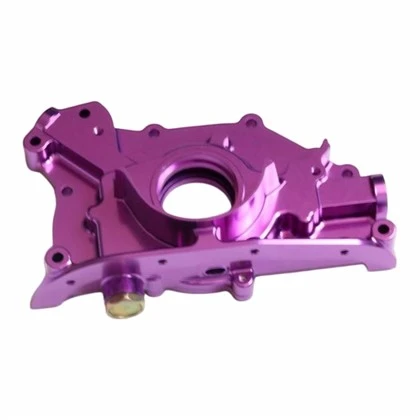
First, you need to start with the foundation. Before you even think about tuning software or boost levels, you have to make sure the engine is mechanically sound. A lot of guys skip this and wonder why their tune goes sideways. When I take on a 1JZ build, the first thing I do is a full compression test. Stock 1JZs (whether the 2.5L 1JZ-GE or the 2.5L turbo 1JZ-GTE, which is the popular one for tuning) should have consistent compression across all cylinders—usually around 170-190 PSI, with less than 10 PSI difference between any two cylinders. If compression is low, you’ve got rings, valve, or head gasket issues to fix first. I also do a leak-down test, because compression can hide problems that a leak-down test catches—like bad valve seals or worn piston rings that don’t show up in a standard test.
Next, the basics of internal components. Most stock 1JZ bottom-ends are surprisingly strong, but that doesn’t mean you can ignore upgrades if you’re pushing big power. The stock forged crankshaft is good for well over 500 whp, and the connecting rods are forged steel in the GTE version, which is reliable up to around 600 whp. The weak point is usually the stock pistons if you’re going above that—hypereutectic pistons don’t handle high cylinder pressures or detonation well. If your build is targeting 700+ whp, I always recommend upgrading to forged pistons. I source high-quality forged pistons for my builds from trusted suppliers, because cutting corners here is how you get a spun bearing or a cracked piston at 4,000 RPM. Also, don’t sleep on the head gasket. Stock head gaskets can blow under high boost, especially on twin-turbo or single-turbo conversions. I always use multi-layer steel (MLS) head gaskets for any tuned 1JZ over 400 whp—they hold up to heat and pressure way better than the stock paper composite ones.
Once the engine is mechanically sorted, it’s time for supporting mods. The 1JZ loves to breathe, so airflow is key. The stock intake and exhaust are restrictive for tuned applications. For intake, a high-flow air filter and a 3-inch cold air intake are non-negotiable for most builds. I also recommend upgrading the throttle body if you’re pushing over 500 whp—stock 60mm throttle bodies start to become a bottleneck at higher RPM. For exhaust, a 3-inch exhaust manifold (or 3.5-inch if you’re going all-out) and a full 3-inch exhaust system with high-flow catalytic converters (or straight pipes for off-road use) make a huge difference. The stock exhaust manifold is cast iron and can crack under boost, so an aftermarket tubular manifold not only flows better but is more durable. Also, don’t forget the fuel system. The stock fuel injectors and fuel pump are only good for around 350 whp. If you’re pushing more than that, you’ll need high-flow injectors (usually 550cc or 720cc for 400-600 whp) and a high-pressure fuel pump. I supply compatible fuel system upgrades that are calibrated specifically for 1JZs, so you don’t have to guess about flow rates.
Now, the most critical part of tuning: the ECU and software. The stock ECU for the 1JZ-GTE is the JZZ30 model, and while it’s capable, it’s often hard to tune for large power gains without an aftermarket ECU. I’ve had great success with Haltech and Apexi ECUs for 1JZ builds, but I’ve also tuned a lot of stock ECUs with stand-alone piggyback systems like the Haltech Elite or the Apexi Power FC. The key here is to start with a baseline map before you turn up the boost. I always do a baseline dyno run first to log stock parameters—airflow, fuel trims, ignition timing, etc.—so I know where the engine is starting from. Detonation is the biggest enemy of any tuned engine, especially the 1JZ, which is an interference engine (so if the timing belt breaks, you’ll bend valves). That means timing is non-negotiable. I usually start with conservative ignition timing around 15-18 degrees of advance at low RPM and gradually adjust as we add boost and airflow. For a street build targeting 400 whp, I keep boost around 12-15 PSI, with fueling adjusted to an AFR of 11.5:1 at full throttle—this is the sweet spot for power and reliability. For a track build pushing 600 whp, we’ll run 20-25 PSI, but we have to adjust the AFR slightly to 11.2:1, and make sure the fuel system can keep up.
Wait, I should mention single-turbo conversions, which are super common for 1JZ owners. A lot of people swap a large single turbo on the 1JZ for more low-end torque and simpler tuning than the stock twin-turbo setup. When I do a single-turbo conversion, I always recommend a Garrett GT3582R or a similar frame turbo—this is a reliable choice that makes great power without spooling too late. The stock twin-turbo setup spools quickly, but it’s less efficient at high RPM. When tuning a single-turbo 1JZ, I adjust the timing for the turbo’s spool characteristics—usually a little less timing at low RPM to prevent lag-related detonation, and more timing as the turbo builds boost. I also upgrade the wastegate—an external wastegate is necessary for single-turbo builds over 450 whp, because the internal wastegate on the turbo can’t handle consistent high boost.
Cooling is another part that’s easy to overlook, but it’s make-or-break for a tuned 1JZ. These engines run hot under load, especially at the track. The stock radiator is small and restrictive. I always upgrade to a dual-core aluminum radiator, which has better heat dissipation. Also, a high-flow water pump and a thermostat that opens at 160 degrees (instead of the stock 180) keep the engine from overheating. For oil cooling, an external oil cooler is non-negotiable for any build pushing over 500 whp. High oil temperatures cause oil to break down, which leads to worn bearings and engine failure. I supply oil coolers that are sized specifically for 1JZ applications, so you don’t get one that’s too small or too big.
Testing and datalogging are the final steps, and they’re just as important as the actual tuning. I never turn a tune over to a customer without doing multiple dyno runs and datalogging every parameter. I check for boost creep, air/fuel ratio fluctuations, ignition knock (using a knock sensor and datalogging the knock retard data), and coolant and oil temperatures. If I notice a cylinder with more knock than others, I’ll adjust the timing for that cylinder individually—even a 1-degree difference can make a huge impact. I also do a road test after the dyno tune, to make sure the engine behaves well at different RPM ranges, from idle to redline. A good street tune should be smooth around town, not just powerful at full throttle.
I’ve seen too many guys ruin their 1JZs by rushing the tune. They’ll install a big turbo, turn up the boost to 20 PSI without adjusting the fuel or timing, and burn a piston within 10 minutes. The 1JZ is durable, but it’s not indestructible. Patience is key. Start small, get the basics right, and gradually increase power as you verify each component can handle it.
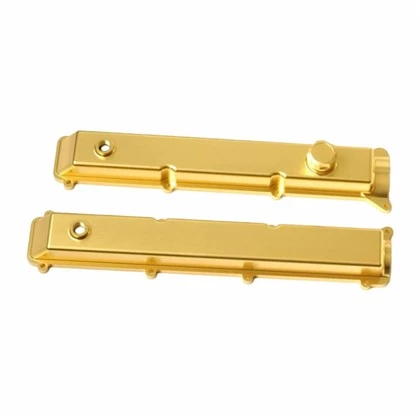
As someone who’s been in the 1JZ parts business for years, I’ve seen first-hand what works and what doesn’t. I supply everything from performance pistons and head gaskets to exhaust manifolds and fuel injectors, all tested on real 1JZ builds. Whether you’re building a mild 350 whp street cruiser or a 700 whp track monster, having the right parts is half the battle. If you’re planning a 1JZ build and need parts tailored to your specific goals, or if you want to learn more about tuning your engine right, feel free to reach out to our team for a consultation. We work with tuners and builders all over to get their 1JZs running reliably and making the power they want.
TOYOTA 2JZ References:
- Toyota 1JZ-GTE Service Manual, Toyota Motor Corporation, 1999
- "1JZ-GTE Tuning Guide", Performance Imports Magazine, Issue 47, 2008
- Haltech Elite Series ECU Application Notes for Toyota JZ Engines, Haltech International, 2021
- "Common 1JZ Failure Points and Solutions", Import Performance Tech Journal, Volume 12, 2019
- Garrett Turbocharger Application Guide for JZ Engine Swaps, Garrett Motion, 2020
RCH Precision Machinery Co., Ltd.
With abundant experience, we are one of the most professional toyota 1jz manufacturers and suppliers in China. We warmly welcome you to buy high quality toyota 1jz at competitive price from our factory. If you have any enquiry about cooperation, please feel free to email us.
Address: No.71 Zhennan 3 road Tong’an Area Xiamen, Fujian, China
E-mail: mike@rchxm.com
WebSite: https://www.rchxm.com/
