If you’re running a CNG daughter station—you know the drill: balancing peak demand for fleets (like delivery vans, school buses, or garbage trucks), keeping equipment from breaking down mid-run, and making sure you’re not leaving money on the table from wasted gas or overworked compressors. I’ve been on this side of the table for 12 years, supplying daughter stations to fleets across the Midwest, and I’ve seen first-hand how teams were winging it before data changed everything. No spreadsheets jammed with handwritten numbers, no guessing when to schedule maintenance, no losing 10% of your daily throughput because a compressor was running at 90% load 24/7. Data doesn’t just “improve operations”—it turns a station that’s treading water into one that hits 98% uptime and cuts operational costs by 15% in 6 months. Let me break down the stuff we actually use at our stations, no fancy enterprise jargon required. CNG Daughter Station

First off, your CNG daughter station’s bread and butter is its compressor. That’s the machine that takes low-pressure gas from a mainline (or a pipeline) and cranks it up to 3,600 psi so trucks can fill their tanks. A lot of stations run their compressors on a static schedule—like turning it on at 6 a.m. and off at 10 p.m.—but fleets don’t follow that. Last year, I had a client in Detroit that ran their compressor 16 hours a day, 7 days a week, and still missed 20% of fill requests from night shift delivery drivers. They were wasting 3 hours of compressor run time every night when no trucks needed gas, and leaving drivers waiting first thing in the morning. The fix? We hooked them up with a cheap (we’re talking $200 a month) IoT sensor that logs every compressor start/stop, fill volume, and even truck arrival times. We crunched 30 days of their data and found that 85% of their fills happened between 6 a.m. to 2 p.m. and 4 p.m. to 9 p.m.—so we shifted compressor runtime to exactly those windows. That cut their compressor’s energy use by 22% in the first month. No more paying to run a machine when it’s barely doing anything.
But it’s not just the compressor. Your station’s storage vessels—those big steel tanks holding pressurized CNG—are another big cost sink. If you’re overfilling them, you’re wasting gas (and extra energy to pump it in). If you’re underfilling, you’re leaving drivers stuck waiting. A lot of operators just set a fixed fill pressure, like 3,600 psi, and call it a day. But what if a truck only needs 2,000 psi for a short route? Pumping it up to 3,600 is overkill, and it wears on the storage vessels’ seals faster. We use data here to adjust fill pressure based on actual fleet demand. For example, a school district we supply has 120 buses that only run 5 hours a day, on a fixed route. Their data showed that 90% of their buses never needed more than 2,800 psi. So we programmed the storage vessels to hold 2,800 psi during the school week, only cranking up to 3,600 psi after school for weekend athletic trips. That reduced seal replacements by 30% and cut storage maintenance costs by nearly $1,200 a quarter. Small changes, big wins.
Now, the part that’s easy to overlook: maintenance. I’ve seen stations with a compressor that’s 5 years old run until it seizes up, then lose 3 days of operation waiting for a part. That’s a $10,000 hit minimum, not to mention the fleet’s lost productivity. Predictive maintenance isn’t some magic trick—we use vibration sensors and temperature data to catch issues before they become failures. Last year, one of our stations in Ohio had a compressor bearing that was starting to wear. The sensor picked up a slight spike in vibration at 2 a.m. on a Tuesday. Our tech didn’t wait for it to break—we swapped the bearing during a slow Sunday shift, no downtime for the fleet. Before we started using data-driven predictive maintenance, that station had an average of 1 compressor failure every 3 months. Now it’s less than 1 a year. The best part? You don’t need a data team for this. The sensors feed into a simple dashboard (we make ‘em custom for our clients) that sends an alert if a part is about to go bad. No guessing, no emergency calls at 7 p.m. when a driver can’t fill up.
Wait, let’s talk about another angle: throughput. A lot of fleets have multiple vehicles filling at once, and if your dispenser is slow, that’s lost time. We track fill times per truck, number of fills per hour, and even how long drivers wait in line. For a delivery company in Chicago, we noticed their peak line was 15 minutes every Friday between 1 p.m. and 2 p.m.—and it was because they only had 2 dispensers, but 28 vans were coming in at once. We adjusted their data to flag when line length hits 10 minutes, so they can shift some drivers to a backup station (one of ours, obviously) instead of waiting. That cut driver idle time by 40% in that window, and the delivery company saved $8,000 a quarter in wasted fuel (idling vans use gas too, duh).
But here’s the thing: data only works if you’re using the right kind. A lot of suppliers will push a $10,000 system that tracks every single metric under the sun, but you don’t need that. For a small to mid-sized daughter station, you just need the stuff that moves the needle. We focus on three core data sets for our clients: compressor runtime, storage pressure, and fill demand. No extra fluff. And we train our clients to look at the data, not just stare at numbers. For example, if your compressor is running more than 10% over its expected run time, that’s a sign you might need a second dispenser, or adjust your fleet’s schedule. It’s not rocket science—it’s pattern recognition.
I also need to call out the mistake a lot of new station owners make: ignoring historical data. Last year, a guy in Indianapolis bought a used daughter station and tried to run it like a mainline station. He didn’t look at 6 months of past data, so he ran his compressor 24/7, and his storage tanks were always at max pressure. His energy bill was $12,000 a month, vs. the average for a station his size which is $8,500. We went through his old logs and found that 70% of his fills happened between 5 a.m. and 7 a.m. and 3 p.m. to 5 p.m. We adjusted his runtime, and his bill dropped to $8,200 that next month. That’s the power of using what’s already happened to fix what’s now.
Another underrated use case: compliance. CNG stations have to report to pipeline regulators on gas volume, pressure, and emissions. Before data tracking, operators would manually log numbers, which is error-prone and takes 5 hours a week. Now, our sensors auto-sync that data to the compliance portal, so they don’t have to do anything. No more fines for wrong numbers, no more wasting time on paperwork. That’s a small win that adds up to 20+ extra hours a month for your team to focus on the stuff that matters.
I know some of you are thinking, “This sounds like a lot of work.” But here’s the kicker: we do all the heavy lifting for our clients. We install the sensors, set up the dashboards, train your team to use the data, and even tweak the system as your fleet changes. For example, if a client adds 20 new delivery vans, we update the demand data so the compressor and storage adjust automatically. It’s not a one-time setup—it’s a system that grows with you.
At the end of the day, a CNG daughter station’s job is simple: get gas to fleet drivers quickly, reliably, and cheaply. Data doesn’t just help you do that—it helps you turn your station from a cost center to a profit center. You’re not wasting energy on unnecessary runs, you’re not replacing parts prematurely, you’re not losing drivers to long lines. All that adds up to a station that runs smoother, makes more money, and keeps your fleet happy.
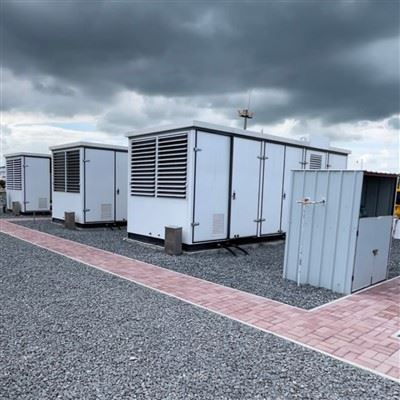
If you’re running a daughter station and you’re still winging it with schedules or maintenance, let’s talk. We’ll walk you through what data you actually need, how to set it up without breaking the bank, and what kind of savings you can expect. No sales pitch, no jargon—just real talk about how to make your station work better. Reach out to us to start a conversation about optimizing your CNG daughter station with data.
CNG Mother Station References
- U.S. Department of Energy, Office of Energy Efficiency & Renewable Energy. (2022). CNG Station Operations and Maintenance Best Practices.
- Natural Gas Vehicles for America. (2021). Data-Driven Optimization of Mid-Sized CNG Refueling Stations.
- International Association of Public Transport. (2023). Predictive Maintenance for Compressed Gas Equipment in Transit Fleets.
- Global Gas Infrastructure Association. (2022). Energy Efficiency Metrics for Small-Scale CNG Refueling Facilities.
Qingdao Lenado Intelligent Equipment Co., Ltd.
Qingdao Lenado Intelligent Equipment Co., Ltd. is one of the most experienced CNG daughter station manufacturers and suppliers in China. We have world-leading production equipment and strong manufacturing capabilities. Please rest assured to wholesale bulk customized CNG daughter station from our factory.
Address:
E-mail: genkegasstation@163.com
WebSite: https://www.cnggasstation.com/
