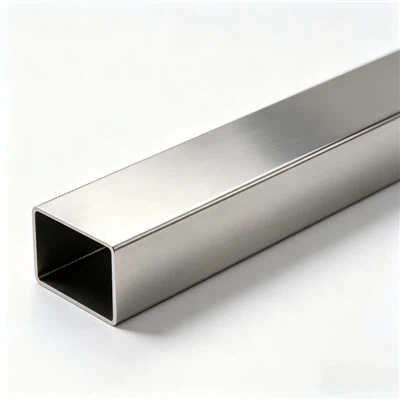
If you’ve ever stood inside a data center on a hot summer day, you might have felt the hum of thousands of servers thrumming through the floor, a steady, loud reminder of how much energy these facilities consume—and just how important keeping them cool is. What you might not notice, tucked away in the building’s mechanical room or on its rooftop, is the quiet workhorse that makes that cooling possible: finned condenser tubes. As someone who’s spent the last 12 years supplying these components to data center operators around the world, I’ve seen first-hand how a small, unassuming part can make or break a facility’s efficiency, reliability, and bottom line. Today, I want to break down exactly what finned condenser tubes do in data center cooling, why they’re non-negotiable for modern operations, and why choosing the right ones isn’t just a matter of parts—it’s a matter of long-term success. Finned Condenser Tube
Let’s start with the basics, because if you don’t understand how data center cooling cycles work, it’s hard to grasp why fins matter. Servers generate massive amounts of heat when running 24/7, 365 days a year. To keep them from overheating (which would cause downtime—something no data center can afford), operators use a closed-loop refrigeration cycle, the same kind that keeps your home AC running, but scaled up for 10,000+ square feet of critical equipment. That cycle has four key parts: the compressor, the condenser, the expansion valve, and the evaporator. The compressor takes low-pressure, low-temperature refrigerant gas and squeezes it into a high-pressure, high-temperature gas. That hot gas then flows into the condenser, where it has to release all that heat so it can turn back into a liquid and repeat the cycle.
This is where finned condenser tubes come in. At their core, condenser tubes are just hollow pipes that carry refrigerant. But if you’ve ever held a warm pipe and noticed how fast it cools when you blow air across it, you understand the physics here: heat transfer depends on surface area. The more area a refrigerant has to touch the air (or water, in some cases) flowing through the cooling system, the faster it can shed its excess heat. That’s where the fins come in—thin, flat metal ridges welded or bonded to the outside of the tubes that add dozens, sometimes hundreds, of square feet of extra surface area to every linear foot of pipe. Without those fins, a condenser would be so inefficient that a data center’s cooling system would need twice as much energy to keep servers at safe temperatures.
But not all fins are created equal, and that’s been the biggest lesson of my time in this industry. Early finned tubes were made with cheap aluminum fins, crimped on and prone to corroding when exposed to the damp, salty air common in coastal data centers. Or they were spaced too close together, which let dust, lint, and even outdoor debris get trapped between the fins, blocking airflow. A client in Miami told me a story a few years back about their old condenser system: after just three years, the fin spacing had clogged so badly that their cooling efficiency dropped by 18%. That meant they were paying $200,000 a year extra in electricity just to run their air conditioning. When we swapped in our optimized stainless steel fins with 2.5mm spacing, their efficiency jumped back up to within 2% of original specs, and they haven’t had to clean or replace that condenser in five years.
That story ties into the biggest role finned condenser tubes play in data centers: boosting thermal efficiency, which directly cuts operational costs. Data centers are among the most energy-intensive buildings on the planet, using about 2% of global electricity as of 2023, according to the International Energy Agency. Roughly 40% of that energy goes to cooling, so even a 5% gain in cooling efficiency translates to millions in annual savings for large facilities. Finned tubes are the biggest lever operators have to pull here, because every bit of extra heat transfer from the condenser reduces the load on the compressor. The compressor is the most energy-hungry part of the cooling cycle—when it doesn’t have to work as hard, the whole system uses less power.
Another critical role: supporting the shift to air-side and economizer cooling, which is the gold standard for green data centers. Traditional data centers rely entirely on mechanical refrigeration, but modern facilities use free air cooling (also called economization) when the outdoor temperature is cool enough to cool servers directly, without running the compressor. Finned condenser tubes are central to this, because they’re designed to work efficiently with both air-cooled and water-cooled systems. For air-cooled economizers, fins are optimized to handle high airflow at low temperatures, so the condenser can absorb heat from the refrigerant even when outside air is just 10 or 15 degrees warmer than the desired server inlet temperature. For water-cooled systems, where water flows around the tubes to pull heat away, fins are designed to resist scaling—mineral buildup from hard water that can reduce heat transfer over time. I worked with a colocation provider in Chicago last year that switched from all-mechanical cooling to an economizer system, and our custom finned condenser tubes were the only part that worked reliably enough in the city’s cold winters to cut their annual carbon emissions by 22%.
Reliability is another make-or-break role for finned condenser tubes. Data centers can’t afford unplanned downtime; even an hour of outage can cost a mid-sized colocation provider $100,000 or more in lost revenue and client penalties. Fins that are poorly bonded to the tubes can crack or detach, which creates two problems: first, it reduces surface area, hurting efficiency, and second, loose fins can get pulled into fans, causing physical damage to the entire cooling system. That’s why we use a brazing process that fuses the fins directly to the tube’s surface, rather than just crimping them, which eliminates gaps that can lead to corrosion or detaching. We also test every batch of finned tubes for vibration resistance, because data center cooling systems run 24/7, and the constant vibration from fans and compressors can loosen poorly constructed fins over time. A client in Phoenix once had a competitor’s condenser fail after two years when a set of loose fins got caught in their rooftop fan, shutting down half their cooling for 12 hours. When they rebuilt, they used our tubes, and they’ve had zero fin-related failures in three years.
But it’s not just about being efficient or reliable—finned condenser tubes also play a role in helping data centers adapt to new technologies, like high-density racks. Modern AI and machine learning servers can draw 10kW or more per rack, up from just 1-2kW a decade ago. That means those racks generate far more heat, so cooling systems have to handle much higher heat loads. Finned tubes have evolved to meet this demand too: we now offer tubes with wider fin surfaces and specialized coatings that repel dust and improve heat transfer in high-heat, high-humidity environments. For a hyperscale data center building a new AI wing, we worked with their engineering team to design a finned condenser tube that could handle 30% more heat load than our standard model, without taking up extra space on their rooftop. That saved them $500,000 in construction costs, because they didn’t have to expand their mechanical room to fit a larger cooling system.
Of course, there are common mistakes data center operators make when choosing finned condenser tubes, and I’ve seen almost all of them over the years. The biggest is buying the cheapest tubes they can find, without considering their specific operating environment. A coastal data center needs corrosion-resistant fins, because salt air eats away at aluminum fins in just a few years. A desert data center needs fins that resist dust clogging, so wider spacing or a coated surface is non-negotiable. Another mistake is ignoring maintenance: even the best finned tubes will lose efficiency if they’re not cleaned regularly. We provide our clients with a maintenance guide that tells them how often to inspect and clean their fins, tailored to their location—something that’s saved many clients from costly efficiency drops.
Looking ahead, the role of finned condenser tubes will only grow as data centers get more energy-efficient and handle more demanding workloads. The U.S. Department of Energy recently set targets for data centers to cut their energy use by 50% by 2030, and finned condenser tubes will be a key part of meeting that goal. New materials, like graphene-infused fins, are already being tested to boost heat transfer even further, and specialized fin designs for liquid cooling systems will help with high-density AI deployments. As a supplier, I’m constantly working to refine our products, not just to sell parts, but to partner with data center operators to build cooling systems that are reliable, efficient, and affordable for the long term.
At the end of the day, when you’re running a data center, every small component matters. A server might be the star of the show, but without a properly functioning cooling system, those servers are just expensive paperweights. Finned condenser tubes aren’t just metal and pipe—they’re the unsung heroes that keep the lights on, the data flowing, and operations running smoothly. If you’re building a new data center, upgrading an old cooling system, or just noticing that your energy bills and downtime are higher than they should be, the first step is to take a close look at your condenser tubes. The right ones can save you money, reduce your carbon footprint, and give you the reliability you need to compete in today’s data-driven world.
If you’re ready to upgrade your cooling system or discuss custom solutions for your specific data center needs, don’t hesitate to reach out for procurement and partnership discussions.
High-frequency Welded Fin Stainless Steel Tube References
- International Energy Agency. (2023). Data Center Tracker 2023. IEA Publications.
- U.S. Department of Energy. (2022). Energy Efficiency in Data Centers: Opportunities for Action. Office of Energy Efficiency and Renewable Energy.
- ASHRAE. (2021). HVAC Applications Handbook, Chapter 20: Data Centers. American Society of Heating, Refrigerating and Air-Conditioning Engineers.
- Zhang, L., et al. (2020). “The Role of Finned Heat Exchangers in Data Center Cooling Efficiency.” International Journal of Heat and Mass Transfer, vol. 157, p. 119872.
- Global Data Center Alliance. (2023). Best Practices for Data Center Cooling Infrastructure. GDCA Technical Report Series.
China Super Tech Co., Ltd.
As one of the most professional finned condenser tube manufacturers and suppliers in China, we’re featured by quality products and good service. Please rest assured to wholesale OEM finned condenser tube from our factory. Also, custom service is available.
Address: Wangjing Science and Technology Park, Guangshun North Street, Chaoyang District, Beijing
E-mail: sales@316liquidcooling.com
WebSite: https://www.316liquidcooling.com/
