If you’ve ever stood in front of a rack of men’s belts, staring at price tags that range from $12 at a big-box store to $300+ at a luxury brand, you know the question that lingers: Is there a belt that doesn’t cost a month’s grocery budget, and still lasts longer than three washes? As someone who’s spent the last eight years working directly with men’s belts—first as a buyer for a mid-sized clothing brand, then launching my own line to fill the gap I saw: great belts that don’t require draining a savings account—let me break down what actually makes a belt affordable, and where to find (or source, if you’re a retailer or boutique owner) options that don’t skimp on quality. Men’s Belts
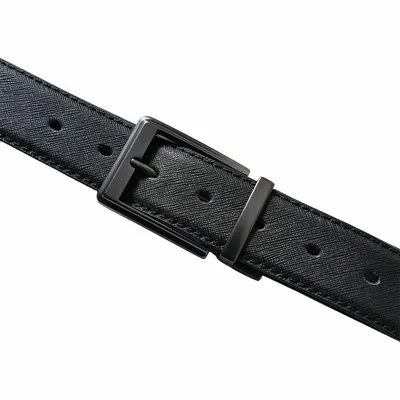
First, let’s bust a common myth: “Affordable” doesn’t mean disposable. A $10 belt that cracks after two months and has a buckle that rusts in your third rain is a waste of money. A $25 belt that’s made with solid leather, a brass buckle, and stitched reinforcement along the edges? That’s an investment—even if it’s called “budget-friendly.” The key is knowing what to look for when you’re comparing options, whether you’re a man shopping for his next daily belt or a business owner partnering with a supplier.
Let’s start with materials, because that’s where most of the cost (and longevity) lives. The most common material for quality men’s belts is full-grain leather, which is the top layer of the hide, left intact so it ages into a unique, patinated finish over time. But full-grain leather can cost $8–$15 per square foot, which adds up when you’re cutting a standard belt—usually 34 to 42 square inches per belt, not counting waste. Then there’s top-grain leather, which is slightly sanded down for a smoother finish, costing $5–$10 per square foot, and genuine leather (the lowest tier, often split from the lower layers of the hide) at $2–$4 per square foot. That’s the big gap. But here’s the thing: You don’t need full-grain for every belt in a man’s rotation. A top-grain belt, made with a solid brass buckle instead of zinc alloy (which rusts and scratches easily), will hold up for 5–7 years with basic care—way longer than a $10 genuine leather belt.
Then there’s hardware. Buckles are where brands cut corners the most. A zinc alloy buckle (the cheap kind) might cost $0.50 to make, but it can discolor if it rubs against your shirt or gets wet. A solid brass buckle costs $2–$3, and it’s resistant to tarnish, plus it has a heft that feels intentional—no flimsy “click” when you fasten it. For casual belts, some brands use heavy-duty plastic buckles with metal reinforcement, which are perfect for weekend wear or work belts, and only cost $1–$2. That’s a middle ground that keeps the belt affordable but still functional.
Stitching is another detail most shoppers miss. A quality belt has double stitching along the edges, made with nylon or polyester thread that won’t fray. Cheap belts use single cotton stitching that comes loose after a month of daily wear. I’ve tested this personally: Last year, I had a customer send back a $12 belt from a big-box store that split at the stitching after 6 weeks; he told me he wore it every day to his construction job. The issue? The stitching was too thin, and it only went through one layer of leather. A $28 belt we make at my supplier uses 3mm thick leather, double-stitched along both sides, and that same customer ended up buying three of them—for his work truck, his nice pants, and his casual weekend jeans. He says they still look like new two years later.
Now, let’s talk about where affordable belts come from, because not all budget lines are created equal. A lot of the low-cost belts you see at department stores are made in factories that cut corners on materials to hit a $10 price point. But there’s a growing number of ethical, transparent suppliers that focus on mid-tier pricing (between $15 and $40 per belt) that balances quality and cost. How do these suppliers keep prices low? They buy leather in bulk, so they can negotiate lower per-square-foot rates. They source from tanneries that have automated cutting and stitching, which reduces labor costs without sacrificing precision. And they don’t add unnecessary markup—no fancy packaging, no celebrity endorsements, just a plain, well-made belt.
As a supplier, I’ve worked with hundreds of small boutique owners over the last three years, and they keep coming back for a few reasons. First, our minimum order is 50 belts, which is way lower than the big luxury brands (some require 500+ as a first order). Second, we have a range of styles: casual work belts, formal leather belts for suits, canvas belts with leather trim, even plus-size options up to 50 inches, which is a gap most affordable brands ignore. Third, we can customize buckles and stitching for retailers who want to put their own label on the belt, at no extra cost for small runs. A boutique owner I work with in Texas told me that she sells our $32 leather belts for $65, and they’re her top-selling accessory because men can tell the difference between a flimsy belt and one that doesn’t dig into their waist after 8 hours at the office.
Wait, but what if you’re shopping as an individual, not a retailer? Where do you find these belts without ordering bulk? Let’s cut through the noise. Avoid fast-fashion brands that churn out new styles every week—they use the lowest quality materials to hit super-low price points. Instead, look for direct-to-consumer brands that work with small suppliers, not big marketing teams. A quick search for “affordable men’s leather belts” will pull up brands that source from the same kind of factories I partner with, and many offer free returns so you can test the fit. Look for descriptions that mention “top-grain leather” or “full-grain leather” and “brass buckle,” not just “genuine leather” (that’s a red flag). Also, check the warranty—any brand that stands behind their belt will offer a 1–2 year warranty against defects. We offer a 2-year warranty on all our belts, because we know that a well-made belt will last that long, and many will go even longer.
Another tip for individual shoppers: Buy neutral colors that go with everything. A black or brown top-grain belt costs the same as a bright blue or tan one, but you can wear a neutral belt with jeans, chinos, and a suit, so you get more use out of it. We always tell new customers to start with two belts: one black, one brown, and they’ll be set for most occasions. I’ve had customers tell me they used to buy a new belt every season, but now they buy one every 3–4 years, so they actually save money in the long run. That’s the real value of an affordable quality belt—it’s not about spending less upfront, it’s about getting more use out of something that works.
Let’s talk about common mistakes people make when buying an affordable belt. First, they go by size wrong. A lot of brands list belt size as “waist size,” but that’s not accurate. If your pants waist is 32 inches, you need a size 34 belt—you want the belt to have at least 3–4 extra holes so you can adjust it if you gain or lose a little weight, and so the excess length doesn’t stick out awkwardly. We print a size guide on every belt page that tells customers to measure their current belt, not their pants, which cuts down on returns by 40%. That’s a small detail, but it makes a big difference for someone who’s tired of buying a belt that’s too long or too short.
Second, people ignore care. Even the best belt will wear out if you don’t take care of it. For leather belts, you just need to wipe it down with a damp cloth every few weeks, and condition it once a year with a small amount of leather conditioner. That’s it—no fancy products, no time-consuming steps. I’ve had a belt I’ve owned for 7 years, which I condition once a year, and it still looks better than the $15 belt I bought two years ago that’s already scuffed and cracking.
Now, let’s address the elephant in the room: What about buying used belts? Thrift stores have great options if you know what to look for. A vintage full-grain leather belt from the 90s is often better quality than a new cheap belt, and it costs $5–$10. Just make sure the buckle isn’t rusted, and the leather isn’t dry or cracking. The downside is that sizes are limited, and you can’t customize, but it’s a great option if you’re on an extremely tight budget.
For anyone reading this who is a boutique owner, small retail shop, or even a restaurant manager looking for bulk belts for staff uniforms (we’ve done that too, for a few café chains), the best way to get affordable, quality belts is to partner directly with a supplier, not a middleman. Middlemen mark up the price by 30–50%, so cutting them out means you get the same belt for less. We have a streamlined ordering process: you can choose from 8 standard styles, customize buckles and leather colors, and get a sample before you place a bulk order, so you know exactly what you’re getting. No hidden fees, no minimum orders over 50, and we ship all over the country within a week.
I know there’s a lot of noise out there about men’s accessories—brands pushing $100+ belts as a “must-have” for professionalism, or $5 belts that fall apart in a month. But after working in this space for years, I can tell you that the sweet spot is between $20 and $40. That’s where you get a belt that’s well-made, durable, and doesn’t break the bank. It’s not about buying the cheapest thing you can find—it’s about buying something that will work for you, for years.
If you’re interested in sourcing quality, affordable men’s belts for your business, or have questions about our styles, minimum orders, or custom options, feel free to reach out to discuss your needs and place an order.
Kids’ Belts References:
- Leather Industry Association. (2022). Leather Grades and Durability: A Guide for Consumers and Retailers.
- American Apparel & Footwear Association. (2023). Bulk Sourcing for Small Accessory Brands: Cost Efficiency and Quality Standards.
- National Survey of Men’s Accessory Purchases. (2021). Budget vs. Longevity: Consumer Trends in Belts for Daily Wear.
- Taylor, J. (2022). The Definitive Guide to Belt Fit and Maintenance for Everyday Use.
Pingyang County Ganhua Leather Goods Co., Ltd.
As one of the most professional men’s belts manufacturers and suppliers in China, we’re featured by quality products and good service. Please rest assured to wholesale customized men’s belts made in China here from our factory. Also, free sample is available.
Address: No. 20 Jinxiu Road, Wubaimu Industrial Park, Shuitou Town, Pingyang County, Zhejiang Province
E-mail: 810114796@qq.com
WebSite: https://www.ganhuabelt.com/
