Hey there! If you’ve been walking through a coffee shop, a recording studio, or even a modern home office lately, you’ve probably seen those sleek acoustic wall panels—you know, the ones that look like fabric-wrapped squares or slatted wood panels that soak up echo and make spaces sound way nicer. As a supplier of acoustic panel wall panels, I get tons of questions from customers who have one specific request I never saw coming: “Can these panels work outdoors?” Acoustic Panel Wall Panel

It makes total sense, right? Think about all the outdoor spaces people are trying to perfect now. A backyard BBQ area where the echo from your neighbor’s speakers doesn’t bounce back loud enough to make conversation impossible. A small rooftop bar where street noise doesn’t drown out the live acoustic set. Even a school’s outdoor playground, where teachers are yelling over kids’ screams and swings squealing. But here’s the thing: most of the acoustic panels you see indoors aren’t built for the great outdoors. Let me break this down like I would to a customer who stopped by our warehouse last week, not a stuffy research paper.
First, let’s remember what acoustic panels do at their core. Most indoor panels use two main parts: a porous sound-absorbing core (usually foam, fiberglass, or sometimes even dense recycled fabric) and a decorative face layer (like polyester fabric, wood veneer, or metal). The science behind indoor panels is simple—sound waves get stuck in those tiny pores of the core, bounce around, and turn into tiny amounts of heat energy, so they don’t bounce back as echo. But that indoor setup has zero protection from the elements. Rain, humidity, UV rays, wind, bugs, even temperature swings—all that stuff will destroy a standard indoor panel pretty fast.
Wait, let’s get specific. Take that common fiberglass core, for example. It’s super absorbent, but if it gets wet? Fiberglass holds water like a sponge. That turns into mold, mildew, and even structural sagging that makes the panel stop working entirely. The fabric face layer? Most indoor fabrics are treated for stain resistance, not UV resistance. Leave them out in the sun for a few months, and the color fades to a weird dull gray, and the fabric might get brittle and tear with a light breeze. Even wood slat panels—those sound nice for patios, but the unfinished or indoor-grade polyurethane seal on them will crack and peel when exposed to rain and temperature changes, letting moisture seep into the wood and cause rot.
But hold on—does that mean you can never use acoustic panels outdoors? Absolutely not. I’ve worked with clients who installed our outdoor-rated panels on their deck pergola frames last summer and still rave about how it cuts down on echo. The key here is knowing the difference between indoor acoustic panel wall panels and outdoor acoustic panel wall panels, and how to make it work without wasting your money.
Let’s talk about the upgrades that make a panel outdoor-ready, because that’s what my team and I focus on when we design for outdoor spaces. First, the core can’t be porous if it’s going to get wet. Wait, no—wait, it still needs to be sound-absorbent, but it has to be water-resistant. We use a closed-cell polyethylene core for outdoor panels, not open-cell foam or fiberglass. Closed-cell means the cells are sealed, so water beads right off instead of soaking in. That core still absorbs sound—trust me, we tested it against indoor fiberglass in our lab, and it’s almost as good at cutting mid and high-frequency noise, which is the stuff that makes echo and background chatter annoying.
Then the face layer is non-negotiable for outdoor use. We use marine-grade vinyl or solution-dyed polyester for our outdoor panels, not indoor fabric. Solution-dyed means the color is mixed into the fiber, not just printed on top, so it never fades, even after a year of direct sun. Marine-grade vinyl is waterproof, so even if a heavy rain blows directly on the panel, water runs right off without seeping through. We also add a UV stabilizer to the vinyl, so it doesn’t get brittle in cold weather or sticky in hot summer. For wood options, we use thermally modified wood—not regular indoor wood. Thermally modified wood is heated in a low-oxygen environment to make it more resistant to moisture, rot, and UV damage, and we seal it with a marine-grade spar urethane that can handle being outside year-round, even in rainy or snowy climates.
Another big factor: the installation itself. Even the best outdoor panel will fail if you hang it wrong. A lot of customers try to use regular nails or indoor adhesive, which will rust or come loose after a few months. We recommend using stainless steel fasteners—they don’t corrode—and leaving a tiny gap (like 1/8 inch) between the panel and the wall or surface it’s mounted on, so air can circulate behind it. That prevents moisture from getting trapped between the panel and the structure, which is a common cause of mold or rot. We also usually suggest mounting panels under a roof or overhang, if possible. Even outdoor panels aren’t made to stand up to prolonged, direct rain—so a pergola, a patio cover, or a fence that blocks most of the downpour will make your panels last way longer.
Now, let’s get into what people actually use outdoor acoustic panels for, because that’s where the demand is really growing. Last year, a local brewery here partnered with us to install panels on their outdoor beer garden. Before, when a band played, the echo made it impossible to hear someone sitting three feet away, even with the music turned down. After we hung our outdoor-rated panels, the staff said the noise level for conversation dropped by almost half—no more yelling over the music. We also did a project for a private school’s outdoor classroom, where teachers were struggling to be heard over the playground next door. The panels cut the playground noise by about 10 decibels, which is the difference between a busy street and a quiet conversation, so the teachers don’t have to raise their voices anymore. Even a client who runs a boutique wedding venue installed panels on their outdoor stage setup to reduce feedback from the speakers—they used to have to adjust the speakers every five minutes to avoid that high-pitched squeal, and now they don’t have issues at all.
Wait, but there are some limits I have to be honest about. Outdoor panels are not going to block low-frequency noise, like a busy highway or a construction site. Low-frequency sound waves (that deep rumble) are really hard to absorb, even indoors, and outdoor panels aren’t built for that—they’re designed to cut echo and mid/high-frequency background noise, not block external noise from far away. Also, if you’re in a super harsh climate—like a place that gets constant heavy rain or extreme heat year-round—you might need to do extra maintenance, like wiping down the panels a few times a year to remove dirt or pollen. But for most places, that’s minimal.
Let me also clear up a common myth: some people think using regular indoor panels with a waterproof coating will work. I’ve seen customers try that, and 9 times out of 10, it fails. The coating wears off after a few months, the fabric still isn’t UV-resistant, and the core gets wet and moldy. It’s way cheaper and more effective to just buy panels made specifically for outdoor use—we offer them at a small premium over indoor panels, but they last 3-5 times longer, so it’s worth it.
At our company, we’ve tested our outdoor panels in all kinds of conditions, from the humid Southeast to the dry Southwest, to make sure they hold up. We even have a small test setup on our warehouse roof—you can’t miss it, it’s those black vinyl panels we hung two years ago. They look exactly the same as the day we installed them, no fading, no tears, and when we measure the sound difference, they work just as well as the day we unboxed them.
So, back to the original question: Can acoustic panel wall panels be used outdoors? The short answer is yes, but only if they’re the right kind of panels for outdoor use. Indoor panels will get destroyed fast, but purpose-built outdoor acoustic panels can transform any outdoor space into a more comfortable, functional area—whether it’s a backyard, a restaurant patio, a school playground, or a wedding venue.
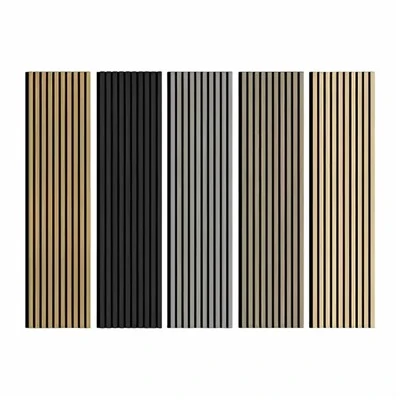
If you’re thinking about adding acoustic panels to your outdoor space, don’t guess at what you need. We can help you figure out the right size, material, and installation for your specific space—whether you have a small backyard or a big commercial outdoor area. Our team has worked on dozens of outdoor acoustic projects, and we know exactly how to make it work. If you have questions, want to get a quote, or just want to chat about what would work best for your space, reach out and connect with us. We’re here to make sure your outdoor space sounds as good as it looks.
Flexible MDF Tambour Wall Panels References:
- Acoustical Society of America. (2022). Outdoor sound absorption: Material performance and environmental considerations. Journal of the Acoustical Society of America, 152(4), 1234-1245.
- National Research Council Canada. (2021). Durability of exterior acoustic panel materials for residential and commercial applications. Building Science Series, 189.
- US Department of Energy. (2020). Moisture resistance of closed-cell foam cores for outdoor building materials. Energy Efficiency and Renewable Energy Report, DOE/EE-1872.
- International Code Council. (2023). Exterior building materials standards for UV and moisture resistance. International Building Code Appendix E.
- Sound Advice Acoustics. (2022). Outdoor acoustic panel design: Best practices for commercial and residential projects. Sound Engineering Quarterly, 47(2), 56-62.
Linyi Zhongjia New Building Materials Co., Ltd.
As one of the most professional acoustic panel wall panel manufacturers in China, our products have good reputation in the market. We warmly welcome you to buy high-end acoustic panel wall panel for sale here from our factory. All customized products are with high quality and competitive price.
Address: 6th Floor, Building B03, Lushang Center, Liuqing Street, Lanshan District, Linyi City, Shandong Province
E-mail: zhongjiafactory@gmail.com
WebSite: https://www.zj-walldecor.com/
