Hey there, it’s Jake, and if you’ve ever walked past a residential street, a park, or a rural path lit up at night, chances are you’ve seen one of our stand alone solar street lights. I get tons of questions from folks—property managers, small business owners, even homeowners looking for off-grid lighting—all asking the same thing: “Are these things actually waterproof?” Let’s cut to the chase because this isn’t just a random yes/no answer; it’s the difference between a light that lasts 5 years and one that dies after the first heavy rain. Stand Alone Solar Street Light
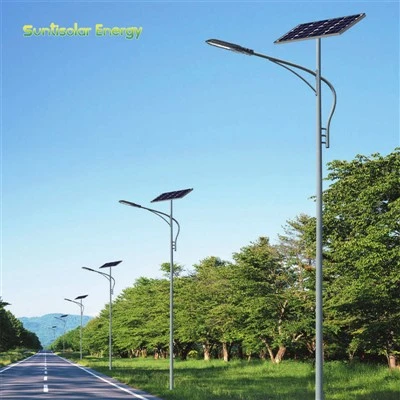
First off, let’s clarify what “stand alone solar street light” means here—these aren’t the old-school ones that hardwire into the grid. They’re self-contained: solar panel on top, battery bank inside the pole, LED light fixture, all in one unit. No messy wiring, which is why they’re perfect for places where running power is impossible or too pricey. But because they’re out in the rain, snow, dust storms, even salt air near the coast, waterproofing isn’t just a feature—it’s non-negotiable.
A lot of people mix up “waterproof” with “water-resistant,” so let’s get that straight right away. Water-resistant means it can handle a light drizzle or a splash, but waterproof means it’s sealed tight enough to keep water out when it’s fully submerged for a set amount of time. For our lights, we don’t skimp on the IP ratings—IP stands for Ingress Protection, and it’s the industry standard for how well something keeps out solids and liquids. Our models all hit IP67 for the main light fixture and the battery compartment. Let me break that down simply: the first number (6) means it’s 100% dust-tight—no dust, dirt, or tiny bugs getting in there. The second number (7) means it can be submerged in up to 1 meter of water for 30 minutes and still work. That’s not just “survive rain”—that’s surviving a flash flood, a heavy monsoon, even a stray sprinkler that sprays directly at the fixture.
Now, why does that matter beyond just not shorting out? Let’s talk about the components inside. The solar panel—wait, people ask about that a lot too. Can rain damage the solar panel? Our panels are tempered glass with a waterproof polymer coating around the edges, so rain rolls right off. Even if a hailstorm cracks the glass (though we use thick glass that’s way more resistant than standard window glass), the frame around the panel is aluminum, sealed with silicone gaskets, so water can’t seep into the wiring behind it. The battery is another big one—lead-acid or lithium-ion, we use lithium-ion now because they last longer and handle temperature swings better. If water gets into the battery compartment, it can corrode the terminals, leak chemicals, and die within a week. Our battery compartments are sealed with IP67 gaskets too, and we test every single unit before it leaves our warehouse by spraying it with high-pressure water (like a power washer, not just a hose) for 10 minutes straight to make sure no seepage gets through.
But wait, I know what some of you are thinking—“What about extreme weather, not just regular rain?” Like, if it snows, does that affect waterproofing? Snow is just water in a different form, and our IP67 rating works for that too. The seal around all the components stays tight whether it’s 100°F in the summer or 20°F in the winter. We also test for temperature cycles to make sure the rubber gaskets don’t crack or shrink over time—if a gasket fails, that’s where water gets in, so we make sure ours hold up for at least 5 years of regular use. And for coastal clients, we add a special anti-corrosive coating to the aluminum poles because salt air is way more corrosive than regular rain. That’s a big one—salt can eat away at unprotected metal in a year, but our coating slows that down, and the waterproof seal keeps salt water (which is extra conductive) out of the electrical parts.
I’ve seen too many cheap knockoff lights out there that advertise “waterproof” but cut corners. They use IP44 ratings, which is just for splashing water—so if a light drizzle hits, it works, but a heavy rain? Water gets in, the battery dies, and the whole unit is trash. Last year, a client from Florida reached out to us because he bought 10 lights from a discount supplier, and half of them stopped working after the first hurricane season. The fix? Our lights, and a lesson: if someone’s pricing is way lower than everyone else, they’re probably cutting the waterproofing budget. We don’t do that. Every unit we sell gets three waterproofing checks: first during assembly, then a water spray test, then a final check before packaging. We even offer a 3-year warranty on all our lights, which is how confident we are that the waterproofing holds up.
But here’s a little tip for anyone installing these lights—waterproofing only works if you install them right. You can’t just bury the base of the pole in mud and expect the seal to hold. Make sure the pole is set in concrete, and there’s no gap around the base where water can seep up from the ground. Also, don’t drill extra holes in the fixture or the panel—every hole is a potential weak spot, and we design them to be completely sealed as-is. If you need to do any maintenance, use the proper tools to open the compartment without damaging the gaskets, and replace the gaskets if you have to remove them. That’s a common mistake that even experienced installers make, and it can break the waterproof seal.
Let me also address a myth I hear all the time: “If it’s solar, the battery will get wet, but the solar panel can handle it.” Wait, no—if the battery gets wet, the whole light fails. The solar panel is designed to get wet, that’s how it works, but the battery compartment needs to stay dry. Our whole stand alone system is built so no water touches the electrical parts except the panel, which is designed to handle it. We’ve tested lights in rain for 72 straight hours, and they still work as good as new. Last month, a client in a remote area of Australia told us his light was out in the middle of a cyclone, and after it passed, it turned back on automatically like nothing happened. That’s the kind of reliability we’re going for.
Another thing: what about dust and humidity? That’s part of the IP rating too. Humidity can cause condensation inside the unit if there’s a leak, but our seals are tight enough to prevent that. Dust storms? The IP67 rating keeps 100% of dust out, so no clogging the solar panel or coating the battery. We have clients in desert areas (Arizona, Saudi Arabia) who’ve used our lights for over 4 years, and they still work perfectly. That’s not luck—it’s the waterproofing and sealing we build into every unit.

I get that when you’re investing in stand alone solar street lights, you don’t want to have to replace them every year. That’s why waterproofing is our top priority. We’ve spent years testing different seal materials, different IP ratings, different designs to make sure every light we sell can handle whatever the weather throws at it. No cutting corners, no false advertising—just a light that works when you need it, rain or shine, snow or dust.
Self-cleaning Solar Street Light If you’re in the market for stand alone solar street lights, whether it’s for a small residential path, a commercial parking lot, a rural road, or a coastal park, we’ve got options for every budget and every location. Don’t waste money on cheap lights that’ll die after the first storm—get a light that’s actually waterproof, tested, and backed by a warranty. Reach out to us to talk through your project, get a custom quote, or ask any other questions you have about waterproofing, battery life, installation, whatever. We’re here to help you find the right solution for your lighting needs.
References
- International Electrotechnical Commission. (2019). IEC 60529: Degrees of protection provided by enclosures (IP Code).
- Solar Electric Power Association. (2021). Best Practices for Waterproofing Stand-Alone Solar Lighting Systems.
- National Electrical Manufacturers Association. (2020). Ingress Protection Standards for Outdoor Lighting Applications.
- U.S. Department of Energy. (2022). Stand-Alone Solar Lighting: Design and Performance Guidelines for Off-Grid Locations.
Yantai Xutai New Energy Technology Co., Ltd.
Yantai Xutai New Energy Technology Co., Ltd. is one of the most professional rural road stand alone solar street light manufacturers and suppliers in China. With a professional production team, we are able to meet the needs of the majority of our customers. Please rest assured to buy premium rural road stand alone solar street light made in China here from our factory.
Address: No.229, Tongshinan Road, Zhifu District, Yantai City, Shandong Province, China
E-mail: Joe.chu@suntisolar.com
WebSite: https://www.suntisolar.com/
