When you’re running a storage racking supply business, you quickly learn that selling a great rack system is only half the battle—getting it from our warehouse to yours without a scratch, delay, or headache is the other half. A lot of first-time clients reach out thinking, “We’ve got a forklift, we can unload whatever you send,” but large-scale racking isn’t like dropping off a stack of pallets. It has specific transportation requirements that, if you skip them, turn a simple delivery into a mess of damaged parts, missed deadlines, and extra costs no one wants. As someone who’s spent 7 years loading, routing, and coordinating deliveries for commercial warehouse clients, I’ve seen both the wins when logistics go right and the disasters when they don’t. Let’s break down what actually matters when moving big storage rack sets, no industry jargon, just real talk from someone who’s on the loading dock every day. Storage Racking
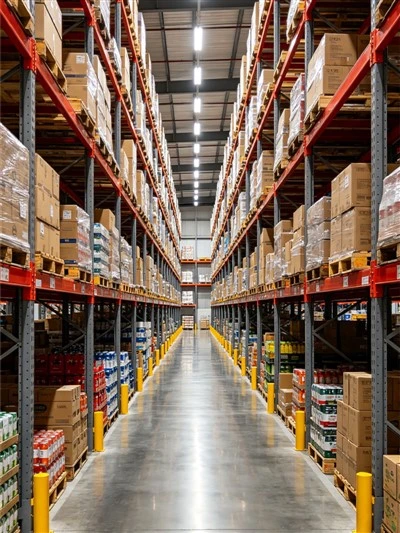
First off, let’s talk about size—because that’s the first big red flag most new clients miss. Large-scale storage racking isn’t small parts you can stuff into a standard box. A typical heavy-duty pallet rack, for example, has uprights that are 18 feet tall, cross beams that stretch 12 feet wide, and sometimes add-on bracing that’s even longer. You can’t just throw those on a regular 53-foot dry van trailer and call it a day. Wait—let me back up: not all 53-foot trailers are made equal. A standard dry van has a maximum internal height of around 110 inches, which is just over 9 feet. That means a 18-foot upright is way too tall to stand up inside it. So what do we do? We lay them on their side, right? But even then, 18 feet of steel takes up more space than most standard pallets. A lot of small carriers will try to cram these uprights into a trailer that’s also carrying other freight, but that’s a terrible idea. Rack parts are heavy—each upright is often 50 to 70 pounds, and cross beams are 30 to 40 pounds—so they’re not like lightweight plastic bins. If you stack other freight on top of them, you’ll bend the steel or scratch the powder coat, which invalidates the warranty and makes the rack way weaker than it’s supposed to be. That’s why we always reserve a dedicated, flatbed or step-deck trailer for large-scale rack orders. A step-deck is perfect because it has a lower rear deck (around 8 feet tall) and a higher front deck, so you can lay those 18-foot uprights along the lower deck without hitting the top of the trailer. No bending, no scratching, no fighting with clearance.
Then there’s weight. Most people think, “It’s just steel, how heavy could it be?” But a single 10,000-square-foot rack system can weigh 30,000 to 40,000 pounds total. That’s a lot for a trailer. You can’t just load that onto any truck—you have to make sure the trailer’s axle capacity matches, and that you’re not overloading the truck’s gross vehicle weight (GVW). States have strict axle weight limits (usually 20,000 pounds per drive axle, 34,000 pounds for a tandem axle set), so if you overload, you’ll get hit with huge fines at state weigh stations. I once had a client who tried to save a few bucks by using a smaller carrier that overloaded the trailer by 5,000 pounds. The truck got pulled over in Ohio, and they had to offload half the rack onto a side street, hire a forklift to re-stack, and pay $1,200 in fines. That ended up costing them more than if they’d booked the right trailer in the first place. Pro tip: when you’re quoting a rack system, give your supplier a clear idea of the total square footage you’re covering. A good rack supplier will break down the total weight and dimensions for you, so you don’t get stuck with a surprise.
Next, route planning isn’t just “get from point A to point B.” When you’re moving 18-foot steel uprights, you can’t take every shortcut, especially on smaller roads or overpasses. I’ve had shipments get stuck because a route we thought was fine had an overpass with a 10-foot clearance, and those 18-foot uprights stuck up too high when the trailer went over it. Or a narrow country road where the truck was too wide to make a turn, and they had to back up for 2 miles, holding up traffic and delaying the delivery by 3 hours. That’s why we always pre-scout the route before dispatch—we use GPS tools that show bridge clearances, road widths, and weight limits, plus we check with local DOTs to make sure there are no construction zones that block large trucks. For clients who are moving rack to a rural warehouse or a site that’s not on a main highway, we even coordinate with a local delivery driver to pick up the full trailer from our facility, then bring it in on a smaller truck that can navigate tighter roads. It adds a little time, but it avoids the mess of a stuck truck.
Then there’s loading and securing the rack parts. This is where a lot of clients cut corners, and it’s the most common reason for damage. Storage rack parts aren’t uniform—uprights are long and thin, cross beams are flat, and small parts like bolts and connectors are easy to lose if they’re not packed right. A good supplier will pack small hardware (bolts, nuts, clips) in labeled, sealed plastic bags, grouped by rack bay, so you don’t have to dig through a box of mixed parts when you’re installing. But securing the big parts is non-negotiable. You can’t just toss an upright on the trailer and call it tight. We use heavy-duty steel straps, not rope or bungee cords, because those will snap on a bumpy highway. We also place padding between the steel parts and the trailer walls, so the powder coat (the protective finish on most racks) doesn’t scratch. And we never stack uprights directly on top of each other—if you have to double them up, put a cardboard spacer between them, so they don’t rub and get damaged. I’ve seen a shipment where a carrier used rope instead of straps, and an upright slid forward during a sudden stop, denting the front of the trailer and bending the upright so bad we had to replace it. That delay cost the client a week of installation time, which they weren’t happy about.
Wait, also—unloading is just as important as loading. A lot of clients think, “We have a forklift, we can unload,” but large rack parts are heavy, and standard forklifts might not have the reach. An 18-foot upright is 18 feet long, so your forklift forks need to be long enough to support the whole length, not just half. If your forks are too short, you’ll drop the upright, bend it, or scratch the floor. We always tell clients to check their forklift’s fork length and weight capacity before delivery day. If they don’t have the right equipment, we can arrange for a specialized unloading crew with a boom lift or a forklift with extended forks, but that’s an extra cost they should plan for upfront. Another thing: the unloading area needs to be flat and clear. If your warehouse has a lot of potholes, or if you’ve stacked pallets in the way of the trailer’s door, the driver can’t back up safely. We once had a client who left a stack of 50-pound pallets in the driveway, so the trailer couldn’t get close enough to unload. They had to move all those pallets, which took 2 hours, and the driver had to wait around, which added time to our route.
Oh, and something most people don’t think about: permits. When you’re moving an oversize load (which a rack shipment with 18-foot uprights definitely is, depending on the state), you need special permits. Most states require permits for loads that are longer than 53 feet, wider than 8.5 feet, or taller than 13.5 feet. Some carriers will handle permits, but a lot of small operators won’t, so you have to ask. I’ve had a client try to skip permits because they thought it was a hassle, and they got a $500 fine in Pennsylvania. That’s not a small cost. Good thing is, a reliable storage rack supplier will handle all the permits for you as part of the delivery process—we don’t make clients chase that down. It’s just part of making sure the shipment goes smoothly.
Let me wrap this up with a real example that stuck with me. A couple years back, a e-commerce client ordered a 20,000-square-foot pallet rack system for their new warehouse. They tried to save money by using a cheap carrier that didn’t reserve a dedicated trailer, didn’t pre-route, and tried to unload with a forklift that had too-short forks. The result: half the uprights were scratched, 2 cross beams were bent, the hardware bags were mixed up, and they had to reschedule installation for 10 days. They ended up paying $3,000 in fines, $1,500 in replacement parts, and lost $10,000 in revenue because they couldn’t store inventory. If they’d worked with us, we would have arranged a dedicated step-deck trailer, pre-scouted the route, coordinated a forklift with 10-foot forks, and packed everything correctly. It would have cost a little more upfront, but they would have avoided all the headaches.
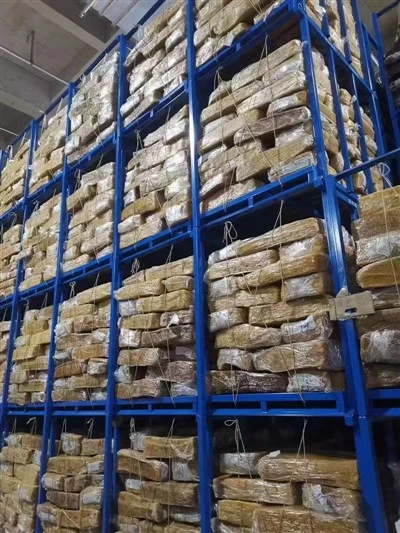
At the end of the day, storage rack delivery isn’t just about dropping off boxes. It’s about matching the right trailer, planning the right route, securing the parts properly, and making sure you have the right equipment on your end. If you’re planning a large-scale rack installation, don’t just focus on the cost of the rack itself—factor in the transportation requirements. If you’re not sure, talk to a supplier who’s actually done this a hundred times, someone who knows the ins and outs of loading, routing, and permits. We’re here to walk you through every step, answer your questions, and make sure your rack shows up on time, in one piece, ready to install. If you’re getting ready to plan your next storage rack project and want to make sure the delivery goes right, reach out to our team to chat.
Storage Racking References
- Modern Materials Handling. (2022). "Best Practices for Transporting Heavy Storage Systems."
- American Trucking Associations. (2023). "Commercial Vehicle Weight and Dimension Regulations."
- Material Handling Industry Association. (2021). "Guidelines for Racking Transportation and Unloading."
- National Safety Council. (2022). "Workplace Safety for Unloading Heavy Industrial Equipment."
Qingdao Shuoxin Storage Equipment Co., Ltd.
As one of the most professional storage racking manufacturers and suppliers in China, we’re featured by quality products and good price. Please rest assured to buy customized storage racking made in China here from our factory. Welcome to contact us for quotation.
Address: No.15 Guangdong Road, Jiaobei Subdistrict, Jiaozhou City, Shandong Province, China
E-mail: 13791964777@163.com
WebSite: https://www.shuoxinrack.com/
