If you’ve ever stood beside a fresh concrete pour on a sunny construction job site, watched a transit mixer rumble up, and thought, “This thing works, but it’d be even better if it did X,” you’re not alone. For years, the construction industry wrote off transit mixers as one-size-fits-all workhorses—big, loud, and built to haul standard batches of concrete from plant to site, no questions asked. But as a transit mixer supplier, I’ve spent the last decade proving that assumption wrong. Today, I get more requests for customized mixers than stock units, and every time, it reminds me that the best equipment doesn’t just meet specs—it fits the job. Transit Mixer
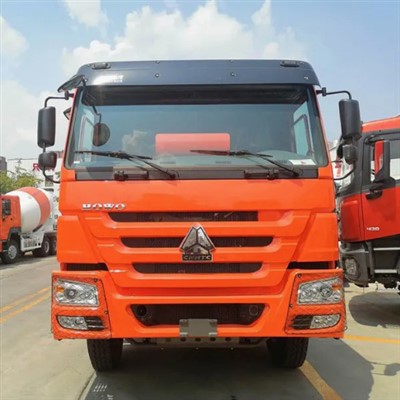
Let’s start with the basics to clear up confusion. A transit mixer’s core job is simple: keep fresh concrete homogeneous, workable, and on-site on time. Standard mixers are built for middle-of-the-road use: 8-cubic-yard drums, diesel engines for open roads, and standard chassis that work for flat highway routes. But construction isn’t one-size-fits-all. A job building a high-rise in a dense urban downtown has way different needs than a road bridge in a rural mountain pass, or a small residential development with tight alley access. Stock mixers can’t check all those boxes, which is why customization isn’t a luxury—it’s a necessity for most modern projects.
I’ll walk you through the most common custom upgrades our team designs, because that’s where the rubber meets the road. First, drum capacity and shape. Most stock mixers top out at 12 cubic yards, but that’s useless for a job in a city where site access is too narrow for longer mixer trucks, or a rural site where you need less concrete to avoid it hardening mid-haul. Last year, we worked on a mixed-use development in downtown Chicago where the city blocked any mixer over 10 feet wide to fit between fire hydrants and existing buildings. Our engineering team shrank the chassis and optimized a 7.5-cubic-yard drum to fit that width, without sacrificing mixing capacity. We also adjusted the drum’s internal mixing blades, which are usually straight on stock units, to have a slight spiral curve that keeps aggregate from settling when we drove through stop-and-go Chicago traffic for 45 minutes. That simple blade change cut concrete separation by 12% on that job, and the general contractor saved $15,000 in wasted material because they didn’t have to reject half a dozen batches for being out of spec.
Another big customization is propulsion and chassis type. Stock mixers almost exclusively use diesel engines, but for projects in indoor or enclosed spaces—like building a sports arena underground—or for job sites that require zero emissions to meet strict local EPA rules, diesel doesn’t cut it. We built our first all-electric transit mixer two years ago for a tunnel project in Seattle, where jobsite air quality rules banned diesel exhaust. The electric motor delivers the same torque as a diesel engine, so it can still haul full concrete loads up 15% grade slopes, which was non-negotiable for that project’s access road. We also can adapt mixers for different fuel sources: natural gas for remote sites where diesel delivery is expensive, or even hybrid systems for long hauls where electric alone can’t make the round trip between plant and site. We also do heavy-duty chassis upgrades for projects that haul 10 or 12 cubic yards of concrete, like dam construction, where a standard chassis would bend under the weight. We reinforced the frame with high-tensile steel and added extra axles to distribute weight evenly, so the mixer doesn’t sink into muddy job site roads.
Then there’s on-board equipment, which is where a lot of hidden customization happens. Stock mixers only have a drum to mix concrete, but many jobs need to add admixtures, water, or even small amounts of aggregate on-site, not at the batch plant. For example, when we worked on a bridge project in Alaska, temperatures dipped below freezing at night, so the concrete batch plant added extra water to keep it from setting before delivery— but that made the concrete too weak for the bridge’s load requirements. We installed an on-board admixture dispenser on the mixer that could add a set-retarding admixture and heated water at the job site, so the concrete stayed workable without extra water. The project’s structural engineer later told us that mixers cut their material testing time by 30%, because they could adjust concrete properties on the fly instead of waiting for new batches from the plant. We also add custom spray systems for drum cleaning, which usually takes 20 minutes per mixer on stock units. For a job with 20 mixers running daily, that adds up to hours of wasted time. We installed a high-pressure, auto-disintegrating spray system that cleans the drum in 5 minutes, so crews can turn mixers around faster.
But here’s the part most people don’t talk about: customization isn’t just about adding parts—it’s about tailoring every component to the operator’s needs, too. The operators who drive these mixers work 12-hour days on rough roads, so a custom cab that’s ergonomic and safe makes a huge difference. For a job in Dubai where temperatures hit 120 degrees Fahrenheit, we built a cab with a built-in cooling system that keeps the interior 20 degrees cooler than stock cabs, plus extra storage for water and personal protective equipment. For jobs where operators make multiple stops per day to drop concrete, we add custom tablet mounts with job site maps, so they don’t have to fumble with paper directions while driving. Last year, one of our long-time clients told us that a custom cab cut operator fatigue-related injuries on their job sites by 25%, which is a win for everyone—operators, contractors, and us.
Now, I know what some people are thinking: “Custom mixers are way more expensive, right?” That’s a fair question, but it’s not the whole story. A few years ago, a small residential developer in Atlanta reached out complaining that stock mixers were too big for their narrow alley, and they were wasting 20% of every batch because the concrete would start setting before they could pour it at the back of the lot. They thought a custom mixer would cost them $50,000 extra, but we worked with them on a compact 6-cubic-yard mixer with a speed-adjustable drum that lets them slow the rotation at stop signs and keep concrete workable longer. The total cost was only $8,000 more than a stock mixer, and they saved over $100,000 a year in wasted concrete and extra truck runs. The key here is that customization doesn’t have to mean a completely unique, one-off unit every time. We build most custom mixers on a modular system, so we can swap out components like drums, propulsion, and on-board equipment without designing a whole new machine from scratch. That keeps costs low, and it means parts are compatible across our entire line, so contractors don’t have to hunt for special parts when they need a repair.
That modular approach is why we can deliver custom mixers faster than most people expect. The lead time for a stock mixer is 8 to 12 weeks, but a custom unit that’s built on our modular platform is usually 10 to 16 weeks—only a little longer, and often worth every extra day. We also test every custom build extensively before it leaves our shop: we run drum stress tests to make sure it can handle uneven loads, take it out on rough roads to check propulsion, and even test the on-board equipment in controlled temperature chambers to make sure it works in Alaska cold or Dubai heat. We don’t cut corners on testing, because when a mixer breaks down on a job site, it delays pours, wastes material, and costs everyone money. As a supplier, my job isn’t just to sell a machine—it’s to make sure it works when the contractor needs it.
Of course, there are limits to what we can customize. We can’t turn a transit mixer into a dump truck, and we can’t make a mixer haul 10 cubic yards over a 20% grade with a standard diesel engine. But if you have a specific job site challenge—narrow access, extreme weather, emission rules, unique concrete requirements—we can adapt a transit mixer to fit that. Last quarter, we worked on a project in Hawaii where the job site was on a cliffside with only one access road, so we built a 5-cubic-yard mixer with a compact steering system that let the operator turn around on a 10-foot-wide stretch of road, which would have been impossible on a stock unit. The general contractor later told us that mixer was the only piece of equipment that could deliver concrete to that site on schedule, and without it, they would have had to pause construction for two months.
For anyone wondering if a transit mixer can be customized, the answer is a resounding yes— but only if you work with a supplier that understands both the science of concrete transport and the unique needs of construction sites. We’ve spent 15 years refining our custom process, and it starts with listening: when a contractor tells us about a job site’s narrow alley, a project’s strict emission rules, or a need to adjust concrete admixtures on the fly, we don’t just build a mixer that checks those boxes—we build one that makes their job easier.

If you’re tired of stock transit mixers that don’t fit your project, or you’ve wasted money on wasted concrete or delayed pours because your equipment wasn’t right for the job, let’s talk. We can walk through your specific needs, show you examples of custom mixers we’ve built for similar projects, and put together a plan that fits your budget and timeline. Whether you need a compact mixer for a residential development, an electric unit for an underground project, or a heavy-duty model for a mountain bridge, we have the experience to deliver what you need. Don’t settle for a one-size-fits-all machine when your project deserves equipment built for it.
Concrete Mixer Truck References
American Concrete Institute. (2022). Guide for Concrete Transport and Placement. ACI 304R-20.
National Ready Mixed Concrete Association. (2021). Customized Equipment for Concrete Construction. NRMCA Technical Report.
Occupational Safety and Health Administration. (2020). Ergonomics Guidelines for Construction Vehicle Operators. OSHA 3814-09N.
Shandong Fuxin Automobile Technology Co., Ltd.
We’re well-known as one of the leading transit mixer manufacturers and suppliers in China, featured by quality products and good price. Please rest assured to buy advanced transit mixer made in China here from our factory. Contact us for more details.
Address: West of Nanshou Road, Beihai Road, Weifang City, Shandong Province
E-mail: h17616861003@gmail.com
WebSite: https://www.fuxinautomobile.com/
