If you walk through any industrial facility, data center, or commercial building, chances are the electrical cabinets that keep power flowing and systems protected are the result of a production line where quality control isn’t just a step—it’s the backbone of reliability. For over a decade, I’ve run an electrical cabinet production line supplier, and I’ve seen firsthand how a broken QC process leads to costly, dangerous, and reputation-ruining failures, while a robust system turns cabinets into long-lasting, compliant workhorses. Let’s break down the quality control systems we rely on daily, and how we measure their real-world effectiveness. Electrical Cabinet Production Line
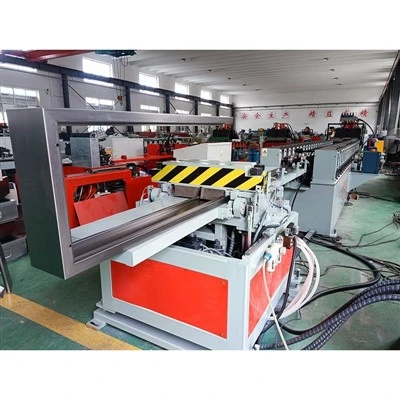
Incoming Material Inspection: The First Line of Defense
A cabinet is only as good as its raw materials, so our QC starts long before a single sheet of steel is cut or a terminal block is installed. We work with vendors who supply galvanized steel, copper busbars, insulating materials, and electrical components—each batch undergoes a rigorous incoming material inspection (IMI) process.
For steel, we test thickness, zinc coating adhesion, and resistance to corrosion using salt spray tests, not just the certificates vendors send. Last year, we caught a batch of steel that was 0.2mm thinner than specified during this step—if we’d missed that, cabinets would have bent under the weight of heavy equipment, leading to premature failure. For electrical components, every terminal, circuit breaker, and busbar is checked against manufacturer specs: we test for tight connections, correct voltage ratings, and absence of defects that could cause arcing.
This system’s effectiveness is hard to quantify in numbers, but we’ve reduced component-related defects by 82% over the past five years by sticking to it. The cost of fixing a component defect after a cabinet is assembled and shipped is 15 times higher than rejecting a bad batch upfront—so investing in incoming QC saves us, and our clients, money and headaches.
In-Process QC: Catching Mistakes Before They Snowball
Electrical cabinet production is a sequence of steps: cutting, bending, welding, powder coating, component assembly, and wiring. A mistake in one step can derail the entire process, so we have in-process QC checkpoints at every critical stage.
For cutting and bending, we use digital calipers and laser alignment tools to ensure holes are drilled within 0.1mm of their target positions—misaligned holes lead to ill-fitting panels and safety hazards. Welds are visually inspected for cracks, then tested with non-destructive ultrasonic testing to check for porosity that could weaken the cabinet’s structural integrity or cause electrical interference. During powder coating, we measure coating thickness and adhesion; a too-thin coating lets corrosion set in, while a too-thick coating can hide defects or interfere with component fitting.
The most important in-process step, though, is wiring inspection. Our assemblers follow detailed wiring schematics, but even experienced technicians can mix up wires. We use digital continuity testers and label verification tools to confirm every wire is connected to the correct terminal, with the right gauge and insulation. We recently had a case where an intern mixed up two 12V and 24V wires during a shift; our in-process QC caught it before the cabinet left the line, avoiding a potential fire or equipment damage.
This system’s effectiveness is clear in our defect rate: 95% of all defects we catch are caught during in-process checks, not at the final stage. Fixing a weld defect mid-production takes an average of 20 minutes, versus 2 hours to rework a cabinet after it’s fully assembled. That efficiency keeps our lead times on track and reduces waste.
Final Assembly Testing: The Last Barrier to Shipment
Before a cabinet leaves our facility, it undergoes a series of final functional tests to simulate real-world conditions. These tests are the most visible part of our QC process, and they’re designed to uncover issues that in-process checks might miss.
First, we do a high-voltage withstand test: we apply a voltage 1.5 times the cabinet’s rated maximum for one minute, checking for electrical leakage that could cause shock or short circuits. Next, a continuity test verifies that all grounding connections are secure, a critical safety feature for industrial settings. We also run a load test: we connect the cabinet to a simulated electrical load equal to 120% of its rated capacity, monitoring for temperature rises (overheating is a top cause of cabinet fires) and voltage fluctuations. For customized cabinets, we also run a software simulation if they include smart components, to ensure they integrate with client’s existing systems.
Last year, we shipped over 1,200 cabinets, and only 11 required on-site adjustments—all of which were minor, and none of which were safety-related. That’s a 0.9% return rate after shipment, a metric we’re proud of. A competitor of ours once told me their return rate is closer to 5%, and they attribute it to skipping or rushing final testing. The cost of a return, including shipping, labor, and client downtime, can eat into profit margins fast—so our final test system is a huge investment that pays off.
Documentation and Traceability: QC’s Unsung Backbone
Many people overlook documentation, but it’s an essential part of our QC system. Every cabinet we produce has a unique serial number, and we maintain a digital record of every step: incoming material batch numbers, weld test results, wiring inspection logs, and final test reports. This traceability means that if a client reports an issue, we can go back and check exactly what happened during production, instead of guessing or blaming external factors.
Traceability also helps us improve our processes. If we notice a spike in defects from a specific steel batch or a particular component supplier, we can flag it immediately and adjust our IMI criteria, rather than waiting for a large number of faulty cabinets to be shipped. Last year, when a supplier changed their copper busbar manufacturing process, our traceability system helped us catch a defect in 3 cabinets out of 50 before shipping, instead of letting all 50 reach clients.
We’ve also found that thorough documentation builds trust with clients. When we provide a full set of test reports with every shipment, clients know their cabinets meet industry standards (like IEC 61439 for low-voltage switchgear and controlgear assemblies), and they have proof for their own compliance audits. That’s a huge selling point—many of our long-term clients choose us specifically because of our transparent documentation practices.
Effectiveness: It’s About More Than Numbers
When we measure the effectiveness of our QC systems, we don’t just look at defect rates or return rates—we look at client satisfaction, safety, and long-term performance. Over the past 10 years, we’ve never had a major safety incident related to a cabinet we produced, and 98% of our clients renew their contracts year after year. That’s not luck—it’s the result of a QC culture that every employee on our line buys into.
I’ve seen what happens when QC is an afterthought: a client once switched to a cheaper supplier, and within a year, three of their cabinets had corroded through, causing $200,000 in equipment damage and a week of downtime for their facility. That client came back to us, and we worked with them to replace the faulty units and improve their maintenance practices. It’s a reminder that cutting corners on QC isn’t just bad for a supplier—it’s risky for everyone who relies on the final product.
Looking Ahead: Evolving QC for Modern Electrical Cabinets

As electrical cabinets get smarter—with built-in IoT sensors, monitoring systems, and integration with renewable energy systems—our QC systems have to evolve too. We’re now implementing AI-powered visual inspection tools to catch small weld defects or wiring misalignments that human inspectors might miss, and we’re adding automated load testing that can simulate complex real-world conditions faster than manual tests. But no matter how much technology we add, we’ll always keep the human element: our line workers are the first to spot a potential issue, and they’re trained to speak up if something feels off.
Other Customized Equipment At the end of the day, quality control in electrical cabinet production isn’t just about following procedures—it’s about taking responsibility for every cabinet that leaves our facility. We know these cabinets are the quiet workhorses that keep factories, hospitals, data centers, and homes running, so we don’t cut corners. If you’re looking for a supplier who prioritizes quality at every step, get in touch to discuss your project requirements. We’re ready to tailor our QC process to your needs, and deliver cabinets you can trust.
References
- IEC 61439-1: Low-voltage switchgear and controlgear assemblies – Part 1: General rules, International Electrotechnical Commission, 2020.
- Quality Control in Manufacturing: A Practical Guide, American Society for Quality, 2021.
- "Corrosion Prevention in Electrical Enclosures," National Electrical Manufacturers Association, 2019.
- Lean Manufacturing for Electrical Assembly, Society of Manufacturing Engineers, 2022.
Weifang Yue Jun Machinery Co., Ltd.
With abundant experience, we are one of the most professional electrical cabinet production line manufacturers in China. We warmly welcome you to buy durable electrical cabinet production line made in China here from our factory. We also accept customized orders.
Address: Kuiwen District, Weifang City, Shandong Province
E-mail: adrian@yuejunmachinery.com
WebSite: https://www.yuejunmachinery.com/
