If you’ve ever worked with CNC turning services, you know the last thing you want to deal with is a sudden slowdown mid-production, a batch of off-spec parts, or a blown-up tool that turns a tight deadline into a mess. As someone who’s run a CNC turning shop for 12 years, I’ve seen it all—from a single worn insert ruining a $5,000 aluminum aerospace order to a tool that lasted 12 hours longer than expected saving a customer $2,000 in rush fees. The biggest culprit behind those headaches? Cutting tool wear. It’s not just a “wear and tear” thing, either—it’s a quiet, gradual issue that creeps up on you if you’re not paying attention, and it impacts every part of your CNC turning operation. CNC Turning Services
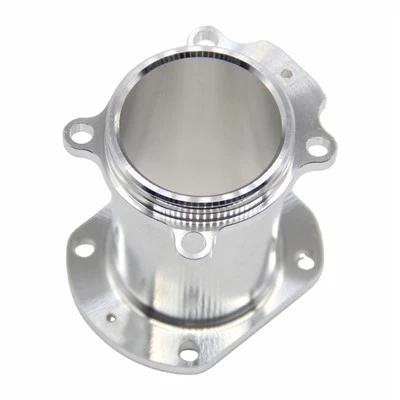
Let’s start with the basics: in CNC turning, a cutting tool’s job is to shape raw material—whether that’s steel, brass, titanium, or even plastic—into a precise part by removing excess material, layer by layer. Over time, the edge of that tool hits stress: high heat from friction, pressure from chip formation, and tiny impacts as it cuts through hard material. That stress leads to wear, which isn’t one single thing—it’s several different types, each with its own effect. I see new customers all the time who think “a dull tool is just a dull tool,” but no—there’s flank wear, crater wear, built-up edge (BUE), and chipping, each messing with your process in different ways.
First up, flank wear. This is the most common kind—basically, the side of the tool (the “flank”) that rubs against the newly machined part’s surface wears down, leaving a flat, wide area instead of a sharp edge. At first, flank wear might not seem like a big deal. But once it reaches even 0.2mm, your tool isn’t cutting through material anymore—it’s scraping. That scraping creates extra heat, which distorts the part. I had a customer last year who got a batch of 50 brass bushings back that were 0.008mm over the diameter spec because we missed a worn flank on a insert—turned out, he’d noticed a tiny burr on the first part and thought it was just a machine calibration issue, not a tool problem. That mistake cost him a whole day of rework, and we ended up eating the rework fees because we’d skipped a quick tool check.
Then there’s crater wear, which happens on the rake face—the top of the tool that the cut chips slide against. High heat is the main cause here, especially when you’re cutting hard materials like stainless steel or titanium. As the crater gets deeper, chips don’t flow smoothly, they get stuck, and that leads to built-up edge (BUE)—tiny chunks of the workpiece material welding onto the tool’s edge. BUE is a sneaky one because it looks like a sharp edge, but it’s actually a lumpy mess. I once worked on a medical device order where a BUE formed on a carbide tool cutting cobalt-chrome—every part looked fine until a quality check found a tiny, rough spot that would have irritated a patient’s tissue. We had to scrap 20 parts, and the customer almost went to another shop because we hadn’t caught the BUE during our post-process inspection.
Chipping is another big one—small pieces breaking off the tool’s edge, usually from interrupted cuts (like turning parts that have holes or slots) or sudden impacts. Chipped tools don’t just make bad parts; they can also damage your CNC machine’s spindle or tool holder, which is a way more expensive fix than a tool insert. A few months back, a customer ran a batch of steel shafts with keyways (interrupted cuts) and skipped tool maintenance—one tool chipped, and it scratched the spindle’s bore. Repairing the spindle cost us $1,200, and the customer lost a week of production waiting for a replacement machine part.
Now, the question everyone asks: how does this actually hit your bottom line? Let’s break it down, because it’s not just about replacing tools. First, part quality. If wear makes parts out of spec, you’re looking at rework or scrap. Rework adds time and labor, and scrap means wasted raw material—aluminum alone costs $1.50 a pound these days, so a 10lb batch of scrap is $150 right there. Even worse, if bad parts make it to your customer, that’s lost trust. I’ve had repeat customers switch to us after a previous shop kept sending them off-spec parts because they ignored tool wear—one told me, “I’d rather pay $2 more a part than deal with a supplier that can’t get dimensions right.”
Then there’s production downtime. Changing tools is part of the job, but if you’re changing tools too often because of excessive wear, that cuts into your run time. Let’s say you run a 10-hour shift, and you have to stop every hour to change a tool—that’s 2 hours of downtime, right there. Multiply that over a month, and you’re losing days of production. Even worse, unplanned tool changes because of sudden chipping or breakage throw your whole schedule off. I once had a customer need 200 aluminum valves in 3 days for a product launch, and our machine had a tool break at 2 a.m.—we had to wait an hour for a replacement insert, and ended up delivering 4 hours late, which almost cost the customer a $10,000 penalty.
Tool costs themselves add up, too. It’s not just the cost of the insert—you have to pay for someone to change it, maybe a tool pre-setter to make sure the new tool is aligned right, and if the tool damages the machine, that’s a huge hit. I’ve seen customers try to skimp on cheaper tools to save money, only to end up spending more on rework and downtime than if they’d used the right tool for the job. For example, a customer tried using a general-purpose carbide insert for titanium turning instead of a titanium-specific coated insert—their tool life was 2 hours instead of 10, so they went through 5 times more inserts, and the scrap rate was 15% instead of 2%, costing them $3,000 extra in a single batch.
But here’s the thing: tool wear isn’t inevitable to the point where you just accept it. There are ways to manage it, and that’s where a good CNC turning service stands out. First, tool selection matters. You can’t use a steel tool for plastic, or a general insert for hard metal. Coatings make a huge difference—coated tools (like TiN, TiCN, or diamond-coated for non-ferrous materials) resist heat and friction, so they wear slower. I always tell customers: match the insert grade to your material, not the other way around. If you’re turning brass, a diamond-coated insert will last 5 times longer than a standard carbide insert, and give a way smoother finish.
Then there’s monitoring. Modern CNC machines have tool life management software that tracks how many parts a tool has made, how much heat it’s generated, and alerts you when it’s time to change it. But even if you don’t have fancy software, a quick check every 50 parts—just a visual look at the tool edge, or a quick measurement with a microscope—can catch wear before it causes problems. We do a tool check every 100 parts for high-volume orders, and that’s cut our scrap rate by 70% over the last 5 years. Cutting parameters matter, too. If you’re running too high a spindle speed or too fast a feed rate, you’re making the tool work way harder than it needs to. I had a customer who was running a stainless steel order at 3,000 RPM when the recommended speed was 1,800 RPM—his tools were wearing out in 30 minutes, instead of 2 hours. Once we adjusted the speed, his tool life tripled, and his part quality got way better.
Wait, let’s not forget the end finish. That’s a big one for customers who need parts that don’t just fit right, but look good. If a tool is worn, the part’s surface finish will be rough—you’ll see tool marks, burrs, or even a dull spot. For parts that get polished or anodized, a rough finish means extra finishing steps, which add cost and time. We had a customer who needed aluminum parts for a consumer electronics product—they wanted a mirror finish, and when their previous supplier used a worn tool, the finish was too rough to anodize. We replaced the insert, adjusted the feed rate, and got a finish that passed their inspection on the first try, saving them $1,200 in finishing costs.
I know a lot of small manufacturers think tool wear is just a cost of doing business, but it doesn’t have to be. At our shop, we’ve built our business on minimizing tool wear-related issues for our customers. We work with them to pick the right tools, set up the machine parameters correctly, and monitor tool wear throughout production so we don’t have surprise problems. Last quarter, we had a customer who’d lost 10% of his order to scrap at his previous shop—we switched his tool setup, and his scrap rate dropped to 1%, saving him $4,500 in a single batch. That’s the kind of value we bring, not just turning parts, but preventing headaches.

If you’re in the market for CNC turning services, or you’re frustrated with current suppliers who let tool wear mess up your parts and deadlines, we can help. We tailor every setup to your material and part specs, track tool wear in real time, and work with you to adjust processes so you get consistent, high-quality parts without the stress of mid-production failures. Whether you’re running low-volume prototypes or high-volume production, we’ve got the tools and experience to get the job done right.
CNC Milling Services Reference
- Davim, J. P. (2011). Machining: Fundamentals and Recent Advances. Springer.
- Shaw, M. C. (2005). Metal Cutting Principles. Oxford University Press.
- American Society of Mechanical Engineers (ASME). (2018). Tool Wear and Tool Life in Machining. ASME International.
Shenzhen Multi-Wins Precision Technology Co., Ltd.
As one of the most professional CNC turning manufacturers and suppliers in China, we have world-leading production equipment and strong manufacturing capabilities. Please feel free to buy customized CNC turning made in China here from our factory. Also, quotation is available.
Address: 1 Phase, Yi’an City Central Garden, Longfei Avenue, Longgang District, Shenzhen, GD, China. 518100
E-mail: info@multi-wins.com
WebSite: https://www.multi-wins.com/
