If you’re an engineering chain supplier like me, you’ve probably seen this play out a hundred times: a client calls, excited about a new project, and their team has specs for every part of the chain—from design to testing to on-site installation. But halfway through, someone drops the ball. The component design team uses a material that’s incompatible with the manufacturing line, the testing team skips a critical durability check because of a tight deadline, or the installation crew shows up without the right tools. The whole chain stumbles, and suddenly everyone’s scrambling to fix a problem that should’ve been preventable. Engineering Chain

That’s the thing about engineering chains: they’re only as strong as their weakest link. But here’s the secret most people miss: a chain isn’t just about the links themselves—it’s about how they’re connected. Coupling that chain effectively isn’t just snapping parts together; it’s about syncing every team, every process, and every decision so no one’s working in silos. After 12 years as an engineering chain supplier, I’ve seen what works and what doesn’t, and it’s not rocket science—it’s just consistent, intentional effort. Let me break down what actually moves the needle, no fluff, no corporate jargon.
First off, stop treating your engineering chain as a one-and-done order. I know, I know—clients come to you with a deadline, they want a quote, and they expect it all to show up on their loading dock in two weeks. But here’s where most of the mess starts: teams act as if their part of the chain is unrelated to the next. Let’s say a client’s design engineers finalize a part that requires a tensile strength of 12,000 PSI for a conveyor belt. They don’t loop in the manufacturing team until after the design is locked, and that team realizes their forging process can only hit 10,500 PSI. Now you’re reworking the design, pushing the deadline, and everyone’s frustrated.
Effective coupling starts early—like, really early. When a client brings us a project, I don’t just pass the specs to our design team and wait. I set up a 30-minute sync within 48 hours that includes the client’s design lead, their production manager, their quality control rep, and our own sales, design, and operations teams. No side convos, no hiding roadblocks. For example, last year a beverage company came to us needing a custom chain for their new canning line. Their design team had specs for a high-torque drive sprocket, but they didn’t account for their line’s frequent stops and starts—something their maintenance manager mentioned offhand. We caught that in the initial sync, adjusted the chain’s material to a wear-resistant alloy, and avoided a costly breakdown three months later. That’s coupling: not just aligning parts, but aligning people before any details get set in stone.
Next, standardize communication, but don’t overcomplicate it. I’ve worked with clients that use Slack, email, a clunky project management tool, and text messages for updates. Half the time, someone misses a note because it’s buried in a 50-message thread, or a critical spec change only gets sent to one person instead of the whole team. When we’re coupling a chain, communication gaps are the single biggest cause of delays and mistakes. Here’s what we do now: we use a shared, simple project hub for every client. It’s not some fancy enterprise tool—just a free platform where we post all specs, change requests, test results, and deadlines. Everyone who needs access can see it, and we set automatic alerts for any updates. No more “I never got that email” excuses.
But here’s the catch: standardizing doesn’t mean automating every interaction. We still hold a 10-minute check-in every Friday for the project core team to flag snags before they turn into problems. Last quarter, a client’s production team noticed a minor misalignment in the chain’s sprocket mount during a pre-installation test. They posted it in the hub on Thursday, and we brought it up in the Friday check-in. Our engineering team reviewed it that weekend, adjusted the sprocket’s design, and we shipped a revised part on Monday—no downtime for the client. If we’d waited until the weekly update call, that misalignment could’ve caused a week of delays. That’s effective coupling: combining structured communication with the flexibility to act fast when small issues pop up.
Another big one: build in feedback loops at every link, not just the end. Too often, teams treat post-installation feedback as an afterthought—like, “Great, the chain works, send us a review” instead of using that feedback to improve the next project. But engineering chains are iterative, and the data from one project is gold for the next. A few years ago, we supplied a chain to a lumber mill that kept failing prematurely. Their maintenance team told us it was because of wood chips getting stuck in the chain’s pins, causing excessive wear. We went back to our design team, adjusted the pin spacing and added a narrow groove to clear debris, and the next version lasted 3x longer. That feedback loop tied our design, manufacturing, and client’s on-site team into a cycle that just gets stronger every time.
I also make sure that when we wrap up a project, we do a deep debrief with the client’s whole team—not just their point person. We ask questions like: What slowed you down? What specs did you change last minute, and why? What would’ve made this process easier? Half the time, the client’s on-site crew has insights that the office team doesn’t—stuff like, “We needed the chain delivered on a Tuesday because our line is shut down for maintenance on Mondays.” We used to miss that, and it caused us to show up with a shipment that couldn’t be installed for a week. Now we note those small, operational details in our project hub, and it’s made a huge difference in how we align our delivery schedules.
Don’t sleep on vendor and partner alignment either. Engineering chains rarely exist in a vacuum—you’re probably working with raw material suppliers, heat treatment shops, coating specialists, and more. If your material supplier delivers 24 hours late, that pushes your manufacturing, which pushes the client’s timeline. Effective coupling means treating your suppliers like an extension of your team, not just someone you send a PO to. We have formal check-ins with our key material suppliers every two weeks, not just when we have an order. Last year, our steel supplier warned us about a 10% price hike and a two-week delay in a key alloy three months before it happened. We were able to lock in pricing and adjust our scheduling for clients, avoiding a bunch of headaches. If we’d only communicated when we needed materials, that warning would’ve slipped through the cracks.
Also, invest in the right tools, but not every tool. A lot of clients come to us wanting the most advanced CAD software or 3D printing for every part, but overcomplicating tools can break the chain just as fast. We stick to tools that actually solve problems: for design, we use a streamlined CAD program that lets us test fit and tension virtually before we make a prototype. That cuts down on prototype revisions by 40% compared to when we used a more complex, hard-to-learn tool. For testing, we use a portable tension tester that our on-site crew can use to adjust chain tension right after installation, instead of waiting for a lab test that takes days. It’s not about having the newest tech—it’s about having tech that makes every link work together, not against each other.
Let’s be real: there will always be hiccups. Even the best-laid plans go sideways. Last year, we had a client whose custom chain was delayed because a critical component got damaged in shipping. Instead of pointing fingers, our operations team jumped in, used our in-house spare parts inventory to build a temporary replacement, and got the line running within 24 hours. That’s what coupling is about—having the flexibility to adjust when things go wrong, not just following a rigid process. We don’t just supply chains; we solve problems, and that means being ready to move as a team, not just as individual departments.
So why does this matter for you, if you’re looking to work with an engineering chain supplier? It’s not just about getting a quote or a part that meets your specs. It’s about working with someone who gets that a chain is only as good as how it’s connected. Too many suppliers treat engineering chains as a commodity—something you buy off a list. But the right supplier will sync with your team early, communicate clearly, use feedback to improve, and act as a partner when things go off track.
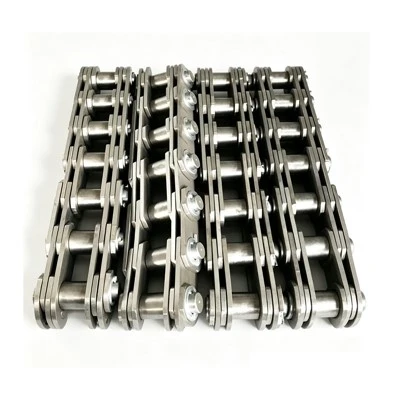
If you’re tired of dealing with misaligned teams, delayed shipments, or parts that don’t work as promised, let’s connect. We can walk through your project, talk through your specs, and figure out how to couple your engineering chain so it works for you, no surprises, no headaches.
Gear References
- Engineering Chain Design and Integration: A Practical Guide, Industrial Press Inc., 2021
- Supply Chain Alignment in Mechanical Engineering Projects, Journal of Manufacturing Technology Management, Vol. 32, No. 4, 2020
- Case Studies in Custom Engineering Chains for Industrial Applications, International Journal of Engineering Management, Vol. 15, No. 2, 2022
- Communication Strategies for Cross-Functional Engineering Teams, Project Management Institute, 2023
- Durability Testing Methods for Industrial Chain Components, ASME International, 2019
Anhui Huihuang Chain Transmission Co., Ltd.
Anhui Huihuang Chain Transmission Co., Ltd. is one of the most professional engineering chain manufacturers and suppliers in China, also supports high quality customized service. Please feel free to buy discount engineering chain made in China here from our factory. Welcome to contact us for pricelist and free sample.
Address: NO.3 YONGQIANG ROAD. JIXI.ANHUI.CHINA
E-mail: 754590660@qq.com
WebSite: https://www.hhchains.com/
