Hey there, ever reached for your favorite throw blanket in the living room storage cabinet only to have it rock side to side like it’s on a tiny rollercoaster? Yeah, we’ve all been there. As someone who’s been supplying living room storage cabinets for years (I know these things inside and out), let me walk you through how to fix that wobbly mess—no fancy tools or handyman fees required. Let’s keep it real, no jargon, just solid steps that actually work. Living Room Storage Cabinets
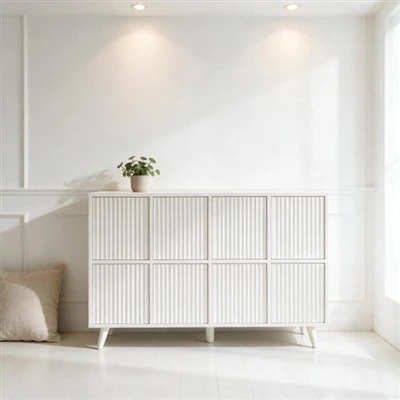
First off, let’s cut to the chase: why is your cabinet wobbly? Most of the time, it’s not because it’s garbage (I’d never knock our own stuff, and honestly, most reputable brands’ cabinets hold up way better than people give them credit for). It’s usually one of three super common issues: uneven floors, loose hardware, or maybe it got nudged a little when you moved the couch or dragged that heavy storage bin in last month. I’ve fixed dozens of these for customers over the years, and 90% of them take less than 20 minutes. Let’s start with the easiest fixes first, ‘cause why overcomplicate things?
Step one: Do the “wiggle test” to pinpoint exactly where the wobble is. Stand in front of the cabinet and push the top left, then top right, then the middle, then the bottom corners. Does it only rock when you push the left side? Or is it more front to back? That tiny detail saves so much time. I always tell my team to have customers do this first because guessing is the worst—you’ll be tightening a million screws when the real problem is just one corner being an eighth of an inch too high.
Okay, first fix for uneven floors: this is the #1 culprit, hands down. Hardwood floors, tile, even lumpy laminate—most homes aren’t perfectly level, especially if they’re older. Most living room storage cabinets come with little adjustable feet, right? You know, those tiny plastic or metal knobs on the bottom corners that you can twist. If yours don’t have them, don’t panic—you can pick up a pack of adhesive felt or rubber pads at any hardware store for like $5, no tools needed.
Here’s how to do it fast. Grab a small level (or even your phone’s level app, most of ‘em are free and surprisingly accurate—don’t tell anyone I use this trick all the time). Set it on the top of the cabinet, or even on a shelf inside it to avoid scratching the finish. Now, push the cabinet firmly back into the spot where it lives—don’t rock it, just set it straight. If it wobbles forward, the back feet are too high; wobbles back, front feet are too high. Twist each adjustable foot clockwise to lower it, counterclockwise to raise it, a little at a time. Do this one turn at a time, check the level after each, ‘cause it’s easy to overdo it. Once it’s steady, walk around it, push each side, make sure it doesn’t rock. Pro tip: if your cabinet has already scuffed the floor where it rocks, add a small felt pad under that extra foot before you twist it—stops scratches too. I’ve had customers with kids who yank on drawers tell me this fixed their wobble for good, no complaints.
Next, loose hardware. This is the second most common issue, and it’s super easy to miss. Let’s be real—when you assembled the cabinet (or hired someone to do it, no judgment if you took the easy way), you might’ve rushed tightening the screws, or they worked loose over time from being bumped. Or wait, maybe the wall anchors for a wall-mounted cabinet came undone? Oh right, don’t forget those—if your cabinet is attached to the wall, that’s a whole other check.
First, take off all the drawers and doors so you can get to everything easier—less clutter, more room to move. Grab a Phillips head screwdriver (or a power drill with a Phillips bit, but if you’re not comfy with power tools, the manual one works fine) and go around all the screws on the sides, the back panel, the shelf supports, even the ones holding the doors on. I once had a customer call me panicking ‘cause their cabinet was wobbling so bad a shelf was about to fall, and it turned out one shelf screw was so loose you could turn it with your fingers. Wild.
For wall-mounted cabinets, this is the big one. If it’s attached to drywall, a lot of times the wall anchors just got pulled a little loose from being nudged. Take a screwdriver and gently wiggle each screw on the back of the cabinet. If it spins without tightening, the anchor is shot. Don’t panic—you don’t have to patch the whole wall. You can buy drywall anchor repair kits at any hardware store (they’re those little metal sleeves that you slide into the old hole), or even just use a slightly longer screw. Drill a tiny new hole next to the old one (not too big!) and secure it back to the wall. If your cabinet is wood and you mounted it to a stud, just tighten those screws a little—studs are solid, they’ll hold tight for years.
Another thing with hardware: if your cabinet has adjustable shelf pins, sometimes those get loose too. If a shelf is wobbly, that makes the whole cabinet feel off. Push each shelf pin in firmly, make sure they’re seated all the way, then set the shelf back on top. If they’re still loose, add a tiny drop of wood glue (just a little, don’t overdo it) or wrap a quarter inch of teflon tape around the pin before pushing it in—gives it extra grip. I’ve used that teflon tape trick so many times, works way better than buying new pins.
Wait, what if none of that works? Let’s talk about the less common, but still fixable, issues. Sometimes cabinets get warped a tiny bit over time—especially if they’re near a vent or a radiator that blows hot air, or if you had a big spill on the floor that made the wood swell a little. If that’s the case, it’s not your fault, that’s just wear and tear. For a warped side panel, you can add small shims (thin wooden or plastic wedges) between the bottom of the panel and the floor, or between the back of the cabinet and the wall, to fill the gap. Shims are cheap, easy to cut with a pair of scissors, and you can paint them to match your cabinet if you don’t want them to show. I once had a customer who lived next to a fireplace, their cabinet was a little warped from the heat, and a shim on the back left foot fixed it perfectly.
Another edge case: if you recently moved the cabinet or rearranged the living room, maybe one of the corner brackets broke. Those little L-shaped metal brackets that hold the sides to the back panel? They’re sturdy, but if you dragged the cabinet or bumped it with a heavy coffee table, they can snap. If you check the back of the cabinet and see a broken bracket, just unscrew the old one and replace it with a new metal bracket (they’re like $1 each at the hardware store). Make sure you get a size that matches the old one, no need to make holes bigger than they already are.
Now, let’s talk about mistakes to avoid, ‘cause I’ve seen people do these and make the problem way worse. First, don’t over-tighten screws. I know, it’s easy to crank them down thinking more is better, but that can strip the screw hole in the wood, which is way harder to fix. If the screw spins when you tighten it, don’t keep cranking—use a little wood filler to plug the hole, let it dry, then drill a new hole next to it. Second, don’t skip the wiggle test. I can’t tell you how many customers I’ve helped who called saying their cabinet was still wobbly after “fixing” it, just ‘cause they tightened the back screws and didn’t check the front corners. Third, don’t use furniture glides that are too thick. If you put a super thick pad under a foot, it’ll throw the cabinet off balance even more. Stick to the thin adhesive ones that are made for furniture.
Hey, let’s be real—even the best living room storage cabinets (like the ones we supply) can get a little wobbly after a year or two. That’s not a flaw, that’s just furniture being used. Most of the time it’s a quick, 10-minute fix, no need to throw the whole thing out or buy a new one.
Wait, but if you’ve tried all these steps and your cabinet is still wobbly, or you notice big gaps or broken parts that I didn’t cover? No worries. As a living room storage cabinet supplier, I’m here to help. Maybe it’s a warranty issue, maybe you need a replacement part, whatever it is, reach out to our team—we’ll walk you through whatever you need, no hoops to jump through. We stand behind the cabinets we make, and we want you to love your living room storage setup, not stress about a wobbly mess.

At the end of the day, fixing a wobbly cabinet is super straightforward—you just gotta figure out where the problem is, take it slow, and not overcomplicate it. Next time you reach for that board game or stack of books, it’ll be solid, no more rollercoaster vibes. If you’re in the market for a new living room storage cabinet or need help with an old one, don’t hesitate to connect with our team to chat through your needs. We’re always here to help make your living room feel comfy and functional, no hassle.
Living Room Storage Cabinets REFERENCES
- American Wood Council. Furniture Assembly and Maintenance Guide, 2022.
- Consumer Product Safety Commission. Household Furniture Stability Recommendations, 2021.
- National Wood Flooring Association. Leveling Furniture on Uneven Floors, 2020.
Zebra Living Furnishings Manufacturing Co.,Ltd
As one of the most professional living room storage cabinets manufacturers and suppliers in China, we offer a wide range of products with superior quality. We warmly welcome you to wholesale high quality living room storage cabinets made in China here from our factory. We also accept customized orders.
Address: No.7 Xianfeng Road, Heshi Industrial Zone, Taixing City, Jiangsu Province
E-mail: info@zaliving.com
WebSite: https://www.zaliving.com/
