As someone who’s spent 12 years in the commuter motorcycle industry—first wrenching at a small dealership, then launching our own line of two-wheelers built exclusively for urban and suburban work commutes—I’ve lost count of the times I’ve fielded this exact question: “What’s the best commuter bike for getting to work?” The answer isn’t one-size-fits-all, but it’s rooted in the daily realities that shape 9-to-5 commuters: rush-hour gridlock, tight parking, budget limits, and the quiet desire to make each ride feel less like a chore and more like a small win. Over the years, I’ve sat across from baristas in scuffed sneakers, software developers with laptop bags slung over one shoulder, and nurses who clock 12-hour shifts, and their needs never change. That’s why I built our commuter line to check every box, and today I’m breaking down what makes a commute motorcycle great, and which of our bikes stand out for different types of workers. Commuter Motorcycle

First, let’s stop confusing “best” with “fast” or “cool.” A 600cc sportbike turns heads, but it’s heavy, hard to park in a 5×7 spot, and gets terrible gas mileage when idling in stop-and-go. A cruiser might be comfortable for highways, but it’s too bulky to weave through midtown traffic. Commuting isn’t about speed or bragging rights—it’s about reliability, efficiency, and ease. I’ve had customers tell me they abandoned their car for a bike after one month because they saved $400 a month on gas, insurance, and parking, and cut their commute time by 20 minutes. But that only happens if the bike doesn’t add new stress. So let’s break down the non-negotiables:
Fuel efficiency is non-negotiable. For most commuters, that means at 50+ miles per gallon. We tested our entry-level model, the C125, in Chicago’s Lincoln Tunnel gridlock, and it averaged 62 mpg—meaning a 40-mile round-trip commute costs less than $1.50 in gas. Compare that to the average compact car, which gets 30 mpg and costs $5 a fill-up for the same distance. Over a year, that’s a $500 difference. But it’s not just about mileage: a bike that’s reliable enough to not leave you stranded on the side of the highway at 7 a.m. is worth every penny of its price tag. That’s why all our bikes come with a 3-year, unlimited-mile warranty—we’ve been there when a customer’s bike died at the train station, and we never want that stress again.
Parking and maneuverability are another big one. I’ve watched a 300-pound rider struggle to back a 450cc bike into a parallel parking spot on 5th Avenue, while a 250cc model slips into a spot smaller than the length of a backpack. That’s why our core line tops out at 350cc max for most commuters—light enough to pick up if it falls over (a common occurrence when grabbing a coffee or sprinting for the train) but powerful enough to keep up with highway traffic for workers who live 20+ miles from their office. Our best-selling model, the Commuter 250, weighs just 285 pounds, has a 31-inch seat height (perfect for riders 5’4” to 6’2”), and a turning radius of 4.5 feet—smaller than most folding bikes. For the commuter who has to squeeze into a spot between two SUVs or navigate narrow apartment garage lanes, that’s a game-changer.
Storage and practicality are often afterthoughts, but they make or break a commute. I’ve seen a worker stuff their laptop into a backpack, sweat through their shirt before they even get to the office, because their bike has nowhere to put their bag. That’s why all our bikes come pre-fitted with integrated, lockable storage compartments: the Commuter 250 has a 12-liter under-seat compartment that fits a 15-inch laptop and a change of clothes, and optional rear racks for adding a top box or bungee cords for groceries. We even designed the seat to be tall enough that you can slide a gym bag under it without it dragging on the ground—no more balancing a $100 Yeti cooler between your legs on the way to the office. Comfort matters too: a commuter shouldn’t leave work with a sore back or numb wrists. Our bikes have adjustable handlebars and a foam-cushioned seat that reduces vibration from potholes, which is a huge deal for 45-minute rides.
Now, let’s talk about budget. A lot of commuters think a good bike has to cost $5,000, but our line starts at $2,800—less than a year of metro passes for two people. We kept costs low by focusing on simple, durable engineering: no fancy touchscreens that break when it rains, no high-performance parts you don’t need for stop-and-go traffic. For the freelancer or part-timer who doesn’t want to drop a chunk of change upfront, we offer financing with 0% interest for 12 months, and a trade-in program for people who want to upgrade later. That’s not a sales pitch—that’s building a product for the people who need it, not the people who want to show it off.
Of course, no two commutes are the same. Let’s match the right bike to your workflow:
If you work in a downtown area with parking spots so tight you have to parallel park like a professional, or take side streets to avoid rush hour, the Commuter 250 is your pick. It’s lightweight, easy to maneuver, and gets 58 mpg. I have a customer in Brooklyn who commutes from Bushwick to Wall Street on one, and he says he saves 15 minutes a day by weaving through traffic that cars can’t touch. It’s also small enough to fit in a lot of apartment building parking garages that ban larger bikes.
If your commute is 20+ miles on highways, you’ll want the Commuter 350. It has enough power to merge onto the highway at 70 mph without stress, and its aerodynamic windshield cuts down wind fatigue on long rides. A nurse we supply in Atlanta drives 28 miles one-way on hers, and she says it’s way more comfortable than her old car—she even brings a change of scrubs in the under-seat compartment now, no need to stop at a laundromat.
If you’re a new rider, or want something super low-maintenance for short trips (under 15 miles), the C125 is perfect. It’s step-through design makes it easy to mount and dismount, it’s nearly maintenance-free (no oil changes until 3,000 miles), and it gets 62 mpg. It’s also great for running errands on weekends, so it’s not just a work bike. We launched it last year, and 70% of our C125 customers are first-time riders—people who were too intimidated to buy a larger bike, but wanted to skip the $120 a month metro pass.
Wait, but what about electric bikes? I get that question all the time. Electric commuter bikes are great, but they have two big flaws for many workers: range and charging. If your commute is 30 miles round-trip, you need a $5,000 electric bike that holds a charge, and you have to find a place to plug it in at work. Most office buildings don’t have charging stations for two-wheelers, and if you live in an apartment, outdoor charging is a theft risk. Our gas-powered bikes don’t have that problem—fill up once a week, keep your bike locked outside, no extra cords. That’s a deal-breaker for a lot of workers who can’t rearrange their whole life around charging.
I’ve seen too many commuter companies overpromise: “best for speed!” “best for style!” but ignore the real pain points. Our customer testimonials back this up: one teacher in Detroit said her commute time dropped from 45 minutes to 18, and she no longer has to pay $250 a month for car insurance. A graphic designer in Austin said she saves $300 a month on gas, and has more energy for her evening projects. Those are the stories that matter, not the spec sheets.
Now, if you’re reading this and thinking, “That sounds exactly like what I need,” don’t overthink it. The best commuter bike is the one that fits your commute. If you’re a 5’4” barista in Phoenix, the C125 is way more practical than a 350cc. If you’re a 6’1” sales rep in Dallas, the Commuter 350 will feel more stable on the highway. But regardless of the model, the key is to pick a bike that doesn’t add work to your workday—no stress about parking, no worrying about gas costs, no fiddling with storage.
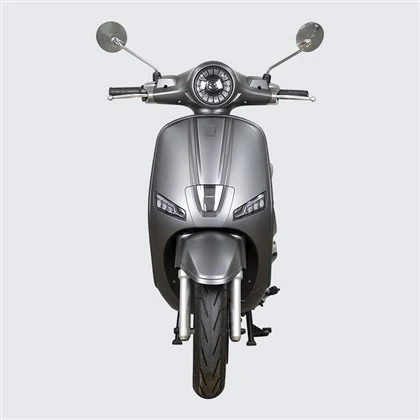
If you’re ready to learn more about our commuter line, or want to talk through what would work best for your specific commute, our team is here to help. We’re a supplier focused solely on commuter motorcycles, so we don’t waste time on models that are built for track days or showrooms. We build for the people who show up to work, run errands, and just want a reliable way to get where they need to go without the hassle.
Adventure Motorcycle References:
- U.S. Department of Energy. (2023). Fuel Economy Trends Report: Light-Duty Vehicles.
- National Highway Traffic Safety Administration. (2022). Motorcycle Safety and Commuter Behavior Study.
- Motorcycle Industry Council. (2023). Commuter Two-Wheeler Market Analysis.
- Urban Transportation Institute. (2022). Cost Comparison of Commuting Modes: Cars vs. Motorcycles.
Zhejiang Siekon Motor Technology Co., Ltd.
Zhejiang Siekon Motor Technology Co., Ltd. is one of the most professional commuter motorcycle manufacturers and suppliers in China, featured by quality products and good service. Please feel free to wholesale advanced commuter motorcycle made in China here from our factory. Also, custom service is available.
Address: Building 3, No. 112 Gaoxin East 1st Road, Tongxiang Economic Development Zone, Tongxiang City
E-mail: wsy@xkjsq.com
WebSite: https://www.siekonmotorcycle.com/
