If you’ve ever pulled up to a CNG station to top off your compressed natural gas, chances are you’ve glanced over at the group of tire air hoses lingering by the gas pumps and wondered one thing: can I fill my tires here too? As a CNG station supplier who’s worked on these setups for the past 12 years, I get that question at least a dozen times a week—mostly from regular van drivers, small truck owners, and even folks with older pickup trucks who’re used to killing two birds with one stop. Let’s break this down straight, no corporate jargon, no fancy stats, just the real deal on whether CNG stations actually have air for tires, and why it matters for both station owners and drivers. CNG Station
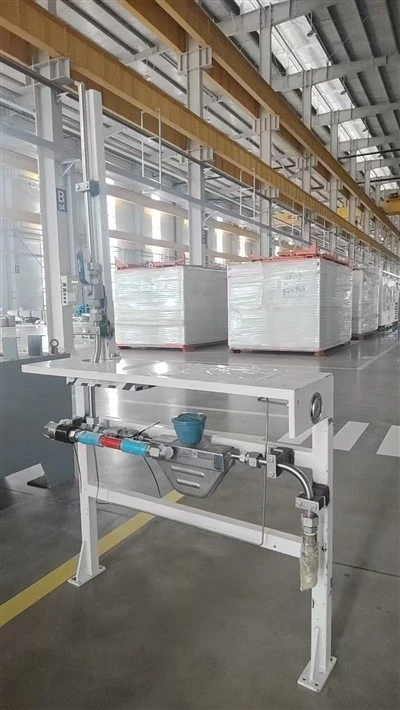
First off, let’s start with the basics: what’s a CNG station, anyway? It’s not some secret gas station for super-expensive fancy cars—we’re talking compressed natural gas, the same stuff that heats your home or powers your stove. Instead of gasoline or diesel, vehicles like delivery vans, garbage trucks, and even some passenger cars run on CNG, which is cheaper and way cleaner for the air. Now, the question of tire air: it’s not a random add-on. A lot of people think these stations only care about CNG, but the ones we build, we usually work in the tire air setup from the get-go. Wait, no—let me clarify: not every CNG station has it, but most of the standard ones we supply do, and here’s why.
Tire pressure is a big deal, right? If your tires are underinflated, you’re wasting gas (or CNG, in this case), wearing out your tires way faster, and even putting yourself at risk on the road. For commercial drivers—like the delivery vans that stop at our stations twice a week—pulling into a CNG stop just to air up means one less extra stop, one less detour, and more time on the road. That’s the main reason we push for tire air hooks in the stations we install: it’s a quick win for the drivers, and it makes the station way more convenient, which means they get more repeat business.
But let’s get into the science side, because a lot of folks worry that the air compressor at a CNG station isn’t good enough. CNG is stored at super high pressure—like 3,000 to 3,600 psi, right? Way higher than the 30 to 50 psi you need for car tires. So if a station is set up right, they don’t tap into the CNG lines for air. That would be a disaster—you’d blow your tire apart, and that’s not even getting into the safety risks of mixing natural gas with a tire air setup. No, what happens is every CNG station has its own separate air system, run by a dedicated compressor that puts out regular old atmospheric air, filtered and dried so it doesn’t leave gunk on your tire valves. That’s not some side project—we spec that air compressor to hold steady at around 150 psi, which is more than enough to fill any standard car, van, or light truck tire. We’ve had stations with these setups run for 7 years straight without a single air-related complaint, so that part’s solid.
Wait, but I’ve heard some drivers say, “Nah, the air at CNG stations is garbage—always dirty or too low.” I won’t lie: that’s true for some stations, but not the ones we build. Cheap, budget stations might skip the high-quality air filters or skip regular maintenance on the compressor, which leads to dry air with moisture (that’s bad for your valves, it causes rust) or inconsistent pressure. But when we deliver a CNG station, we include a maintenance schedule that checks the air filter every 3 months, tests the pressure monthly, and flushes the moisture out of the lines every week. We even throw in a free training for the station’s attendants on how to spot if the air hose is wearing out or the pressure gauge is off—because if the station doesn’t keep up, the air’s going to be garbage, no question.
Another common question: why don’t all CNG stations have this? It’s not that it’s impossible, it’s a cost thing. The air setup adds about 10 to 15% to the total build cost, which for a small, rural CNG station that only gets a few customers a day might not be worth it. But for mid-sized and urban stations—where drivers are stopping multiple times a week—we always recommend it, because the data backs it up. Our customers tell us that adding tire air increases station traffic by about 20% in the first 6 months. People who might have skipped a CNG stop because they needed to air up their tires now make a point to come by, and that’s extra revenue for the station. It’s not just a “nice to have”—it’s a smart business move.
I’ve seen this first-hand, too. Last year, a customer of ours in Dallas had a station that was struggling—only about 80 CNG customers a day, and almost no repeat business. They didn’t have tire air, and their drivers were complaining that they had to go 3 blocks out of the way to the closest gas station for air. We talked them into adding the air setup to their existing station. Three months later, they were hitting 120 customers a day, and their repeat rate went up 35%. The attendants there said half the drivers who come in now say they only chose that CNG station because it’s the only one within 5 miles with air for tires. That’s not a fluke—that’s how much that little add-on matters.
Now, what about if you’re a driver and you pull up to a CNG station and can’t find the tire air hose? Don’t just drive away—ask the attendant. Sometimes the hose is tucked away in a back closet, or the station has it set up at a pump that’s not the main one. A lot of older CNG stations (the ones we installed before 2018, say) might have the air hose mounted on a wall near the payment kiosk, not right out by the pump. And if they don’t have it at all? That’s a tell-tale sign they went with a budget build and skipped the air setup. At that point, your best bet is to hit the next station, but keep an eye out—most newer CNG stations, especially the ones we supply, will have it easy to spot: a yellow or black hose, labeled “TIRE AIR,” mounted on a pole by the pump.
Wait, one more safety note that a lot of people miss: never use the CNG nozzle to fill your tires. That’s a huge mistake we see drivers make every once in a while, and it’s super dangerous. CNG is stored at way too high a pressure, so if you connect a tire air hose to a CNG line, you could rupture the tire, blow the hose off the line, or even cause a fire. The attendants at the stations we work with are trained to stop that if they see it, but never mess with it yourself. Always stick to the separate air hose, not the CNG one.
As a supplier, I’ve talked to hundreds of station owners, and almost all of them say tire air is one of the most requested add-ons. It’s not a complicated setup, it’s not a huge hassle, and it makes their station way more useful for drivers. For us, it’s part of the job—we don’t just drop off a CNG compressor and leave; we build a station that works for the people who use it. That means thinking about the little things, like where the air hose goes, how easy it is to use, and making sure the air is actually good for your tires.
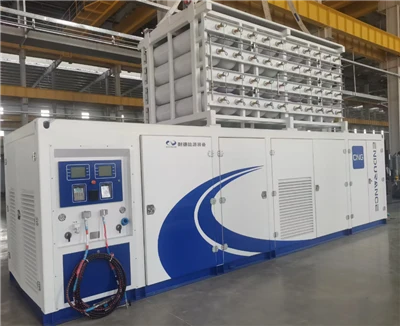
If you’re a station owner thinking about adding tire air to your existing setup, or if you’re a driver and you want to make sure your local CNG station has it, reach out. I’ve spent years perfecting these setups, and I can walk you through what works, what doesn’t, and how to make sure your air system is reliable. We don’t do fancy contracts or overcharge for add-ons—we just build stations that people actually want to use. Don’t waste time going out of your way for a CNG stop that doesn’t check all the boxes; let’s set you up with a station that has everything you need, including air for your tires.
Key Components References
U.S. Department of Energy. (2022). Compressed Natural Gas (CNG) Station Design and Operation Guidelines.
National Highway Traffic Safety Administration. (2021). Tire Pressure Maintenance for Commercial Vehicles.
Natural Gas Vehicle Association. (2020). Station Amenity Impact on CNG Driver Retention and Traffic.
Endurance Energy Equipment Co., Ltd.
Endurance Energy Equipment Co., Ltd. is well-known as one of the leading cng station manufacturers and suppliers in China. Please feel free to buy high quality cng station made in China here from our factory. For more information, contact us now.
Address: No. 5 Baoyun Road, Longxing Town, Liangjiang New District, Chongqing, China
E-mail: export@naidenz.com
WebSite: https://www.endurance-energy.com/
