If you’re reading this, chances are you’re in the market for a cryogenic liquid storage tank—whether you’re running a small food processing plant, a hospital that needs liquid oxygen for patient care, a biotech lab storing samples, or even a construction company using liquid nitrogen for concrete cooling. One of the most common questions we get at our tank shop isn’t just “do you build these?” it’s “what size cryogenic tank do I actually need?” It sounds simple, but pick the wrong size, and you’re either constantly running out of cryo liquid mid-job, or wasting money on a tank that’s way too big for your needs. Cryogenic Liquid Storage Tank
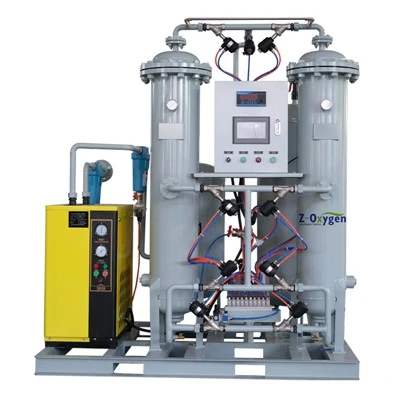
Let’s break this down like we’re chatting over a coffee (yes, we actually do this at our workshop break room, no stuffy sales jargon here). First, let’s get one thing straight: cryo tanks hold super cold liquids—liquid nitrogen (LN2), liquid oxygen (LOX), liquid argon (LAr), liquid CO2, etc.—so “size” isn’t just how many gallons it holds on paper. It’s how much you actually use over time, plus how well the tank insulates, and even space in your facility. We’ve seen people skip these steps and end up with a tank that’s either a paperweight or a budget headache, so let’s avoid that.
First step: calculate your daily consumption rate. This is the big one. Stop guessing. Pull your past invoices, check your equipment specs, or do a quick test run if you’re new to the process. Let’s use common examples because that’s how this works. If you’re a small clinic, your LOX usage for oxygen concentrators and emergency backups is usually 2 to 5 gallons per day. A medium-sized craft brewery using LN2 to flash-freeze hops might use 10 to 20 gallons a day. A biotech lab storing cell samples? That’s 5 to 15 gallons a day, depending on how many freezers you have. A food processing plant that uses liquid CO2 for carbonating soda? Could be 50 to 200 gallons a day, easy.
Wait, but—don’t just take that number and buy a tank that’s exactly that. Cryo tanks aren’t like a water cooler you refill every day. They lose a little liquid over time because of “boil-off.” Think of it like a cold soda can sweating: the insulation isn’t perfect, so some of the liquid turns back to gas and escapes. For a good, well-made cryo tank, boil-off is usually 1 to 2% of the tank’s total capacity per day. Cheaper tanks? Maybe 3 to 5%. That’s a big difference. If you buy a 50-gallon tank and only use 5 gallons a day, but boil-off is 3% a day, that’s 1.5 gallons lost just sitting there. So you’re not just using what you need—you’re throwing away extra because the tank is too small, and the boil-off eats into your supply.
Next, add a buffer. This is where most people mess up. If your daily use is 5 gallons, don’t buy a 5-gallon tank. What if a delivery is late? What if you have a big order that weekend, or a machine breaks and uses more LN2 than usual? We recommend a 20 to 30% buffer for most small to mid-sized operations. Let’s do the math: if you use 10 gallons a day, 10 * 1.3 (that’s 30% buffer) is 13 gallons. But wait—you also don’t want a tank that’s so big you’re only using a tiny fraction of it. Tanks perform best when they’re 20 to 80% full. If you have a 50-gallon tank and only use 10 gallons a day, you’ll only ever have 5 to 15 gallons in it, which means more boil-off relative to how much you’re actually using. That’s a waste of money upfront (bigger tanks cost more) and waste every month on lost liquid.
Let’s use a real example from last year. A local butcher shop came to us a while back. They used LN2 to flash-freeze meat products, and they thought they only needed a 10-gallon tank because their daily use was 8 gallons. They ordered it, and three months later they were back frustrated. Why? Their delivery was running a day late once a month, and they were losing 1.5 gallons a day to boil-off. So by the time the next delivery came, they were running on fumes, almost losing a batch of meat. We swapped them to a 25-gallon tank—their daily use is 8, buffer 30% is 10.4, so that 25-gallon tank keeps them at 30-40% full, no boil-off overload, and enough buffer for late deliveries. Now they’re way happier, and they didn’t pay for a tank twice as big as they needed.
Another factor: tank type matters too. If you’re using a static tank (the kind that sits on the ground at your facility) vs. a portable tank (for jobs you take on-site), the size rules change. Portable tanks are smaller, usually 5 to 50 gallons, because you have to move them. So if you’re a construction contractor moving LN2 to a job site, you’ll go with a 20 or 30 gallon portable, not a 100-gallon static. For static tanks, also think about space: can your facility fit a 10-foot tall tank? Most industrial sites have space, but a small lab might only have a 5×5 foot spot. We’ve had people fall in love with a 100-gallon tank, only to realize it won’t fit through their loading dock, so always measure the spot before you even look at sizes.
Wait, what about tank pressure? Some cryo tanks are low-pressure (15 to 25 psi) and some are high-pressure (150 to 220 psi). High-pressure tanks are smaller for the same amount of usable liquid, because they hold the gas under pressure, so you don’t need as much volume. If you’re using the liquid to run equipment that needs pressurized gas (like a welding rig using liquid argon turned to gas), a high-pressure tank might be better—so you can go with a smaller physical size even if your consumption is similar. Low-pressure tanks are for storage where you just need to keep the liquid cold, no need to vaporize it right away, so they’re usually bigger for the same usable amount. That’s a key point a lot of new buyers miss: pressure affects size too, not just how much you use.
Let’s talk about common mistakes we see all the time. First, guessing instead of measuring. We’ve had a hospital order a tank because they “thought” they used 10 gallons a day, but it turned out their usage was 3 gallons a day—so they were paying for a 50-gallon tank that lost $200 a month to boil-off. That’s a big waste. Second, ignoring boil-off. A tank with 5% boil-off will cost you way more in liquid over time than a tank with 1% boil-off, even if the price difference is a few hundred bucks. Cheaper tanks often use worse insulation, so that’s something to check. Third, no buffer. Emergencies happen, deliveries get delayed, machines break—don’t leave yourself high and dry.
So let’s put this all into a step-by-step checklist you can use right now, no math degree required:
- Track your daily consumption for 2 weeks: Pull old bills, log how much you use each day. If you’re new, run a test: fill a temporary tank, use it, track how much you burn through in a week. Write this number down—this is your baseline.
- Calculate your ideal usable volume: Baseline use x 1.2 (20% buffer) or x 1.3 (30% buffer, if you have frequent delays). This is how much usable liquid you need.
- Add 10-15% extra to your calculation, just in case: This accounts for boil-off, and ensures you never run below 20% of the tank’s capacity (which is where boil-off spikes).
- Check your space: Measure the spot where the tank will go—height, width, access for deliveries. A 100-gallon tank isn’t just bigger on paper; it’s physical size matters.
- Pick the right pressure type: If you need pressurized vapor right away, go high-pressure (smaller physical size). If you just need storage, low-pressure is standard and cheaper upfront.
Let’s test this with another example. A craft brewery we work with: their daily LN2 use is 15 gallons. Step 2: 15 x 1.3 = 19.5 gallons. Step 3: add 15% = ~22.5 gallons. So a 25-gallon tank is perfect. It fits in their outdoor 6×6 foot spot, the boil-off on our tanks is 1.5% a day, so they lose less than a half-gallon a day, no buffer issues, and they didn’t pay for a 50-gallon tank that would sit half-empty and waste money. They’ve had this for two years, no complaints.
What if you’re still unsure? We get it, tank specs can be confusing. A lot of suppliers will just push you for a 100-gallon tank “for flexibility,” but that’s not flexibility—that’s extra cost. Our team at the shop actually does free quick assessments: you can send us your usage numbers, tell us a little about your space, and we’ll walk you through what size works best, no sales pitch, no pressure. We’d rather get you the right tank once than have you come back six months later upset you wasted money.
Wait, one last thing: don’t forget to account for future growth. If you’re a small lab now but plan to add more freezers next year, or a brewery that’s expanding their line, you might want to size up 10% extra now instead of buying a new tank in a year. That’s a middle ground—don’t buy for 5 years of growth if you’re only growing 20%, but a little buffer for upcoming changes is smart.
At the end of the day, picking a cryo tank size is all about matching your actual needs, not a one-size-fits-all number. Too small, and you’re stuck scrambling for refills. Too big, and you’re throwing money away on unused capacity and lost liquid to boil-off. We’ve helped hundreds of customers pick the right size, from tiny 5-gallon portable tanks for lab samples to 500-gallon static tanks for large food processing plants.
If you’re ready to stop guessing and get the exact size that works for you, reach out to our team to chat through your needs. We’ll break down the numbers, answer any questions about insulation, pressure, or space, and make sure you don’t end up with a tank that’s more hassle than it’s worth.
Specialty Gases References:
- Cryogenic Tank Size Selection Guide, Industrial Gas Storage Association, 2022.
- Boil-off Rates in Cryogenic Storage Vessels, Journal of Cryogenic Engineering, Vol. 45, No. 3, 2021.
- Small-Scale Cryogenic Storage for Commercial Applications, International Association of Food Industry Suppliers, 2023.
Xinxiang Jiale Intelligent Equipment Co., Ltd.
As one of the most professional cryogenic liquid storage tank manufacturers and suppliers in China, we’re featured by quality products and good service. Please rest assured to buy durable cryogenic liquid storage tank for sale here from our factory. We also accept customized orders.
Address: No.3913, 9th Floor, Unit 3, East Commercial and Office Complex, Baolong City Plaza, Hongqi District, Xinxiang City, Henan Province, China
E-mail: cc2397410@gmail.com
WebSite: https://www.jiale-asu.com/
