Hey there, fellow bus operators, fleet managers, and anyone who’s ever sweated through a bumpy bus ride on a sweltering day (or shivered their way through a winter route—we feel you). Let’s cut to the chase: your bus AC fan speed isn’t just a “set it and forget it” button. As a bus AC supplier who’s spent the last decade troubleshooting systems for small shuttle fleets and cross-country coach lines, I can’t tell you how many times I’ve gotten a call at 2 a.m. from a manager panicking because their AC is blowing too hard, too slow, or just not at all. Bus Air Conditioner

Today, we’re breaking down exactly how to adjust your bus AC fan speed like a pro—no engineering degree required. We’ll skip the jargon, use the kind of tips we’ve tested on hundreds of vehicles, and keep it real (no stuffy manuals here). First, let’s get one thing straight: adjusting fan speed isn’t just about comfort. It saves fuel, extends your AC unit’s lifespan, and keeps your passengers happy. Win, win, win.
First, Know Your Bus AC Setup (Most Common Types)
Before you tweak anything, you need to know what kind of AC you’re working with. From what we see out on the road, there are two main types of bus AC systems: direct-drive (older, simpler units common in shuttles and small buses) and variable-speed (newer, energy-efficient models for coaches and luxury buses).
Direct-drive systems: These have a basic fan that’s linked to the compressor. Usually, you adjust speed with a knob or switch on the dash—low, medium, high, maybe an auto setting. Nothing fancy, but easy to mess up if you don’t know what each setting does.
Variable-speed systems: These are the ones we install most now. They use an inverter to adjust the fan speed smoothly, not just on three preset levels. They’re quieter, use less power, and can adjust based on cabin temperature. But they also have a few more settings you might not have noticed.
Step 1: Start With the Basics—Your Dash Controls
Let’s start with the obvious stuff, but you’d be surprised how many people skip this. The first place to check is the driver’s control panel. Look for the fan icon—it’s usually a little fan shape with lines blowing out of it. That’s your main control.
For direct-drive systems (old school): If it’s blowing too hard, nudge it down one notch. If it’s too weak, bump it up. But here’s a pro tip from our techs: don’t just leave it on high all the time. When the cabin is cold (or cool in mild weather), low speed is enough. High speed should only be for when it’s 95 degrees outside and you’ve got 40 passengers crammed in—you need that extra airflow to cycle the cold air fast.
For variable-speed systems (newer): The fan control might not have fixed levels. Instead, there’s a slide bar or a +/– button. Play with it—hold down the + for a few seconds, and you’ll see it adjust gradually. If your AC has an “auto” mode, that’s where the magic is. Auto mode uses a sensor to check the cabin temp and adjust fan speed automatically. If you’re running late and don’t want to fumble with controls, just hit auto—9 times out of 10, it’s spot-on.
Wait, quick check: Sometimes the controls look confusing because some buses mix fan speed with air direction (like if the air is blowing at your face vs. the floor). Don’t mix those up! The fan icon is separate from the air direction arrows. We see this all the time—someone turns the direction knob down, thinks they adjusted speed, and wonders why the bus is suddenly hot. Oops.
Step 2: What If Your Controls Aren’t Working?
Okay, so you messed with the knob, pressed the buttons, and nothing changed. That’s not a failure—we get calls about this every week. Let’s troubleshoot before you call us (we’re here for you, but let’s rule out the easy stuff first).
First, check the filter. Yeah, the AC filter. If it’s clogged with dust, leaves, or bug guts, the fan can’t push air through—no matter how high you set it. Most bus AC filters are behind a panel near the dash or under the seats, and you can pull them out in 2 minutes. If it’s gray and dirty, wash it (if it’s reusable) or replace it (disposable ones are cheap, we stock them) and see if that fixes it. We’ve had so many customers save themselves a service call just by swapping a filter.
Next, check the compressor. Wait, no—don’t panic. If the fan is blowing slow, it might not be the fan itself. Some systems have a pressure switch that shuts down high speed if the AC is low on refrigerant (that’s the stuff that makes the air cold). If you hear a weird clicking noise when you turn the fan up, that might be the pressure switch. Don’t mess with refrigerant yourself—call a tech, or if you’re looking for a reliable partner, we do AC service too, no fine print.
Also, check the cabin vents. Are the vents open all the way? Sometimes passengers lean against them, or a package gets shoved in front, blocking airflow. If your vents are half-closed, even a high fan setting will feel weak. Have your co-driver walk around the bus and make sure every vent is open—easy fix, no tools needed.
Step 3: Adjusting for Different Bus Types (Shuttle vs. Coach vs. Small Van)
Here’s the thing: a one-size-fits-all fan speed doesn’t work. A 15-passenger shuttle is way different than a 50-passenger cross-country coach. Let’s break it down by what you’re driving.
Shuttle buses (school shuttles, airport shuttles, small town buses): These have smaller cabins, usually with more stops. Passengers come and go a lot, so you don’t need high speed all the time. For mild weather (60–75 degrees outside), set fan speed to medium-low. If it’s over 80, medium is good—high will just make noise and use more fuel. Also, since shuttles have more door openings, auto mode works great here because it adjusts when you open the doors and lose cold air.
Coach buses (long-distance, luxury): These have big, sealed cabins, so you need more consistent airflow. For summer, when it’s over 90 outside, set fan to medium-high. If you’ve got a full load (40+ passengers), bump it to high for the first 10 minutes to get the cabin down to a comfortable 72 degrees, then drop it back to medium. For winter, fan speed should be low—high speed will blow cold air on passengers and waste heat. Some of our luxury coach units have a separate rear fan control for the back seats—make sure those are set to match the front, not too high or too low.
Small passenger vans: Most van ACs are direct-drive, so they’re simple. If you’re driving alone, low speed is enough. With 3–4 people, medium. Don’t blast high—van cabins are tight, so high speed can feel like a wind tunnel, and it puts extra strain on the small AC unit.
Step 4: Pro Tips to Make Fan Speed Adjustments Last Longer
As a bus AC supplier, we’re not just here to sell you parts—we’re here to help you keep your AC running right. Here are a few tricks we’ve learned from 10 years on the job that’ll make your fan speed adjustments work better and last longer.
- Timing is everything: Don’t adjust fan speed mid-ride when the cabin is already freezing or roasting. If you’re at a stop light, that’s the perfect time. The engine is idling, so the AC has more power, and you won’t be adjusting while driving (safety first, always).
- Don’t run high speed 24/7: We see this all the time. Drivers leave fan on high even when the cabin is cool, and that wears out the fan motor faster. It also uses 15–20% more fuel—money out of your pocket. Low to medium speed is almost always enough for comfort.
- Clean your vents twice a year: In the spring, before summer hits, and in the fall, before winter. Dust, pollen, and cigarette smoke (if you allow that) build up in vents and block airflow. A quick wipe with a cloth and a vacuum with a brush attachment makes a huge difference in how your fan speed feels.
- If you have a variable-speed unit, use “eco mode”: Most of these units have an eco setting that adjusts fan speed to save energy. It’s not as cold as max, but it’s comfortable for most rides, and it extends your AC’s lifespan. We recommend turning eco mode on when you’re driving routes with steady passenger loads.
What To Avoid When Adjusting Fan Speed
Let’s wrap this up with the mistakes we see drivers make that end up costing them time and money.
First: Don’t override auto mode randomly. If your auto mode is working, leave it. Every time you mess with it, the sensor has to re-calibrate, and that can cause the fan to act weird later.
Second: Don’t ignore weird noises. If your fan makes a grinding sound when you turn it up, that’s a sign the motor is going bad. Adjusting speed won’t fix it—you need to replace the fan motor. We sell replacement parts for almost every bus AC brand, so don’t wait until it breaks on the side of the road.
Third: Don’t use fan speed to adjust temperature. That’s what the cold knob (or temperature button) is for. If you want colder air, turn the temp down, not the fan up. Blowing high speed on a slightly warm AC just makes noise and doesn’t cool the cabin any faster. It’s a common mistake, but easy to fix.
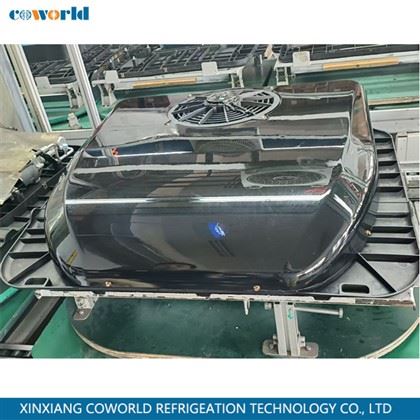
At the end of the day, adjusting your bus AC fan speed is simple once you know what you’re looking for. It’s not about guessing—it’s about knowing your system, checking the basics (filters, vents), and matching your setting to your bus size and the weather. If you’re still having trouble, whether it’s a wonky control panel or a fan that won’t budge, we’re here to help. We’re a bus AC supplier that doesn’t just sell units—we provide support, tips, and parts to keep your system running smooth.
Refrigerated Truck Body If you’re looking to upgrade your AC system, replace a faulty fan motor, or just get a second opinion on why your fan speed is off, hit us up to connect for sourcing and service. We’re not the big, impersonal supplier—we’re the team that’s on call when you need us, with parts that fit your bus, no guesswork.
References
- Bus Air Conditioning Systems: Operation, Troubleshooting, and Maintenance. Commercial Vehicle Cooling Association, 2022.
- Fleet Fuel Efficiency Tips: HVAC Optimization for Transit Buses. American Public Transportation Association, 2021.
- Variable-Speed AC Technology for Commercial Vehicles. SAE International, 2020.
Xinxiang Coworld Refrigeration Technology Co., Ltd.
As one of the most professional bus air conditioner manufacturers and suppliers in China, our products have good reputation in the market. We warmly welcome you to buy cheap bus air conditioner for sale here from our factory. If you have any enquiry about cooperation, please feel free to email us.
Address: B103 ROOM, GT CITY, NO.199 ZHENGZHONG ROAD, HIGH TECH ZONE, XINXIANG CITY, HENAN PROVINCE, CHINA
E-mail: coworldfrio@hotmail.com
WebSite: https://www.coworldthermo.com/
