As a round diamond supplier who’s spent over a decade sourcing, cutting, and matching stones for jewelers and private clients alike, one of the most frequent questions I get asked is: “Why are round diamonds almost always pricier than Asscher cuts?” I’ve sat across from store owners, engaged couples, and even fellow industry peers as they lay out their wishlists, and more often than not, that question is tied to a bigger one: “Am I paying extra for a round shape just because it’s popular, or is there something real behind the price gap?” Today, I want to break this down not with textbook jargon, but with the on-the-ground, day-to-day context only someone who handles these stones can share. Round Diamond
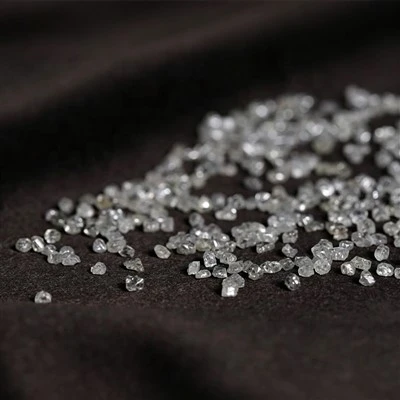
Let’s start with the basics: what makes a diamond round, versus an Asscher cut? Round brilliant diamonds, the most common shape you’ll see in engagement rings and fine jewelry, were refined in the early 1900s to maximize light return—how much light bounces out of the stone to create that signature sparkle. Their shape is symmetrical, with 57 or 58 facets (the extra one is for culet, the tiny point at the bottom) arranged to catch and reflect light from every angle. The Asscher cut, on the other hand, is a square-shaped, step-cut diamond, born in the early 1900s as well, but designed to mimic the geometric sparkle of old European cut diamonds. It has fewer facets—usually 50—arranged in a grid pattern, which creates that sharp, mirror-like look rather than the round’s soft, scattered sparkle.
At first glance, the Asscher’s simpler shape might make you think it’s easier to cut, which would make it cheaper. But that’s where the real story starts. Cutting diamonds, regardless of shape, begins with a rough diamond—the raw, mined stone that’s only had its outer rock stripped away. Rough diamonds aren’t uniform; they have natural inclusions, flaws, and crystalline structures that dictate how you can shape them without ruining its value. A few years back, I worked with a single 3-carat rough diamond that had a very symmetrical structure—no major flaws, and a shape that could be split into two Asschers or one round. The rough’s internal crystal orientation meant that to get a perfect round, the cutter didn’t have to waste as much material fixing irregular edges, but when he tried to split that same stone into two Asschers, he had to cut away almost 30% of the rough just to avoid tiny natural cracks that ran along the Asscher’s geometric corners. That’s the first big price driver: rough yield.
For rounds, the rough yield is just higher. When mining teams pull rough from the earth, about 40% of all rough diamonds mined are suited for round brilliant cuts, because their round shape aligns with how many natural diamonds crystallize. That’s not true for Asschers. Asscher cuts are a rare shape, and only about 1% of rough diamonds are suitable for cutting into Asscher stones. Most Asscher cuts need a rough stone that’s almost a perfect square, with no internal flaws along the square’s sides—otherwise, you end up with a stone that has an inclusion right in the center, which kills its value. I’ve seen cutters turn down rough stones that would’ve made great rounds because they didn’t have the symmetrical, square structure needed for an Asscher. That scarcity of suitable rough is a big reason Asschers often cost less per carat, even with the higher labor for shaping.
Now, let’s talk about labor. Cutting a diamond is a delicate, hands-on process that takes hours—sometimes days—per stone. Round brilliant cuts, while they look simple, are actually more complex to cut than most people realize. The symmetry of a round’s facets has to be perfect within thousandths of a millimeter; even a tiny off-set facet can dim the light, which drops a diamond’s grade (and price) by hundreds, even thousands of dollars. But Asschers? Their labor is often more precise in a different way. Asschers have deep, parallel facets that run along the square’s edges, and if even one facet is off by a fraction of a degree, it creates a “window”—a dark spot in the center of the stone that ruins its look. A good Asscher cutter has to spend hours checking each facet with a loupe, adjusting just a hair to get that parallel alignment right. That extra precision, paired with the scarcity of suitable rough, means labor costs for Asschers can sometimes equal or even exceed round cutting labor.
But wait—scarcity doesn’t just stop at rough and cutting. Round diamonds are way more popular, which drives demand. According to the Gemological Institute of America (GIA), about 75% of all diamonds sold in jewelry are round cuts. That demand means round diamonds have a larger supply chain, more competition among suppliers, and a more established market for resale. If you buy a 1-carat round diamond, you can almost always resell it easily because jewelers have steady orders for round settings, chain stores keep them in stock, and they’re the default for engagement rings. Asscher cuts? They’re unique, but they’re a niche. Most independent jewelers only order a few Asschers a year, because they need a custom setting to showcase the square shape’s geometric sparkle. That means Asschers often have lower resale value, which suppliers factor into their pricing. I’ve had a customer buy a 1.5-carat G-color, VS1 Asscher for $5,200 a few years back, and when he tried to resell it last year, he only got $3,800. That same 1.5-carat round would’ve easily fetched over $6,500 on the resale market.
Of course, price isn’t a one-size-fits-all thing. There are cases where an Asscher can be more expensive than a round—usually when it’s a large, flawless stone. For example, a 5-carat Asscher with no inclusions, a perfectly symmetrical square shape, and a D color (the highest grade) is going to command a premium because those large, perfect Asschers are even rarer than large rounds. But for the average stone—say, a 1-carat, G-color, VS1 stone that most people buy for engagement rings—the round will almost always be more expensive than an Asscher of the same grade. The GIA’s 2023 diamond price list backs this up: a 1-carat G VS1 round is priced around $5,100, while a 1-carat G VS1 Asscher of the same grade is around $4,200. That $900 difference lines up exactly with the rough yield and demand gaps I mentioned earlier.
Another factor I see all the time is people confusing “carat weight” with size. A round diamond looks bigger than an Asscher of the same carat weight, because of its shape. The round’s girdle (the edge of the stone) is spread wider than an Asscher’s square edge for the same carat. So a 1-carat round will look like it’s 6.5mm across, while a 1-carat Asscher is only about 6mm across. That means if you want a diamond that looks larger, you might opt for a round, which often makes people assume the round is pricier because they’re comparing sizes, not carat weights. I’ve had engaged couples come to me saying they want a 1-carat stone, but they’re surprised when I show them a 1.1-carat Asscher that’s almost the same size as a 1-carat round, for less money.
Now, as someone who’s in the round diamond game, I’m not here to say Asschers are “worse” than rounds. They’re a beautiful, timeless shape with a unique sparkle that fits perfectly in vintage-style or geometric settings. For clients who prioritize a bold, stand-out stone over the round’s widespread familiarity, an Asscher is a great choice. But when someone asks why rounds are pricier, it’s not just a marketing trick— it’s a combination of natural rough scarcity, cutting complexity, and massive demand that’s been built over decades.
I’ve seen this play out firsthand during industry trade shows, where jewelers come looking for both shapes. Last year, at the Baselworld trade show, I sat next to an Asscher cutter who said he only gets 50 suitable rough stones a month, while a round cutter two booths over gets 500. That gap never goes away—because natural diamonds are formed in such a way that round shapes are far more common, but Asschers’ specific square structure is a rare find.
So what does this mean for you, whether you’re buying a stone for an engagement ring, a necklace, or a custom piece? If budget is a top concern, and you love the classic, versatile sparkle, a round diamond makes sense—its widespread demand means you’ll have more options, easier resale, and a higher quality-to-price ratio for standard-sized stones. If you want something unique, a little more geometric, and don’t mind a smaller size for the same carat weight, an Asscher can be a great value. But just know, the price gap between the two shapes is rooted in more than just popularity—it’s the work that goes into turning a hunk of rough rock into a finished stone, and how many of those stones actually exist to meet demand.
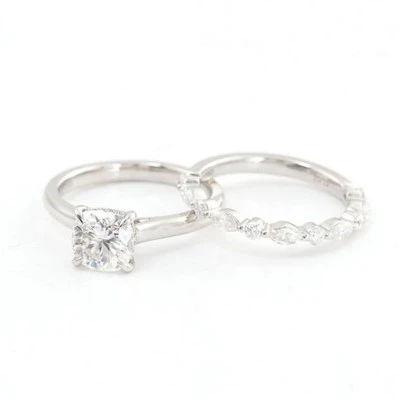
If you’re ready to browse our inventory of round diamonds, compare with other shapes, or talk through what fits your budget and style, feel free to reach out to our team to set up a time to discuss your needs. We’d be happy to walk you through different cuts, grades, and pricing options tailored to your project.
Octagonal Diamond References
- Gemological Institute of America (GIA). (2023). Diamond Price Index Report.
- American Gem Society (AGS). (2022). Diamond Cutting Complexity and Yield Analysis.
- International Gemological Institute (IGI). (2023). Global Diamond Shape Demand Trends.
Hongkong Jingcan Crystal Craft Limited
Hongkong Jingcan Crystal Craft Limited is one of the most experienced round diamond manufacturers and suppliers in China. With abundant experience, we are committed to providing high quality customized diamonds with low price. Please rest assured to wholesale bulk classy round diamond in stock here and get quotation from our factory. 3 years warranty is available.
Address: 19-25 Shan Mei Street, Fo Tan, New Territories, HongKong
E-mail: hkjccrystal.cheungkong@gmail.com
WebSite: https://www.hkjcdiamond.com/
