Hey everyone,
If you’ve ever wondered what exactly wire mesh fabric is, you’ve come to the right spot. As a wire mesh supplier, I get this question all the time—from contractors checking specs for a new fence to designers hunting for unique materials for a retail display, even hobbyists tinkering with a backyard project. It’s not just some random grid of wires; it’s a super versatile material that’s way more common in your daily life than you probably realize. Let’s break it down, keep it real, and skip the stuffy textbook jargon. Wire Mesh
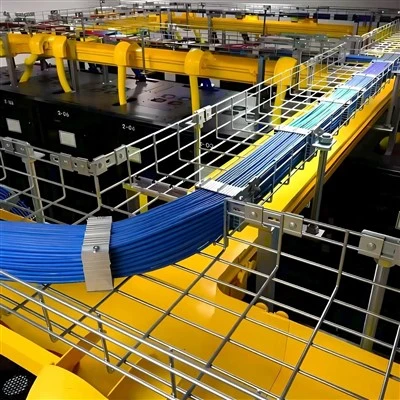
First off, let’s get the basics straight: wire mesh fabric is a flat, flexible (wait, mostly) sheet made by weaving, welding, or knitting metal wires into a consistent, patterned grid. The wires can be thin like fishing line or thick enough to hold back heavy rocks, and the gaps between them—we call those “openings”—can be as tiny as a pinhole or as big as a basketball hoop. But here’s the thing: it’s not just “metal netting.” There are dozens of types, each built for a specific job, and I’ve seen every single one of them in action over the years.
Let’s start with how it’s actually made, because that’s where the real differences come in. The two main production methods are weaving and welding, though there’s a less common one called knitting too. Woven wire mesh is the one that feels like cloth—like, if you’ve ever screen-printed a t-shirt, it’s similar to that weave, just with metal instead of cotton. You have a “warp” wire running lengthwise, and a “weft” wire crossing over and under the warp to lock it in place. I remember a customer last year, a small-scale bakery, wanted woven mesh for their pastry cooling racks—they needed the flexibility to bend it into a circular shape without breaking, which welding just can’t do. Welded mesh, on the other hand, is stiffer: every single crossing point of the warp and weft wires is fused with heat and pressure so it’s solid, no give. That’s the stuff you see in garden fencing or dog crate panels—way more durable for holding heavy stuff than woven.
Then there’s the material the wire is made of, and that’s where most people get tripped up. It’s not just steel. You’ve got galvanized steel, which is regular steel coated in zinc to stop rust—perfect for outdoor fences where it’s exposed to rain. Then there’s stainless steel, which is way pricier but can handle saltwater, chemicals, and high heat. I supplied a stainless steel mesh to a brewery last month for their mash tuns—they needed it to hold grain while letting water pass through, and rust would have ruined a whole batch of beer. There’s also aluminum, which is lightweight, good for window screens so it doesn’t sag, and even copper for decorative accents because it develops that cool patina over time. Whatever you need, there’s a wire for it.
Now, let’s talk about what wire mesh is actually used for, because it’s not all construction. I’ve categorized the jobs I see most often, just to make it relatable. For residential stuff: window screens (it’s the fine mesh that keeps bugs out but lets air flow), garden beds (welded mesh keeps rabbits and gophers from digging up veggies), and even stair treads—some homeowners use it instead of wood because it doesn’t get slippery when wet. Then commercial/industrial: filtration is a big one—oil refineries use woven mesh to strain out impurities from crude oil, and swimming pools use it in their sand filters. Architectural stuff is huge too—designers use wire mesh for room dividers, facade accents, or even light fixtures because it’s semi-transparent; light shines through the gaps but still creates privacy. Oh, and automotive: car grilles are almost always wire mesh, right? It’s tough enough to keep debris out but lets air get to the engine.
Wait, but here’s a common misconception: all wire mesh is the same size, right? No way. We measure it by two main things: wire diameter (how thick the individual wire is) and mesh count (how many wires are in a 1-inch span). A fine mesh, like 200-count, has tiny openings—you’d use that for sifting flour or straining coffee, basically. A low-count mesh, like 5-count, has big openings, good for supporting shelves in a garage. Last week, a local artist came to me needing 10-count aluminum mesh for a large outdoor sculpture—they wanted the thick wires to hold up to wind, and the big gaps to let light through. That’s the kind of custom project that makes this job fun.
Now, as a supplier, I’ve learned that picking the right wire mesh isn’t just about size and material—it’s about the environment it’s going in. If it’s going somewhere super humid, like a coastal porch, galvanized steel might not be enough; you need marine-grade stainless steel. If it’s going inside a food processing plant, it has to be food-grade stainless steel, no coatings that might chip off and get into food. I once had a customer try to save a buck by using regular galvanized mesh for a restaurant’s fryer basket—within a month, the zinc coating was peeling off into the oil, and they had to replace everything. Lesson learned: cheap isn’t always better.
Also, there’s a lot of custom stuff we do—cutting mesh to specific sizes, bending it into curves, even adding a powder coat in any color. A few months back, a café asked for black powder-coated mesh for their countertop display cases; they wanted it to look sleek, not like the gray mesh you see at a hardware store. We were able to pull that off, and it turned out way better than they imagined.
Wait, let’s circle back to the original question: what is wire mesh fabric, exactly? At the end of the day, it’s a structural material that balances strength, flexibility, permeability (that’s the fancy word for “letting stuff pass through”), and aesthetics. It’s not just a commodity—it’s a solution to a lot of different problems, big and small. Whether you’re a homeowner fixing a screen, a builder putting up a fence, or an artist creating something new, there’s a wire mesh type that fits your needs.
If you’re in the market for wire mesh and not sure where to start, don’t overcomplicate it. Think about where it’ll live (outdoor? Food-related?), what it needs to do (hold weight? Let air through?), and how it should look. I’ve helped hundreds of people narrow it down over the years, so just reach out. We can walk through options, answer your questions, and even send samples if you want to see the difference between a fine and coarse mesh for yourself. No pressure, just good old-fashioned wire mesh advice.
Fiber Optic Raceway Don’t sleep on wire mesh—it’s way more versatile than you think. Next time you’re at a grocery store, look at the produce bins: that’s wire mesh. Look at the front of your car: that’s wire mesh. Even the mesh in your laundry room drying rack? Yep. It’s everywhere, and it’s there for a reason.
References
- "Wire Mesh Fabric: Types and Applications" – Industrial Materials Journal, 2022
- "Weaving and Welding Techniques for Metal Mesh Production" – Manufacturing Today, 2021
- "Corrosion Resistance of Metal Wire Mesh for Outdoor Applications" – Construction Materials Quarterly, 2023
- "Architectural Wire Mesh in Modern Design" – Interior Design Trends Digest, 2022
Hebei Shenyi Metal Products Co., Ltd.
Hebei Shenyi Metal Products Co., Ltd. is one of the most professional wire mesh manufacturers and suppliers in China, featured by quality products and good service. Please rest assured to wholesale durable wire mesh in stock here and get free sample from our factory. Customized orders are welcome.
Address: Gengtun Industrial Zone, Gengtun Village, Xiliangwa Township, Anping County, Hengshui City, Hebei Province
E-mail: HBshenyi@outlook.com
WebSite: https://www.shenyimetal.com/
