When someone first reaches out to our shop asking, “What’s the maximum part size for a 5 axis machining center,” I don’t just throw out a number and move on. For us, a 5 axis machining center is more than a piece of equipment—it’s a solution for complex, high-precision parts that 3 axis mills can’t handle. That question always leads to a dozen other conversations, because the “maximum size” isn’t a single fixed value; it’s a blend of machine design, workholding, part geometry, and what you actually need to machine. Let me break this down like I do with every customer who sits across our conference table, or sends an email at 9 PM after a long production run. 5 Axis Machining Center
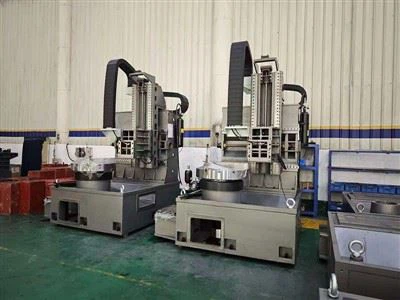
First, let’s get clear on what “5 axis machining” actually means here. We don’t just add two extra axes to a 3 axis mill. A standard 3 axis mill moves the table along X and Y, and the spindle along Z. 5 axis machines add two rotational axes—usually a trunnion table that tilts (B axis) and rotates (C axis), or a head that swivels (A and C axes)—so the cutting tool can approach a part from any angle, without re-fixturing. That ability changes how we define maximum part size, because it’s not just about how big the table can hold, but how that table interacts with the cutting tool and how the part behaves when tilted.
A lot of our competitors will quote a maximum table load and a maximum part diameter, but that’s half the story. Let’s start with the basics of our machines, since that’s what we build every day. Our mid-range 5 axis vertical machining centers (VMCs) have a standard trunnion table that’s 1,500 mm in diameter. That table can handle parts weighing up to 1,500 kg, and we often run parts right up to 1,400 mm in diameter. But wait—there’s a catch here: that 1,400 mm measurement is the part’s overall footprint. If your part has long, overhanging features, like turbine blades or aerospace brackets, we have to account for tool length too. The spindle on that same machine has a Z travel of 800 mm, and when the trunnion tilts to 90 degrees, the distance from the spindle nose to the center of the table shrinks. So if you’re using a 500 mm long tool to reach a deep pocket on a tilted part, that cuts your effective reach—so your maximum part length can’t just be 1,400 mm; it has to account for that tool length and the clearance between the tool and the machine’s frame.
We had a customer last year in the oil and gas industry who came to us with a 1,600 mm long valve body they wanted to machine on a 5 axis machine. At first glance, our 1,500 mm table seemed too small. But when we adjusted the workholding—using a four-jaw chuck instead of a full trunnion mount, and offsetting the part’s center of rotation a little away from the table’s center—we got it to fit. The key there wasn’t just the table size, but how we positioned the part relative to the axes of rotation. If we’d tried to mount that part dead-center, it would have collided with the machine’s protective enclosure when the trunnion tilted. That’s why we always tell customers: don’t just measure your part’s length or width. Measure how much clearance you have between every edge of the part and the machine’s axis limits.
Another big factor is part weight, especially for heavy parts. A lot of our large 5 axis machines, the ones with 2,000 mm trunnion tables, can handle parts up to 3,000 kg. But when a part is that heavy, the trunnion’s rigidity changes. If you have a 2,500 kg part, and it’s mounted far out on the trunnion (instead of at the center), the table can deflect a little when you tilt it at high speeds. That deflection throws off precision—we’re talking thousandths of a millimeter, but for aerospace or medical parts, that’s non-negotiable. So for heavy parts, we often recommend keeping the part closer to the table’s center, which might shrink your effective maximum size, but keeps the tolerance within ±0.02 mm that our machines are designed for.
Then there’s the less obvious stuff: workholding and the part’s own geometry. Let’s say you’re machining a 1,500 mm long wind turbine blade root. That’s a big part, but you can’t mount it flat on a trunnion—you need custom fixtures, right? Those fixtures add height. If your fixture is 300 mm tall, that means your part’s total height (from the table to the top of the part) has to be less than the machine’s maximum vertical travel. Our largest 5 axis machine has a vertical clearance of 1,200 mm when the trunnion is at 0 degrees, so if your fixture is 300 mm, your part can only be 900 mm tall. If you had a shorter fixture, you could go taller. We’ve had to build custom fixtures for customers that add 400 mm of height, and that meant adjusting their part size to fit within the machine’s envelope.
We also have to think about collision avoidance. 5 axis machines have 3D probing systems that check for collisions before every cut, but you can’t rely on that. Last quarter, a customer brought in a mold for a large automotive panel that was 1,800 mm wide. Their engineers had measured the table as 2,000 mm, so they assumed it would fit. But when we ran a simulation, the tool would hit the machine’s side housing when we tried to reach the inner edges of the mold. The mold was 50 mm wider than the safe working envelope for that tool path, so we ended up recommending a machine with a 2,200 mm table and a longer spindle to clear the mold’s edges. That’s a conversation we have all the time: a part that fits the table physically might not work with the tool paths you need.
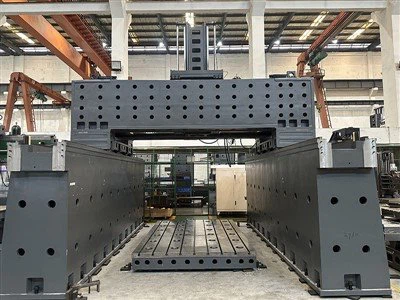
Now, let’s talk about specialized applications, because that’s where maximum size gets even more flexible. For 5 axis machining of large composite parts, like airplane wings or boat hulls, we have gantry-style 5 axis machines, not the standard VMCs. Those gantry machines can handle parts up to 10 meters long. Wait—10 meters. That’s a huge number, but it’s a different design: the spindle moves along gantry rails, instead of the table moving under the spindle. So for those applications, the “table size” isn’t the limit; the building you put the machine in is. We installed one for a aerospace customer in Washington last year that’s 12 meters long, and the only reason it fits is because they built a new shop bay around it. That’s a big difference from smaller 5 axis machines that fit in a standard 10×10 foot room.
A common mistake customers make is asking for the largest possible machine, instead of the right machine for their part. We had a job shop that came to us two years ago, wanting to machine 800 mm long aluminum brackets for drones. They were shopping for a 2,000 mm table machine, which would have cost them twice as much as they needed. When we walked them through it, a 1,200 mm table machine was perfect—their parts were small, they didn’t need to machine anything bigger, and the smaller machine would run faster, use less power, and have lower maintenance costs. So maximum size should always be paired with your actual part requirements, not just the biggest machine you can afford.
We also do custom modifications for customers who need a specific size that’s off our standard line. Last year, a medical device manufacturer needed to machine titanium implants that were 1,100 mm long, which was 100 mm bigger than our standard 1,000 mm maximum for that machine model. We worked with our engineering team to adjust the trunnion’s rotation limits, add a 100 mm extension to the workholding plate, and tweak the tool path software to avoid collisions. It took a couple of weeks of testing, but we delivered the machine, and they’ve been running parts on it for 12 months with zero issues. That’s the advantage of being a machine supplier, not just a reseller—we’re not tied to rigid maximum sizes; we can adjust for your needs.
Let’s circle back to that original question: what’s the maximum part size for a 5 axis machining center? The short answer is, it depends. It’s not a number you can Google and apply to every machine. It’s a calculation that factors in:
- The machine’s table size and weight capacity
- The tool length and spindle reach, including clearance for tilted parts
- Custom workholding height and footprint
- Part geometry, and whether you can machine it without collision
- Your required precision and speed
If you’re working on aerospace parts, medical implants, oil and gas valves, or large composites, those variables change. We’ve machined parts as small as 50 mm (for dental implants) on the same machines that handle 10 meter long wind turbine components. That’s the beauty of 5 axis machining—it’s versatile, but you have to match the machine to your part, not the other way around.
I’ve been in this business for 18 years, and I’ve seen too many customers get burned by looking at a spec sheet that lists “maximum part diameter: 2,000 mm” and buying a machine that’s too big, or too small, for their actual work. Last year, a customer in Germany bought a 2,500 mm table machine because their part was 2,200 mm wide. But they didn’t account for their tools being 400 mm long, so the effective reach when the trunnion was tilted was only 1,900 mm. They had to slow their production down, because they had to re-fixture the part to reach the edges, which took away the time savings that 5 axis machining is supposed to provide. That’s why we always offer a free machine assessment: we’ll look at your part drawings, run a simulation, and tell you exactly what size machine you need, no guesswork.
At the end of the day, a 5 axis machining center’s maximum part size isn’t a marketing number—it’s about what you can machine accurately, efficiently, and without collision. If you’re not sure what size is right for your next project, we’d be happy to walk through your needs, run a simulation, and find the solution that fits. Don’t just go for the biggest spec; go for the machine that works for your parts.
If you’re ready to discuss your 5 axis machining needs and find the right solution for your part size, reach out to our team to start a conversation. We’re here to help you avoid the common mistakes and find a machine that meets your production goals.
Linear Way Turning Machine Center References
- Modern Machine Shop. (2022). 5-Axis Machining Basics: Understanding Capabilities and Limitations.
- aerospace manufacturing and technology. (2021). Large Format 5-Axis Machining for Composite and Metallic Parts.
- International Journal of Machine Tools and Manufacture. (2020). Accuracy Considerations in 5-Axis Machining of Large, Heavy Workpieces.
- custom manufacturing solutions. (2023). Workholding Optimization for 5-Axis Machines: Balancing Size and Rigidity.
Smartech Machinery & Equipment Co., Ltd.
As one of the most professional 5 axis machining center machine manufacturers and suppliers in China, we also support customized service. Please rest assured to buy bulk 5 axis machining center machine made in China here from our factory. Contact us for more details.
Address: Room 2832, Changping Commercial Mansion, Shihua Road, Futian Free Trade Zone, Shenzhen, China
E-mail: smartech@smartechcnc.cn
WebSite: https://www.smartech-cnc.com/
