Hey there! If you’re reading this, chances are you’ve hit a snag with a big battery setup—like a commercial vehicle fleet, a recreational vehicle (RV) with dual batteries, or even a off-grid power system that needs more oomph than one charger can handle. As someone who’s been in the car battery charger game for years (we supply to small fleets, backyard mechanics, and even gearheads building custom rigs), I get how easy it is to panic when a single charger just won’t cut it. Wait, before I go off on a tangent—let’s talk real: connecting multiple chargers isn’t just plugging ’em into a power strip and calling it done. There’s a right way, a very wrong way, and a lot of mistakes I’ve seen people make over the years. Let’s break this down like we’re chatting over a garage beer, no stuffy jargon allowed. Car Battery Charger

First off, let’s set the baseline: why would you even need multiple chargers? I see this all the time with people who have dual-battery RVs, where one battery’s for the engine and the other’s for your fridge, TV, and camping gear. Or fleet managers with 10+ work trucks that all need charging after a long week of delivery runs. Heck, even guys building portable power stations that use car batteries—they want faster charging, right? One 10-amp charger takes 24 hours to top off a deep-cycle battery; two 10-amp chargers? Maybe 12 hours, if you do it right. Mess it up, though, and you’ll get batteries that don’t hold a charge, chargers that overheat, or even a fried component. Not fun.
Now, the #1 rule I drill into every customer who calls our support line: match your chargers. Wait, what does that mean exactly? Let’s keep it simple—voltage first, obviously. Car batteries are 12V, right? But not all 12V chargers are the same. If you have a 12V lead-acid battery (the standard car battery), you can’t use a 6V charger, duh, but more importantly, you can’t mix a smart charger with a dumb charger here if you’re tying them directly to the battery bank. Smart chargers are the ones that adjust their output as the battery charges—they monitor voltage, switch from bulk charge to float, all that. Dumb chargers just put out a steady stream, like a old school unit you’d see at a parts store that never stops running once plugged in. If you mix those two, the smart one will see the voltage going up and throttle back, but the dumb one’s still cranking, which can overcharge the battery. That’s a quick way to kill a $100 battery.
Amperage is the next big one. Let’s say you have two 12V batteries wired in parallel (so total voltage still 12V, capacity doubles). If one charger is 5A and another is 10A, that’s not the end of the world, but try to run a 20A charger with a 5A one on the same battery? The 5A charger will just get overwhelmed, and neither will charge properly. Plus, overloading the charger’s output can make them overheat, and trust me—no one wants a smoking charger in their garage or truck bed. If you’re connecting multiple chargers to the same battery bank, stick to chargers with the same rated voltage and as close to the same amperage as possible. Our team at [our supplier name] always recommends checking the charger’s label, not just the model number—sometimes two chargers from different years have slightly different output specs.
Now, how do you actually connect them? There are two main ways people go about this, and I’m gonna walk you through both, starting with the safe one that our support team signs off on 99% of the time. First, if you’re connecting multiple chargers to a single battery or parallel battery bank (most common use case), use a common bus bar. Wait, a bus bar? Yeah, it’s just a metal block with multiple terminals that lets you connect all your charger leads together without stringing wires all over the place. Here’s the step-by-step, real garage style: first, turn off every single charger and unplug them from the wall—safety first, people, don’t skip this. Grab your positive (red) and negative (black) cables from the battery bank. Splice each charger’s positive terminal to a separate spot on the positive bus bar, same for the negatives. Wait, no—wait, the battery’s positive goes to one main spot on the bus bar, and all the chargers’ positives connect to other spots on the same bus bar? No, hold on, let’s get that right. Let’s say the battery bank has a positive post and a negative post. Mount your bus bar near the battery, so the battery’s positive cable connects to the central positive terminal on the bus bar. Then, each individual charger’s positive output cable connects to a separate positive terminal on the bus bar. Do the exact same for the negative side: battery negative to central negative bus bar terminal, each charger’s negative output to its own negative terminal on the bar. That way, every charger is pulling power from the same, stable source, no voltage drops between them.
Wait, but what if you have separate batteries and want to charge both at the same time? Like, a dual-battery truck where one’s cranking, one’s auxiliary. Then you can wire each charger directly to its own battery, right? But here’s the catch—don’t wire them in series when connecting chargers. Wait, series vs parallel—let’s explain that like I’m talking to my teen cousin who just got his first car. Batteries in series add voltage: two 12V batteries in series make 24V, good for big trucks or golf carts. Chargers in series do the same—two 12V chargers in series make 24V, which would fry a 12V battery immediately. So never connect chargers in series. Only parallel chargers, which is what we were talking about earlier—same voltage, parallel wired to the same battery bank. That’s the only safe way to combine their amperage to charge faster.
Now, the mistakes I see all the time, so you can avoid them. First, daisy-chaining chargers. What’s that? Plugging charger 1 into the wall, then plugging charger 2 into charger 1’s AC outlet, like a power strip. Wait, that’s bad. Most car chargers pull a decent amount of current, and the wall outlet can only handle so much. If you plug two chargers into each other, you’re adding their draw, and if that outlet isn’t rated for it, you’ll trip a breaker, or worse, start a fire. Always plug each charger directly into a dedicated wall outlet, or a heavy-duty power strip that’s rated for the total amperage of all chargers combined. For example, if you have two 10A chargers, total draw is 20A, so your power strip needs to be at least 20A, not the cheap $5 one from the gas station. That’s a rookie mistake, and we get 10 calls a month from people whose power strips melted because of it.
Another mistake: not using fuses. Oh my god, fuses are non-negotiable here. Each charger’s positive line should have its own in-line fuse, close to the charger. Why? If a charger shorts out, the fuse will blow before it messes up your battery or other chargers. I always recommend a fuse rated for 125% of the charger’s amperage. So a 10A charger needs a 12A fuse, easy. Don’t skip this—we’ve seen a guy who didn’t use fuses, and when his 15A charger shorted, it took out his entire battery bank and two other chargers. Cost him more than a year worth of fuses, that’s for sure.
Wait, what about smart chargers vs old manual ones? If you’re using all smart chargers, you’re golden—they’ll communicate with each other through the bus bar, right? No weird overcharging issues. But if you mix smart and dumb, like I thought earlier, that’s a no-go. Dumb chargers keep pumping power even when the battery is full, so a smart charger will see the voltage climb and go to float, but the dumb one is still cranking, which can boil the battery’s electrolyte, damage the plates, or even cause a leak. Stick to the same type of charger if you’re mixing them on the same bank. Our line of smart chargers all sync perfectly, so if you grab two or three of ours, you don’t have to worry about that. That’s one reason we tell customers our chargers work great together—we tested ’em ourselves.
What about bigger setups, like off-grid systems with four or more batteries? Same logic, just scale up. Use a larger bus bar, make sure all chargers are same voltage and amperage, add fuses for each line, and never mix charger types. I worked with a guy last year who had a solar setup with four 12V deep-cycle batteries, and he wanted to charge them faster so he could camp more without hooking up to shore power. He bought two of our 20A smart chargers, wired ’em parallel to his battery bank, and cut his charge time in half. He texted me a pic of his fridge running all weekend, no dead batteries, and he was stoked. That’s the kind of win we love seeing.
Now, let’s talk about when you shouldn’t connect multiple chargers. Wait, is there ever a time? Yeah. If your battery is dead, like completely drained below 10V, don’t hook two big chargers to it all at once. It can cause a surge that damages the battery or the chargers. Instead, use one charger to get it back up to 12V first, then add the second one for faster charging. Also, if you have a lithium-ion battery—wait, those are different, right? They have their own built-in BMS (battery management system) that controls charging, so you can’t just hook two chargers to them. You might mess up the BMS, which is expensive to replace. For lithiums, only use chargers rated specifically for lithium, and even then, check the charger’s specs before mixing.
Another pro tip from our service team: when connecting chargers, leave a little extra slack in the cables, don’t pull them tight. Tight cables can cause loose connections, which lead to voltage drops, overheating, and even sparks. And always check the connections after the first 10 minutes of charging—feel the cables, the bus bar, the charger housings. If anything’s hot to the touch (more than warm), turn everything off and check for loose wires or wrong amperage. That’s a quick way to catch a problem before it gets worse.
So to recap the steps in plain English, no fancy stuff: 1. Get chargers that have the same voltage (obvi) and as close to the same amperage as possible, same type (all smart or all dumb) if it’s a lead-acid battery. 2. Grab a bus bar (or two, if you’re charging separate batteries), in-line fuses for each charger, heavy-duty power strip or dedicated wall outlets. 3. Unplug every charger first, wire each charger’s positive and negative to their own terminals on the bus bar, same as the battery’s terminals. 4. Put a fuse on each charger’s positive line, right by the charger. 5. Plug each charger into their own outlet (or rated power strip), turn ’em on, double-check connections.
If you’re still unsure, or you have a weird setup—like a big fleet, a custom van, or a industrial battery bank—reach out to our team. We supply chargers to all kinds of folks, and we can help you pick the right ones and walk you through the setup, no pushy sales stuff, just straight answers. We’ve been in this business for years, so we’ve seen every mistake in the book, and we don’t want you to make ’em.
Wait, before I wrap this up, let’s hit the big safety note one more time. Never work on chargers or batteries while drinking, or when you’re tired. Batteries produce hydrogen gas, which is flammable—no open flames near the battery when you’re charging. Ventilate the area, especially if you’re charging a dead battery that’s gassing a little. That’s a non-negotiable, don’t take that lightly.
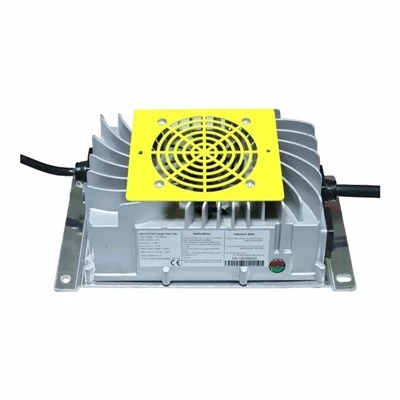
At the end of the day, connecting multiple chargers isn’t rocket science—it just requires following some basic rules, not cutting corners, and using the right parts. I’ve had customers who did this wrong and ruined batteries, and ones who did it right and saved hours of charge time, so it’s all about getting it right. If you have questions, or you need chargers for your setup, hit us up to connect for sourcing and procurement talks. We’re here to make sure you get the right gear and the right info, no BS.
Votage Stabilizer References:
- Battery University. (2022). Charging multiple batteries and chargers. Retrieved from academic automotive engineering resources on safe charging practices for parallel charger setups
- Automotive Parts Association. (2023). Best practices for connecting battery chargers. Retrieved from industry guidelines for charger amperage matching and fuse sizing in lead-acid battery systems
- International Recreational Vehicle Association. (2021). Dual battery charging for RVs and fleet vehicles. Retrieved from RV and commercial vehicle maintenance standards for multiple charger installations
Huizhou Qiangfeng Power Technology Co., Ltd.
Huizhou Qiangfeng Power Technology Co., Ltd. is one of the most professional car battery charger manufacturers and suppliers in China, featured by quality products and good service. We warmly welcome you to buy customized car battery charger made in China here from our factory. If you have any enquiry about quotation and free sample, please feel free to email us.
Address: No. 28, Hu’ao Avenue, Shiwan Town, Boluo County, Huizhou City, Guangdong Province
E-mail: Komco@Jinlidianqi.cn
WebSite: https://www.autobatterychargers.com/
