So, you’ve decided to dive into pastries production and are on the hunt for a production line that actually works—no flaky surprises, no wasted dough, no 3 a.m. panic sessions because your mixer died mid-shift. As someone who’s spent the last decade building and tweaking these lines for bakers just like you, let me walk you through the messy, real stuff of investing in one. No jargon, no sales fluff, just what I’ve seen go right and wrong for folks who actually want to make money (and maybe still get to sleep before 10 p.m.). Pastries Production Lines
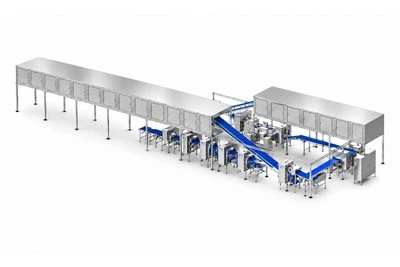
First off, let’s get this straight: buying a pastries production line isn’t like grabbing a random pastry from the grocery store. It’s a long-term call—think 10+ years of weekly use, thousands of pounds of dough, hundreds of hours of your team’s time. I’ve had clients come to me thinking, “Just give me the biggest line you have” or “I’ll get second-hand to save cash” and… yeah, that almost always blows up. I’m not here to sell you something you don’t need, though. Let’s break this down step by step, like we’re sitting in my workshop drinking too much bad coffee.
First, figure out your actual production goals. Not the “someday I’ll bake 10k croissants a week” someday—your next 6 months to 2 years. Do you want to make croissants? Danish? Cupcakes? Maybe all three? Different pastries need different setups. For example, laminated dough (croissants, Danish) needs a sheeter that can fold and roll without tearing the layers. Cupcakes need a depositor that squeezes the right amount of batter every time (no lopsided tops = no waste). I had a bakery owner last year who bought a line meant for croissants because he thought it would “scale” to his cookie business… turns out the sheeter couldn’t handle stiff chocolate chip dough, and he lost $15k in rework before we sorted him out. So, write down exactly what you’re making, how many units a day/week you actually need to hit to be profitable, and if you might add a new item in the next year. That’s your baseline.
Next, consider your space and your team. I see so many people skip this part and then spend 3 weeks rearranging their entire bakery just to fit the line. How much floor space do you have? Not just the machine’s footprint—you need room to load dough, unload finished pastries, clean the parts, and move boxes of ingredients around. For example, a full croissant line might be 40 feet long, but if your bakery is only 30 feet, you’re either cramming it (good luck reaching the back of the oven) or making it run in a weird, inefficient pattern that breaks down more. Also, how tech-savvy is your team? If you’ve got a crew that’s been hand-shaping pastries for 20 years, a super automated line with 15 buttons and a touchscreen might scare them. We have mid-range lines with simple controls that still get consistent results—way better than forcing your bakers to learn a whole new system and quit because it’s overwhelming. Oh, and power! Make sure your facility can handle the electricity (or gas, if you have gas-powered machines) the line needs. Nothing’s worse than firing up a brand new line and tripping the main breaker because you didn’t check the voltage.
Now, the big one: new vs. used. I know used lines are tempting—half the price, same “size” on paper. But here’s the thing: pastries production lines have a lot of moving parts that take a beating. A used sheeter from another bakery might look good, but the blades are dull, the dough roller is warped, or the motor is on its last leg. I had a client who bought a used depositor online for $8k that was supposed to be “like new.” It broke down 3 days in, and the parts cost $5k to fix—way more than buying a gently used line from a reputable supplier who checks everything. New lines are reliable, come with a warranty, and you can customize them to your exact needs. Used is only worth it if you’re super handy, know exactly what to look for (no scratches on the gear parts, no leaks in the oil system), and have a backup tech on call. For 90% of small to medium bakeries, new (or certified pre-owned, from a trusted supplier) is the way to go.
Then, customization and flexibility. Your business will grow—maybe not tomorrow, but in a year or two. Can the line you’re looking at adapt? For example, if you start making plain croissants now, can you swap out parts to make almond croissants later? Or switch the depositor nozzle from round to heart-shaped for Valentine’s Day? We design our lines so you can add attachments as you go—no need to buy a whole new line when you’re ready to expand. I can’t tell you how many clients call me a year after buying a line saying, “Can you add a laminator attachment?” because they saw a demand for more laminated pastries. If your line’s rigid, you’re stuck.
Don’t sleep on after-sales support. This is probably the most important part. If your line breaks at 2 a.m. before a big weekend order, who are you gonna call? We have a 24/7 support line for our clients—if a part breaks, we ship it overnight, and our techs can walk your team through fixing it over the phone (or come out if it’s something big). Some cheap suppliers will sell you the line and then disappear—no calls back, no parts, no help. I had a bakery owner last year whose line broke during a holiday rush, and the supplier he bought it from wouldn’t answer his texts. He lost $20k in sales that week. Don’t be that guy. Ask the supplier: what’s the warranty? How fast do you ship parts? Do you have local techs, or do we have to wait for someone to drive 6 hours? That stuff matters more than the initial price.
Also, think about cost per unit, not just the sticker price. A line that’s $50k might sound cheaper than a $60k line, but if the cheaper one wastes 20% more dough (because the depositor is inconsistent), that’s $1000s lost every month. A more efficient line might pay for itself in 6 months from less waste, better quality, and less rework. I always run the numbers with my clients—let’s calculate how much dough you’ll save, how much less time your team will spend fixing mistakes, how much more consistent your pastries will be (so fewer returns). That’s the real ROI, not just the upfront cost.
Wait, let’s talk about a few specific pastries to make this real, because generic lines don’t work. For laminated dough (croissants, Danish), you need a sheeter with a reversible roller system—so you can fold the dough correctly without getting lopsided layers. If your sheeter only rolls one way, the layers will be uneven, and no one wants a croissant with a dense bottom. For cupcakes or muffins, a depositor that can handle different batters—light sponge vs. dense corn bread—without clogging. Clogged nozzles = wasted batter, and time wasted cleaning. For bread rolls, a molder that can shape them evenly so they bake at the same rate (no raw centers or burnt edges). I’ve seen lines that work amazing for one pastry and terrible for another—so match the line to your core products, not what you think you might make someday.
Oh, and training. Even the best line is useless if your team doesn’t know how to run it. We include free on-site training for our clients—our techs will spend 2 days walking your team through every part: how to load dough, adjust settings, clean the machine, fix small issues, and even tweak recipes for the line. Last month, a baker told me that after training, his team went from hand-shaping 500 croissants a day to 1200, with less than 1% waste. That’s the kind of win I live for. Don’t skip training—cheap suppliers will just send a video and say “watch this.” A video can’t answer questions in real time, or adjust to your team’s learning style.
Let me throw in a quick real example to make this concrete. A client of mine, Sarah, owned a small bakery in Portland, making 2,000 croissants and 1,500 Danish a week. She was hand-shaping everything, working 12-hour days, and struggling to keep up with local café orders. She came to me, and we looked at her space (25×30 feet), her team (3 bakers, pretty tech-savvy), and her goals (grow to 5k pastries a week in 1 year, add cinnamon rolls). We went with a mid-sized, croissant-specific line with a sheeter, laminator, and depositor—built to fit her space, with simple controls, and it can add a cinnamon roll attachment later. The total cost was $58k, but we calculated she’d save $8k a year in dough waste, cut her team’s hours by 10 a week, and hit her growth goal in 8 months instead of 18. She’s now booked out for 3 months, and called me last week saying she’s gonna add a second line next year. That’s the kind of win that makes all the late nights in the workshop worth it.
Wait, what about common mistakes I see over and over again? Let’s list them: 1) Buying a line that’s too big for their actual output—wastes space and is more expensive to run. 2) Skipping after-sales support—end up stuck when something breaks. 3) Forgetting to check utilities—tripping breakers is a huge headache. 4) Choosing a line that can’t adapt to new products—costs more later when they have to upgrade. 5) Not calculating waste—small inefficiencies add up to thousands.
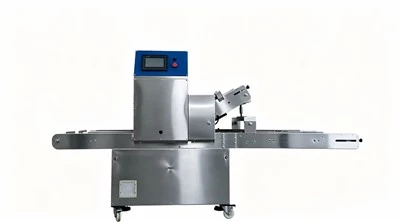
At the end of the day, investing in a pastries production line is about making your life easier, not harder. It’s about scaling your business without burning out, making consistent, delicious pastries that customers come back for, and not stressing about 2 a.m. breakdowns. If you’re ready to stop guessing and start getting real numbers, hit us up to chat through your space, products, and goals. No pressure, no sales pitch—just honest talk about what will work for your bakery, not mine.
Filled Tangyuan Production Line References:
- “The Pastry Chef’s Guide to Commercial Production Equipment” – American Bakers Association, 2022
- “ROI Analysis for Small Bakery Production Lines” – Bakery Tech Magazine, Vol. 18, Issue 4, 2023
- “Key Considerations for Laminated Dough Production” – International Association of Pastry Chefs, 2021
Shanghai Longyu Electro-Mechanic Technology Co., Ltd.
Shanghai Longyu Electro-Mechanic Technology Co., Ltd. is one of the most professional pastries production lines manufacturers and suppliers in China, featured by quality products and good service. Please feel free to wholesale advanced pastries production lines made in China here from our factory. Also, custom service is available.
Address: No.66, Guangfulin East Road, Zhongshan Subdistrict, Songjiang District, Shanghai, China
E-mail: sales4@longyu-sh.com
WebSite: https://www.longyu-sh.com/
