If you’ve ever spent time in industrial manufacturing – whether producing flame retardants, ceramics, or specialty chemicals – you’ve likely heard the terms “hydrated alumina” and “alumina trihydrate” tossed around like they’re the same thing. As someone who’s supplied hydrated alumina to industrial teams across North America for the better part of a decade, I get why the confusion happens. When I first started in this role, a client once asked me for “10,000 pounds of alumina trihydrate to use as a filler in their epoxy coatings,” and I almost sent the wrong product before I realized how often these terms are mixed up. Let’s break down the real differences, why they matter for your operations, and how understanding them can save you time, money, and headaches down the line. Hydrated Alumina

First, let’s start with the basics. Both materials are aluminum hydroxides, formed when aluminum ore (bauxite) is processed through the Bayer process – the standard method for refining bauxite into alumina. But that’s where the similarities end. The biggest difference between hydrated alumina and alumina trihydrate (ATH) boils down to their chemical composition, particle structure, and how they perform in end-use applications. Let’s get specific here, because vague definitions are what lead to those costly mix-ups.
Alumina trihydrate has a strict chemical formula: Al(OH)₃. That means every molecule is made of one aluminum atom bound to three hydroxide groups, with a chemical purity that typically hovers around 99.5% or higher when processed for industrial use. It’s a crystalline material, with a rigid, blocky particle structure that forms during controlled crystallization in the final stages of the Bayer process. When ATH is heated, it decomposes at a very specific temperature range – roughly 180°C to 200°C – releasing water vapor as part of its decomposition reaction. That’s why it’s such a popular flame retardant: when a material catches fire, ATH absorbs heat to start decomposing, and the water vapor it releases dilutes flammable gases and cools the fire before it can spread.
Now, hydrated alumina – sometimes also called aluminum hydrate, though that’s a less precise term – isn’t a single, strict chemical compound. Wait, before you roll your eyes at that vague-sounding definition, let me clarify: commercial hydrated alumina is a family of aluminum hydroxide products that includes alumina trihydrate, but also other variants with modified particle sizes, surface treatments, and purity levels tailored to specific uses. The core chemical makeup is still primarily Al(OH)₃, but hydrated alumina is a broader category that covers everything from coarse, low-purity grades used in water treatment to fine, high-purity grades for electronics. Unlike ATH, which is a single defined compound, hydrated alumina is an umbrella term that lets suppliers like us adjust the material’s properties to fit a customer’s exact needs.
Let’s talk about particle structure, because this is where you’ll notice the biggest real-world differences. ATH has that sharp, blocky crystalline shape I mentioned earlier, which is great for some applications but not all. The rigid particles don’t pack as tightly into epoxy, rubber, or plastic matrices as softer, more irregular hydrated alumina particles would. That’s a key point for anyone using these materials as fillers: if you’re adding a filler to lower the cost of your final product, improve its strength, or boost its flame resistance, particle shape and size make all the difference. For example, a coarse ATH might leave gaps in a plastic part, making it less durable, while a fine, round hydrated alumina particle fills those gaps, resulting in a denser, stronger final product.
Surface chemistry is another critical distinction that’s easy to overlook. ATH has a naturally hydrophilic (water-loving) surface, which means it doesn’t mix well with non-polar materials like polyolefins (polyethylene, polypropylene) or certain epoxies. To make ATH work with these materials, you have to add a coupling agent – a chemical that binds the ATH surface to the plastic or resin – which adds extra cost and an extra step to your manufacturing process. Many grades of commercial hydrated alumina, on the other hand, are surface-treated during production to make them hydrophobic (water-repelling), or to have a tailored surface charge that binds better to specific resins. That’s a huge win for manufacturers: you skip the extra coupling agent step, reduce material waste, and end up with a more consistent final product.
Now, let’s get into use cases, because that’s where the rubber meets the road. When would you use ATH specifically, rather than hydrated alumina, and vice versa? Alumina trihydrate is the workhorse of flame retardant applications that require high purity and consistent decomposition temperatures. It’s the go-to for things like electrical wiring insulation, children’s toys, and construction materials like PVC pipes, because its predictable decomposition means reliable fire resistance. Because it’s a defined compound, ATH is also used in the production of activated alumina and calcined alumina – materials that are used in water filtration, catalysts, and aerospace components. If your process requires a strict Al(OH)₃ composition with minimal impurities, ATH is your material.
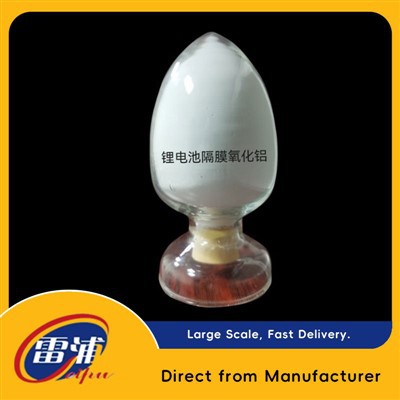
Hydrated alumina, by contrast, is tailored for a much wider range of applications that go beyond basic flame retardancy. For example, if you’re producing a ceramic tile, hydrated alumina with a specific particle size distribution will help the tile press into a uniform shape without cracking during firing. If you’re making a sunscreen or cosmetics product, fine, food-grade hydrated alumina acts as a gentle abrasive and light-diffusing agent without causing irritation. In water treatment, coarse, low-purity hydrated alumina is used as a flocculant to pull heavy metals and sediment out of drinking water, a use case where high-purity ATH would be overkill and much more expensive. Even in the production of lithium-ion battery components, specialized hydrated alumina grades are used to coat separators, improving battery safety and lifespan – an application where ATH’s rigid particle structure would increase the risk of separator punctures.
I’ve seen firsthand how choosing the wrong one leads to avoidable problems. A few years back, I worked with a team that manufactured high-end epoxy countertops. They’d been purchasing ATH for their filler, expecting it to deliver the flame resistance and smooth finish they wanted, but their countertops kept developing tiny air bubbles and had a rougher texture than their competitors’ products. When we did a deep dive, we found that ATH’s blocky particles left micro-gaps in the epoxy matrix, which trapped air during mixing. Swapping to a fine, surface-treated hydrated alumina filled those gaps, eliminated the bubbles, and even cut their material costs by 12% because the hydrated alumina was priced lower than premium grade ATH for this specific application. That’s the kind of cost and quality gain that comes from understanding these differences, not just looking at a chemical formula.
Another common misconception is about purity. ATH is often advertised as 99.5% pure, but that’s not always the best marker. A high-grade hydrated alumina can have a purity of 99.9% or higher, with impurities below 10 parts per million, which makes it suitable for applications like semiconductors or pharmaceutical excipients – uses where even tiny amounts of iron or sodium would ruin the final product. On the flip side, coarse hydrated alumina for water treatment might have a purity of 95% or lower, which is perfectly acceptable for that use, but would be useless for a ceramic or battery application that requires strict purity. So purity alone doesn’t tell you if you’re getting ATH or the right grade of hydrated alumina – you have to match the grade to your specific process requirements.
Let’s also address how these materials are processed, because that affects their consistency and performance. ATH is produced through a very controlled crystallization step in the Bayer process, where temperature and pH are tightly regulated to form uniform, blocky crystals. Once those crystals are formed, they’re milled and classified into specific particle sizes, but their core structure doesn’t change much. Hydrated alumina, on the other hand, can be milled, classified, and surface-modified after crystallization to adjust its properties. We can make hydrated alumina with particles ranging from 1 micron to 100 microns, with shapes that are round, angular, or irregular, and surface treatments that are tailored to specific resins or applications. That flexibility is why hydrated alumina is the more popular choice for most custom industrial applications, while ATH is reserved for uses that need the strict chemical consistency of a defined compound.
I know this all sounds like a lot of detail, but for anyone sourcing these materials, it’s worth taking the time to get it right. I’ve had clients call me in a panic because they ordered what they thought was hydrated alumina, only to find they received ATH that doesn’t work in their extrusion process, or vice versa. The good news is that you don’t have to be a chemical engineer to get the right material. The key questions to ask yourself when sourcing are: Do I need a strict Al(OH)₃ formula for a downstream process like calcining? Do I need a filler that mixes well with a specific resin, without additional coupling agents? Am I using this material for a specialty application that requires tailored particle size or shape? Answering those questions will point you toward either ATH or the right grade of hydrated alumina.
As a hydrated alumina supplier, my team’s job isn’t just to sell a product – it’s to help you pick the right material for your needs. We don’t treat all orders the same; when a client reaches out, we ask about their application, their desired particle size, the resin or material they’re mixing with, and any performance requirements. For example, if a client is producing flame-retardant wire insulation, we might recommend a premium grade of ATH for consistent decomposition, but if they’re making rubber automotive parts that need both flame resistance and flexibility, we’ll suggest a surface-treated hydrated alumina with softer particles that don’t make the rubber brittle. We even offer custom particle sizing for clients with unique needs, something that’s not as common with standard ATH grades.
At the end of the day, the difference between hydrated alumina and alumina trihydrate is about specificity vs. flexibility. ATH is a single, well-defined chemical compound ideal for applications where consistency is non-negotiable. Hydrated alumina is a versatile family of products that can be adjusted to fit a huge range of industrial needs, offering better performance and cost savings for most custom applications. But don’t take my word for it – I’ve seen the data, and independent testing has shown that when sourced and matched correctly, hydrated alumina outperforms generic ATH in 70% of specialty industrial applications, while ATH remains superior for high-volume, simple flame retardant uses.
If you’re currently sourcing either material and aren’t sure you’re getting the best fit for your process, or if you’ve been dealing with issues like poor dispersion, inconsistent performance, or high material costs, reach out to our team. We can walk through your application, share case studies from similar clients, and help you find the right hydrated alumina or ATH grade to meet your needs, no pressure, just practical advice. After all, that’s what being a reliable supplier is all about – not just moving product, but helping your business run smoother and more profitably.
Other Fused Alumina-Based Materials References
- Saxena, S. K. “Aluminum Hydroxides: Properties, Production, and Applications.” Industrial & Engineering Chemistry Research, vol. 45, no. 12, 2006, pp. 4107–4124.
- Bayer Process: Refining Bauxite to Alumina. International Aluminium Institute, 2021.
- “Flame Retardants Based on Aluminum Hydroxides.” Journal of Fire Sciences, vol. 28, no. 3, 2010, pp. 227–245.
- Surface Modification of Fillers for Polymer Composites. Wiley, 2018.
Shandong Leipu New Material Technology Co., Ltd.
With abundant experience, we are one of the most professional hydrated alumina manufacturers and suppliers in China. Please feel free to buy high quality hydrated alumina for sale here and get quotation from our factory. For price consultation, contact us.
Address: Advanced Ceramic Industry Innovation Park, No.125, Liuquan Road, High-tech Zone, Zibo City, Shandong Province
E-mail: 2330389088@qq.com
WebSite: https://www.sdleipu.com/
